


Introduction
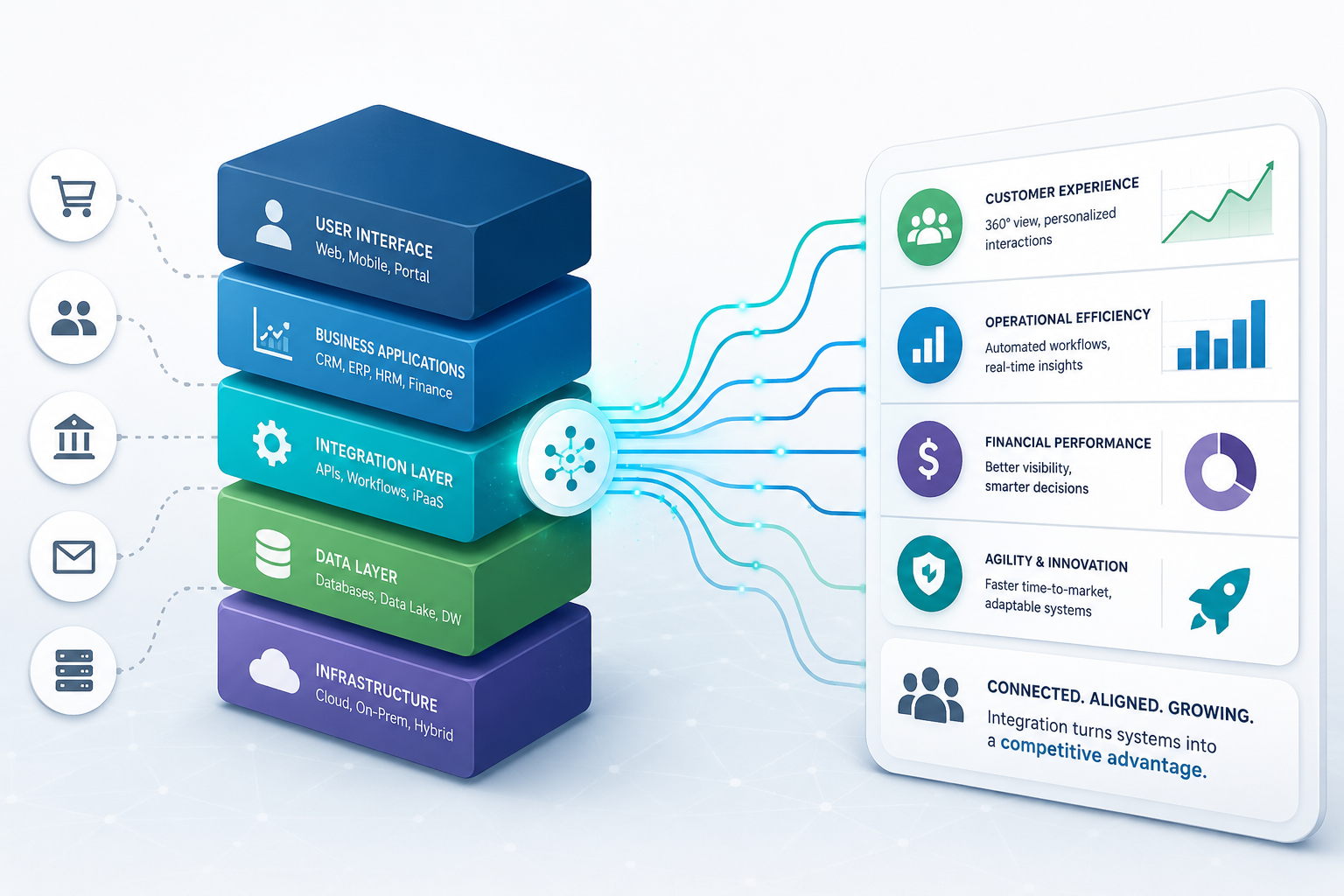
Modern organizations depend on a growing collection of business systems to manage operations, customers, employees, vendors, reporting, approvals, and financial processes. HRIS platforms manage employee data. CRM systems support customer relationships. ERP environments coordinate operational and financial information. Procurement systems handle purchasing activity. Workflow platforms manage execution and approvals.
Individually, these systems provide value. Collectively, they determine how effectively an organization operates.
The challenge is that many businesses continue to treat these systems as independent tools rather than components of a connected operational infrastructure. As operational complexity increases, disconnected systems create visibility gaps, workflow bottlenecks, reporting inconsistencies, and administrative overhead.
The modern business systems stack increasingly depends on integration.
What Is the Modern Business Systems Stack?
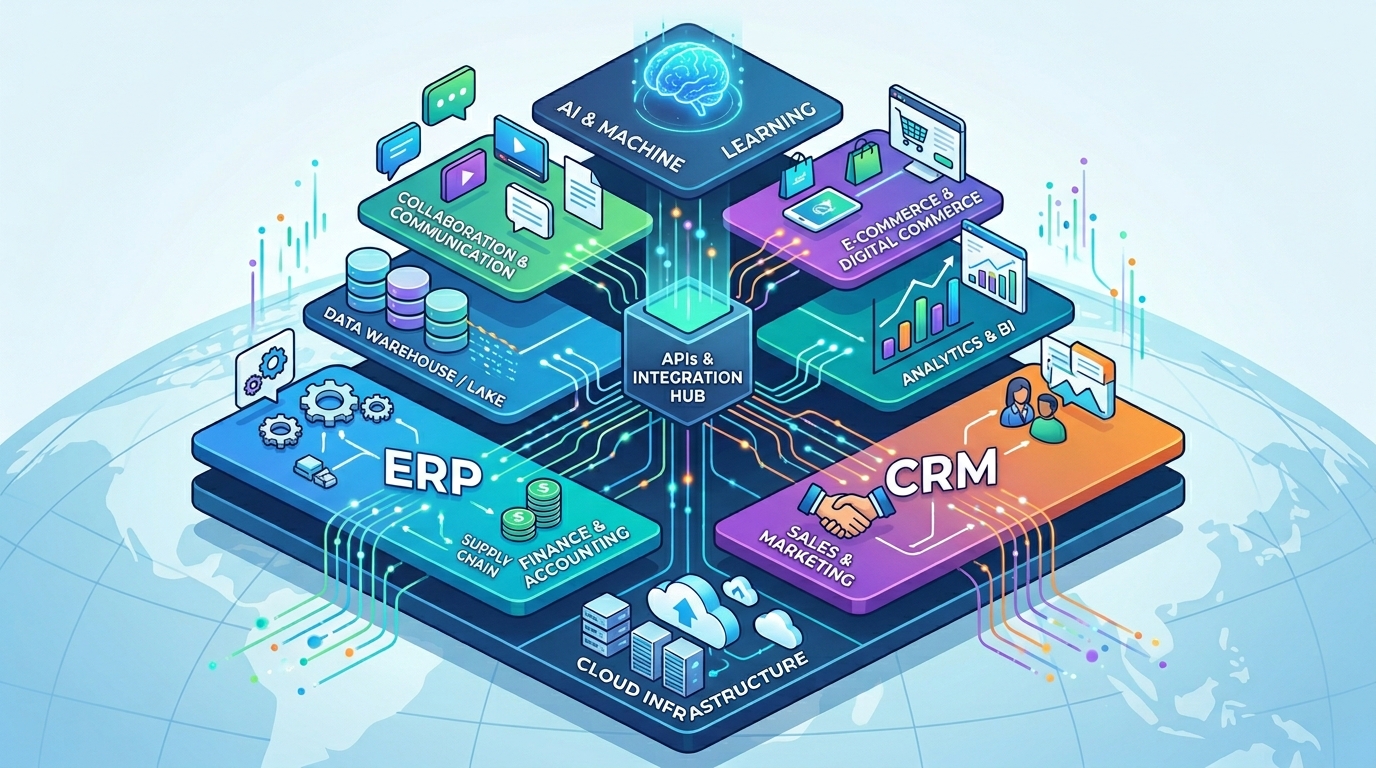
The business systems stack represents the collection of operational technologies used across an organization.
Common components include:
- HRIS platforms
- CRM systems
- ERP environments
- Procurement systems
- Identity and access platforms
- Workflow management tools
- Reporting and analytics platforms
- Communication systems
These technologies support operational execution across the enterprise. The effectiveness of the stack depends not only on the quality of individual systems but also on how effectively they work together.
The Problem with Disconnected Systems
Many organizations build their technology environments over time. Departments often select systems independently to address specific operational needs.
This approach frequently creates:
- Information silos
- Duplicate data entry
- Workflow fragmentation
- Approval delays
- Limited operational visibility
- Reporting inconsistencies
As organizations scale, these problems become increasingly difficult to manage.
Why Integration Matters
Integration creates the connective layer that allows systems to exchange information and coordinate activity.
API-connected operational infrastructure enables:
- Real-time data sharing
- Workflow coordination
- Reporting consistency
- Operational transparency
- Reduced manual effort
- Improved accountability
Rather than operating as isolated applications, systems become part of a unified operational ecosystem.
Operational Visibility Across the Stack
Visibility is one of the most important benefits of integration.
Leadership teams require visibility into:
- Workflow status
- Approval activity
- Operational performance
- Resource utilization
- Reporting trends
- Business priorities
Without integration, visibility becomes fragmented across systems. API connectivity helps create a more complete operational picture.
Workflow Coordination Across Systems
Modern workflows frequently span multiple platforms.
Examples include:
- Employee onboarding
- Procurement approvals
- Customer lifecycle activities
- Operational requests
- Governance processes
Integration helps these workflows move consistently across systems while improving accountability and reducing delays.
The Role of APIs
Application Programming Interfaces (APIs) enable systems to communicate automatically.
APIs help organizations:
- Synchronize information
- Automate operational updates
- Reduce duplicate entry
- Improve reporting accuracy
- Support operational intelligence
API integration has become a foundational capability for modern operational infrastructure.
Business Growth and Infrastructure Maturity
Organizations often discover that operational challenges emerge not because they lack software, but because their systems do not work together effectively.
Infrastructure maturity increasingly depends on:
- Connected systems
- Workflow visibility
- Operational coordination
- Reporting consistency
- Governance readiness
Integration supports all of these capabilities.
How Organizations Can Modernize Their Systems Stack
- Evaluate disconnected systems.
- Identify workflow dependencies.
- Prioritize API integration opportunities.
- Improve operational visibility.
- Standardize workflows.
- Reduce manual handoffs.
- Design for scalability.
Conclusion
The modern business systems stack is no longer defined by the number of applications an organization owns. It is defined by how effectively those systems work together.
API-connected operational infrastructure helps organizations improve visibility, workflow coordination, accountability, reporting consistency, and scalability.
As operational complexity continues to grow, integration is becoming one of the most important foundations of operational maturity.
Learn how connected operational infrastructure helps organizations create visibility, coordination, and scalability across their business systems ecosystem.