


Introduction
Modern organizations increasingly rely on automation technologies to improve efficiency, accelerate workflows, and reduce manual operational tasks. Businesses across industries continue adopting workflow automation platforms, integrations, AI-driven systems, and operational technologies to streamline execution.
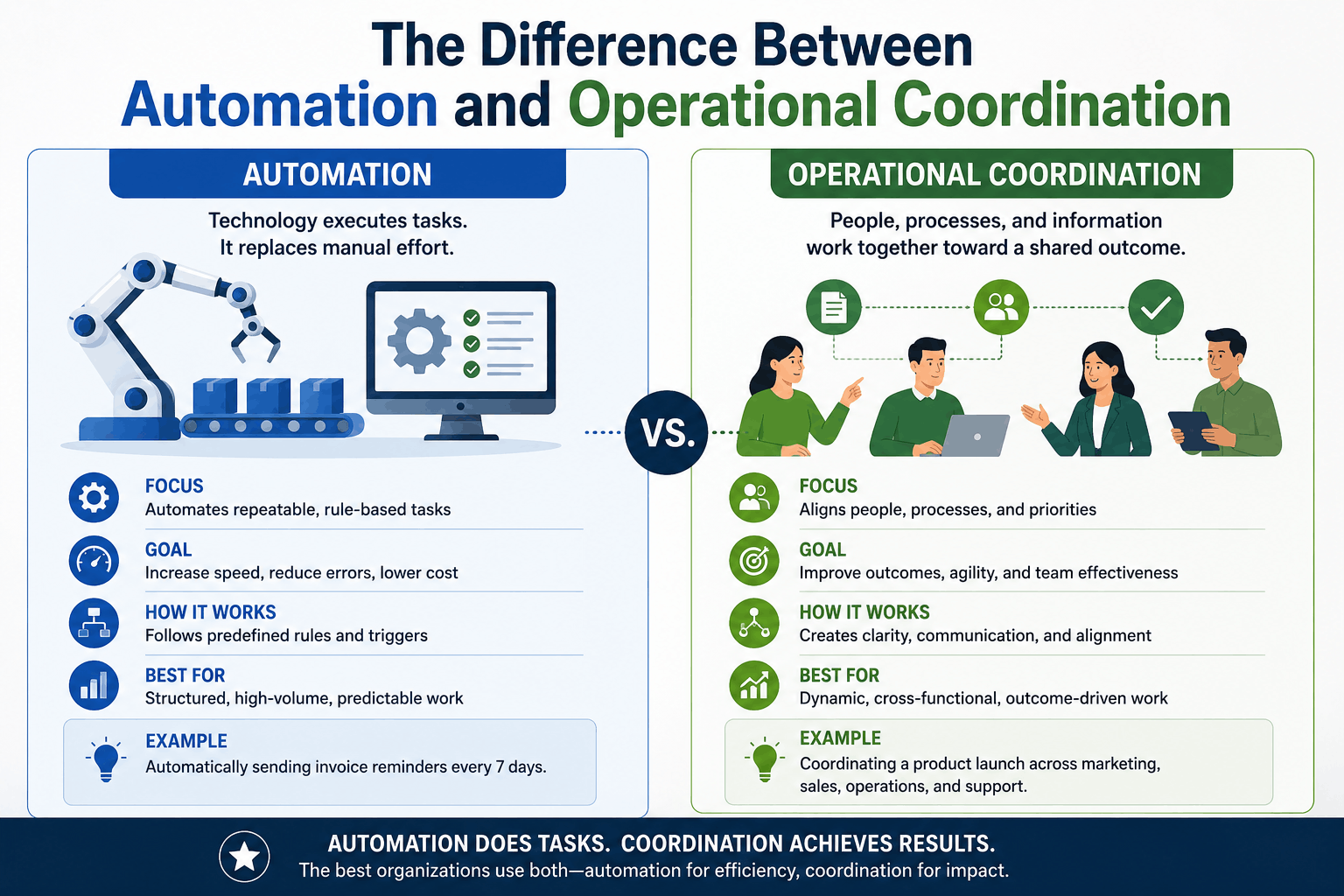
However, many organizations misunderstand the difference between automation and operational coordination. Businesses frequently assume automation alone will solve workflow bottlenecks, communication fragmentation, visibility gaps, and operational inefficiencies.
In reality, automation without operational coordination often creates additional complexity. Disconnected automation environments may accelerate workflows inside fragmented systems ecosystems while reducing visibility across the organization.
Operational coordination focuses on how workflows, systems, approvals, communication pathways, reporting environments, and operational responsibilities interact cohesively across departments and operational structures.
Modern operational maturity increasingly depends not only on automation capabilities but also on coordinated operational infrastructure that supports scalable execution, governance readiness, operational visibility, and organizational consistency.
What Is Business Automation?
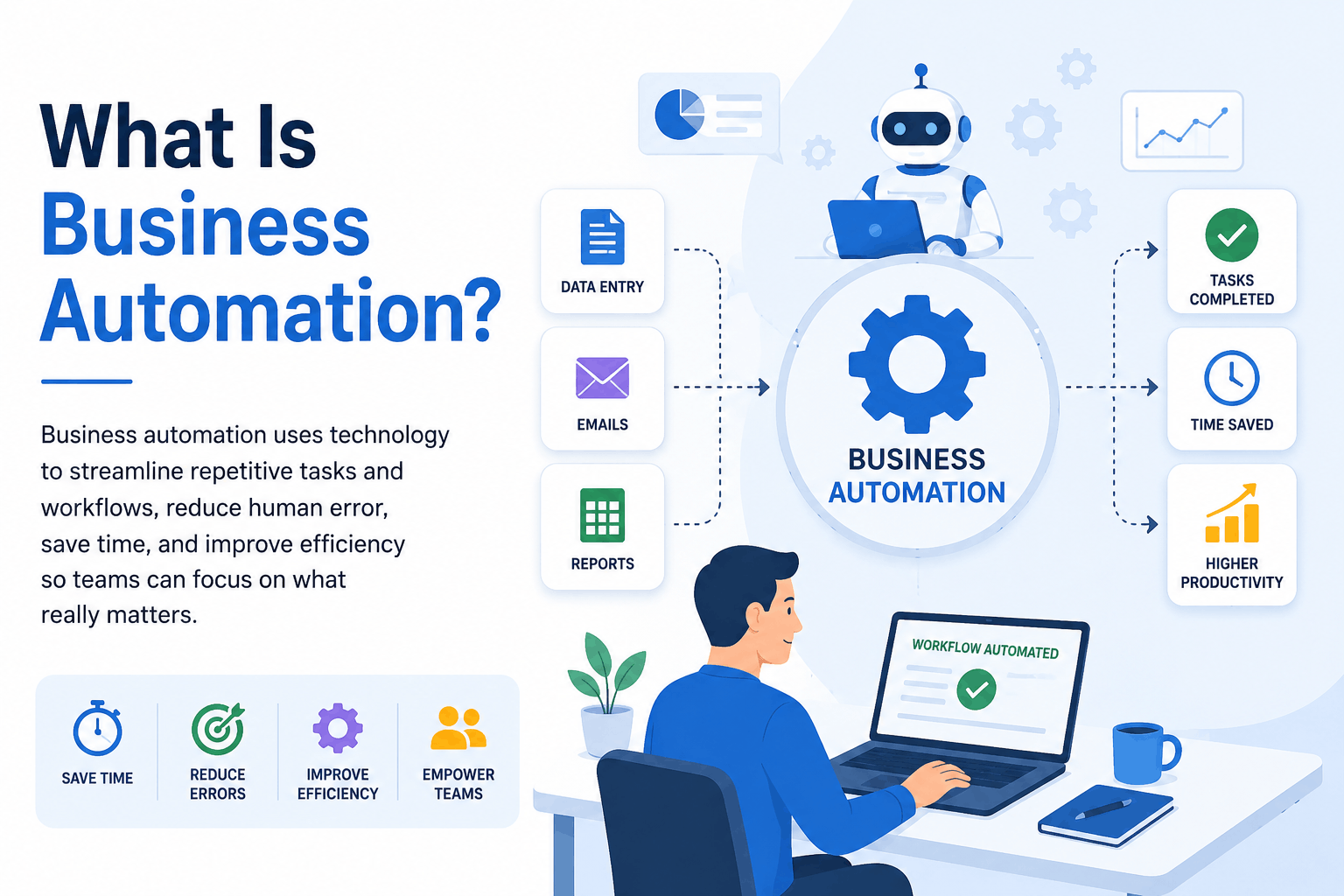
Business automation refers to the use of business software systems and technology tools to reduce manual operational tasks and accelerate workflow execution.
Examples of automation include:
– Automated approvals
– CRM workflow automation
– Invoice processing automation
– Employee onboarding automation
– Operational notifications and alerts
– Marketing automation
– Automated reporting systems
– Workflow routing automation
Automation improves productivity by reducing repetitive tasks and minimizing manual administrative work. However, automation alone does not ensure organizational coordination or operational consistency.
Many businesses automate isolated workflows without addressing how those workflows interact operationally across systems and departments.
What Is Operational Coordination?
Operational coordination refers to the alignment and management of workflows, approvals, systems, communication structures, operational responsibilities, and visibility across the organization. For organizations coordinating approval-heavy business card workflows, Business Card Manager provides centralized ordering, approval routing, and operational visibility across teams and locations.
Operational coordination focuses on:
– Workflow consistency
– Cross-functional alignment
– Approval governance
– Operational visibility
– Systems integration
– Reporting coordination
– Accountability structures
– Organizational responsiveness
Businesses with strong operational coordination create environments where workflows remain scalable, visible, and coordinated even as organizational complexity increases.
Why Automation Alone Creates Fragmentation
Many organizations aggressively pursue automation while neglecting operational coordination. As a result, businesses often create fragmented automation environments where disconnected workflows operate independently without centralized visibility or governance.
Common operational consequences include:
– Workflow silos
– Inconsistent approvals
– Fragmented reporting
– Duplicate operational processes
– Communication breakdowns
– Reduced accountability
– Operational blind spots
Automation may improve speed, but without coordination, businesses risk accelerating fragmented processes rather than improving operational consistency.
Organizations often discover that operational complexity continues increasing despite significant investments in automation platforms.
Operational Visibility Depends on Coordination
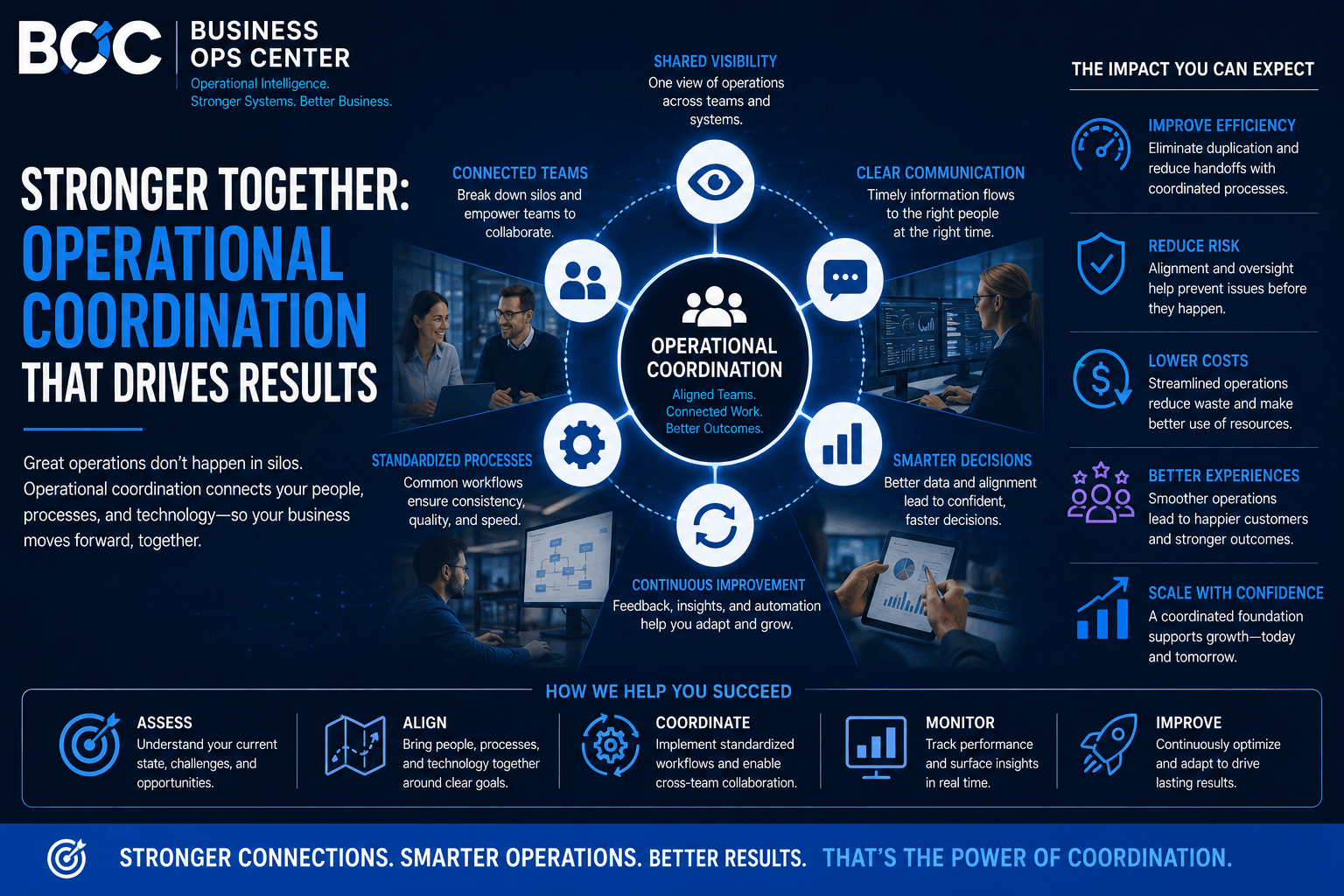
Operational visibility is becoming one of the most important strategic advantages for modern organizations. Leadership teams require centralized visibility into workflows, approvals, operational priorities, reporting environments, and execution status.
Operational coordination improves visibility by:
– Standardizing workflows
– Centralizing approvals
– Improving systems integration
– Defining workflow ownership clearly
– Reducing fragmented communication
– Coordinating reporting environments
Disconnected automation systems often reduce visibility because workflows operate independently across disconnected operational environments.
Workflow Standardization Supports Coordination
Workflow standardization is foundational to operational coordination. Organizations cannot effectively coordinate workflows when operational processes vary significantly across departments.
Standardized workflows improve:
– Accountability
– Execution consistency
– Reporting reliability
– Workflow tracking
– Cross-functional communication
– Governance readiness
Businesses that standardize workflows before automation often create stronger operational environments that scale more effectively.
The Strategic Value of Operational Coordination
Operational coordination is becoming increasingly critical as organizations adopt additional systems, workflows, distributed teams, and software platforms.
The benefits of operational coordination include:
– Improved operational visibility & identity standardization
– Faster decision-making
– Reduced workflow fragmentation
– Better accountability
– More scalable execution
– Stronger governance readiness
– Improved cross-functional coordination
Organizations with coordinated operational environments often respond faster to operational challenges while maintaining stronger workflow consistency.
Automation vs Operational Coordination
| Area | Automation | Operational Coordination |
|---|---|---|
| Main purpose | Speeds up individual tasks | Aligns people, systems, and workflows |
| Risk | Can automate fragmented processes | Reduces fragmentation |
| Best for | Repetitive task execution | Cross-functional workflow alignment |
| Visibility | Often limited to one system | Centralized across workflows |
| Governance value | Partial | Stronger governance readiness |
How Businesses Can Improve Operational Coordination
Businesses seeking stronger operational maturity should prioritize coordination alongside automation.
Recommended operational strategies include:
1. Standardizing workflows before automation
2. Improving systems integration
3. Centralizing operational visibility
4. Clarifying workflow ownership
5. Reducing disconnected operational silos
6. Improving cross-functional communication
7. Implementing governance-oriented frameworks
8. Evaluating operational infrastructure strategically
Organizations that intentionally design coordinated operational environments often improve scalability, visibility, accountability, and operational resilience.
Conclusion
Automation is an important operational capability, but automation alone does not solve organizational complexity. Businesses that prioritize automation without operational coordination often create fragmented operational environments that reduce visibility and increase inefficiency.
Operational coordination ensures workflows, systems, approvals, reporting structures, and operational responsibilities operate cohesively across the organization.
Modern operational maturity increasingly depends on coordinated operational infrastructure that supports scalable execution, operational visibility, governance readiness, and organizational consistency.
Organizations that intentionally build coordinated operational governance systems and ecosystems position themselves for stronger operational resilience, scalability, and long-term operational maturity.