


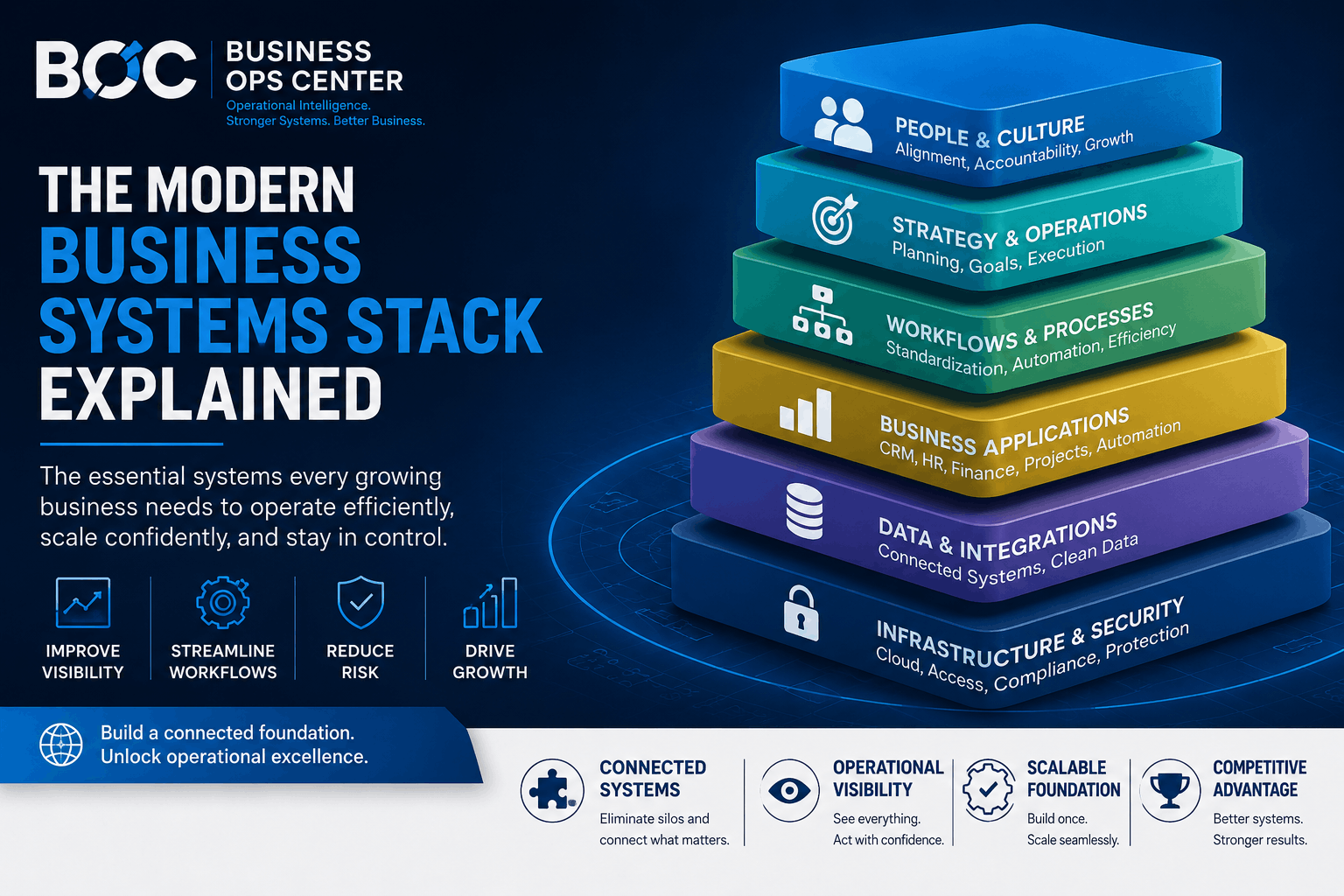
Introduction
As organizations scale, operational complexity increases rapidly. Teams adopt more software platforms, workflows become fragmented, and visibility across departments begins to deteriorate. Many growing companies mistakenly view software acquisition as operational maturity, when in reality, disconnected systems often create inefficiency, duplication, communication gaps, and coordination failures.
A Modern Business Systems Stack is not simply a collection of tools purchased over time. It is a structured operational infrastructure designed to support workflow coordination, governance, reporting visibility, communication, and long-term scalability. Organizations that intentionally design their operational systems architecture create stronger consistency across departments while reducing fragmentation and operational bottlenecks.
Businesses that fail to create integrated operational environments often struggle with disconnected workflows, siloed information, approval delays, and inconsistent reporting. As operational complexity continues increasing, organizations require centralized systems ecosystems capable of supporting scalable execution.
What Is a Modern Business Systems Stack?
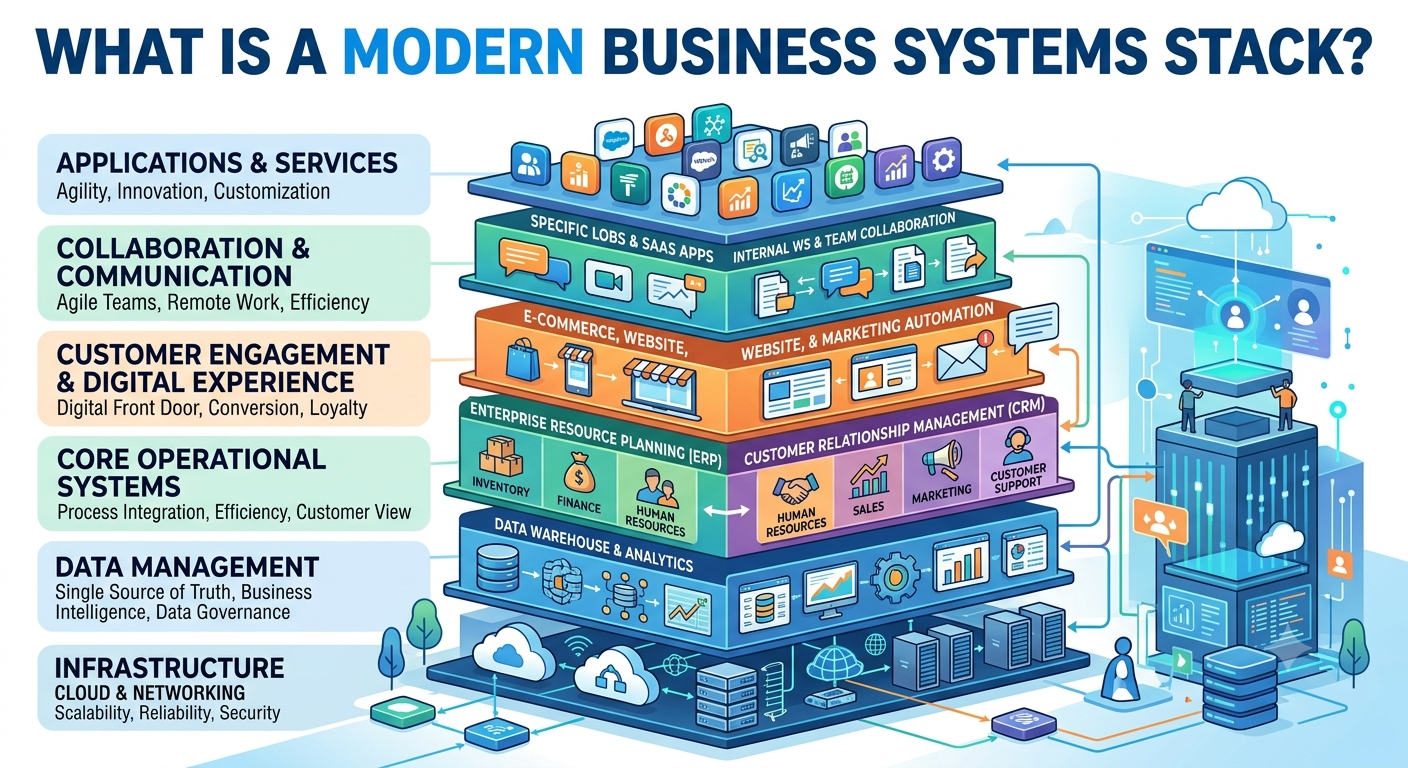
A Modern Business Systems Stack refers to the integrated ecosystem of operational platforms, workflows, communication systems, automation tools, and governance technologies that organizations use to manage day-to-day operations.
Rather than operating as isolated software solutions, these systems function as interconnected infrastructure that supports coordination across the business. The primary objective is to create continuity between departments, workflows, approvals, reporting systems, and operational execution.
Modern organizations increasingly rely on connected operational ecosystems because scalability depends on visibility and synchronization between systems. When systems communicate effectively, organizations gain better operational control, stronger reporting accuracy, and improved workflow consistency.
Without integration, even advanced software environments can create operational confusion rather than efficiency.
Core Components of a Modern Operational Stack
A strong Modern Business Systems Stack typically includes several foundational operational systems that work together to support business scalability.
CRM Systems
Customer relationship management platforms help organizations manage sales pipelines, customer communication, reporting visibility, and account coordination across teams.
Project Management Platforms
Project management systems coordinate operational tasks, timelines, team accountability, and workflow execution. These platforms improve visibility into ongoing initiatives while reducing operational confusion.
Accounting and Financial Systems
Financial platforms provide operational forecasting, reporting accuracy, budgeting oversight, and financial visibility that support strategic decision-making.
HR and Payroll Platforms
HR systems support onboarding, workforce management, compliance, employee operations, and organizational structure management across departments.
Communication Systems
Internal communication platforms improve cross-functional collaboration, responsiveness, and workflow coordination between distributed teams.
Workflow Automation Tools
Automation systems reduce repetitive manual tasks while improving operational consistency and reducing workflow inefficiencies.
Approval and Governance Systems
Governance systems create operational accountability by standardizing approvals, permissions, workflows, and reporting visibility across the organization.
Why Businesses Lose Operational Visibility
One of the most common operational challenges for growing organizations is system fragmentation. As departments independently adopt software tools based on immediate operational needs, organizations gradually lose centralized visibility into workflows, approvals, and execution processes.
This fragmentation often creates:
- duplicate processes
- inconsistent reporting
- approval bottlenecks
- communication delays
- operational inefficiencies
- reduced accountability
- disconnected workflows
Operational visibility becomes increasingly difficult when systems are not designed to communicate with one another. Teams may manage similar processes in separate platforms without synchronization, creating conflicting data and inconsistent execution standards.
Organizations implementing a centralized Modern Business Systems Stack reduce these risks by creating operational alignment across systems and departments.
Operational Coordination vs Automation
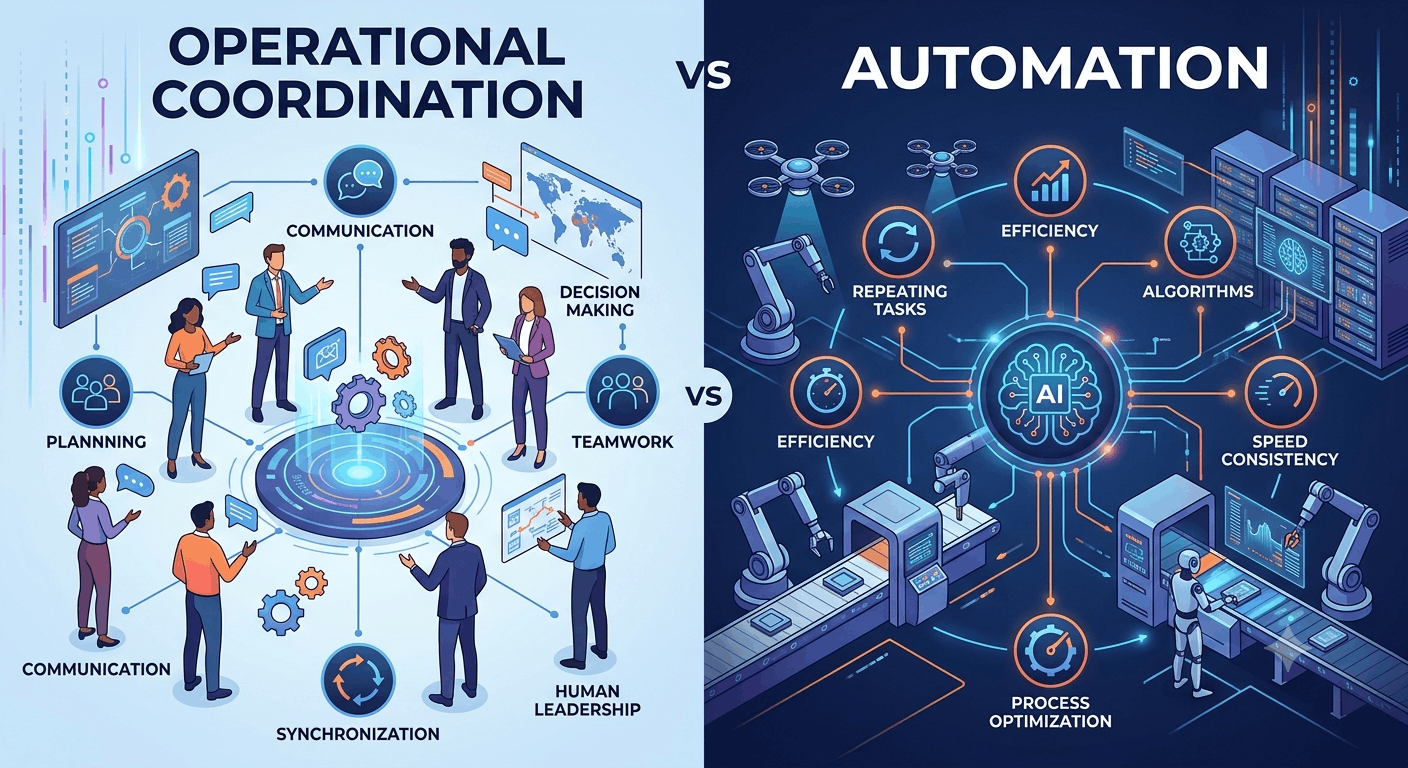
Many organizations incorrectly assume automation alone solves operational inefficiency. However, automation without coordination can actually accelerate fragmented workflows by increasing the speed of disconnected processes.
Operational coordination focuses on how systems, workflows, approvals, reporting structures, and teams interact across the organization. The strongest operational environments combine automation with centralized governance, workflow visibility, and operational standardization.
A well-designed Modern Business Systems Stack ensures that automation supports coordinated execution rather than isolated task completion.
This distinction becomes increasingly important as businesses scale across departments, locations, and distributed operational environments.
The Strategic Value of Operational Infrastructure
Modern operational infrastructure provides organizations with scalable systems capable of supporting growth without introducing operational chaos. Businesses that invest in integrated systems architecture often scale more efficiently because workflows remain coordinated across the organization.
Well-designed system stacks improve:
- organizational consistency
- workflow transparency
- operational reporting
- governance readiness
- team accountability
- decision-making speed
- cross-functional coordination
- infrastructure visibility
Organizations with mature operational infrastructure also gain stronger adaptability. As workflows evolve or new systems are introduced, integrated operational environments allow organizations to maintain consistency while supporting continuous growth.
Conclusion
The Modern Business Systems Stack is becoming a foundational requirement for operational scalability. Organizations that prioritize workflow coordination, operational visibility, governance infrastructure, and systems integration position themselves to scale with greater efficiency and fewer operational bottlenecks.
As operational complexity continues to increase, businesses that intentionally design interconnected operational ecosystems will gain significant advantages in execution, visibility, governance, reporting accuracy, and long-term operational maturity.
Modern business growth no longer depends solely on acquiring more tools.
It depends on building systems that operate together as a unified operational infrastructure.The Modern Business Systems Stack Explained