


Introduction
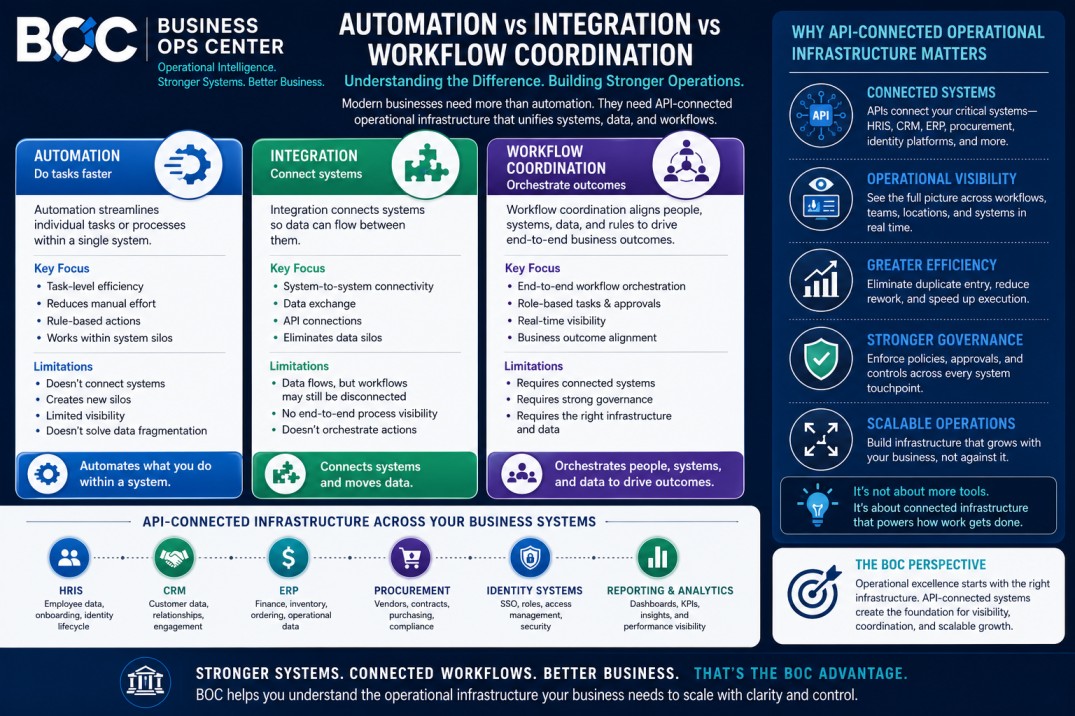
As organizations scale, they invest in automation platforms, systems integrations, and workflow technologies. Many leaders use these terms interchangeably, but each serves a distinct purpose. Understanding the differences is essential for building operational infrastructure that supports visibility, scalability, and execution consistency.
What Is Automation?
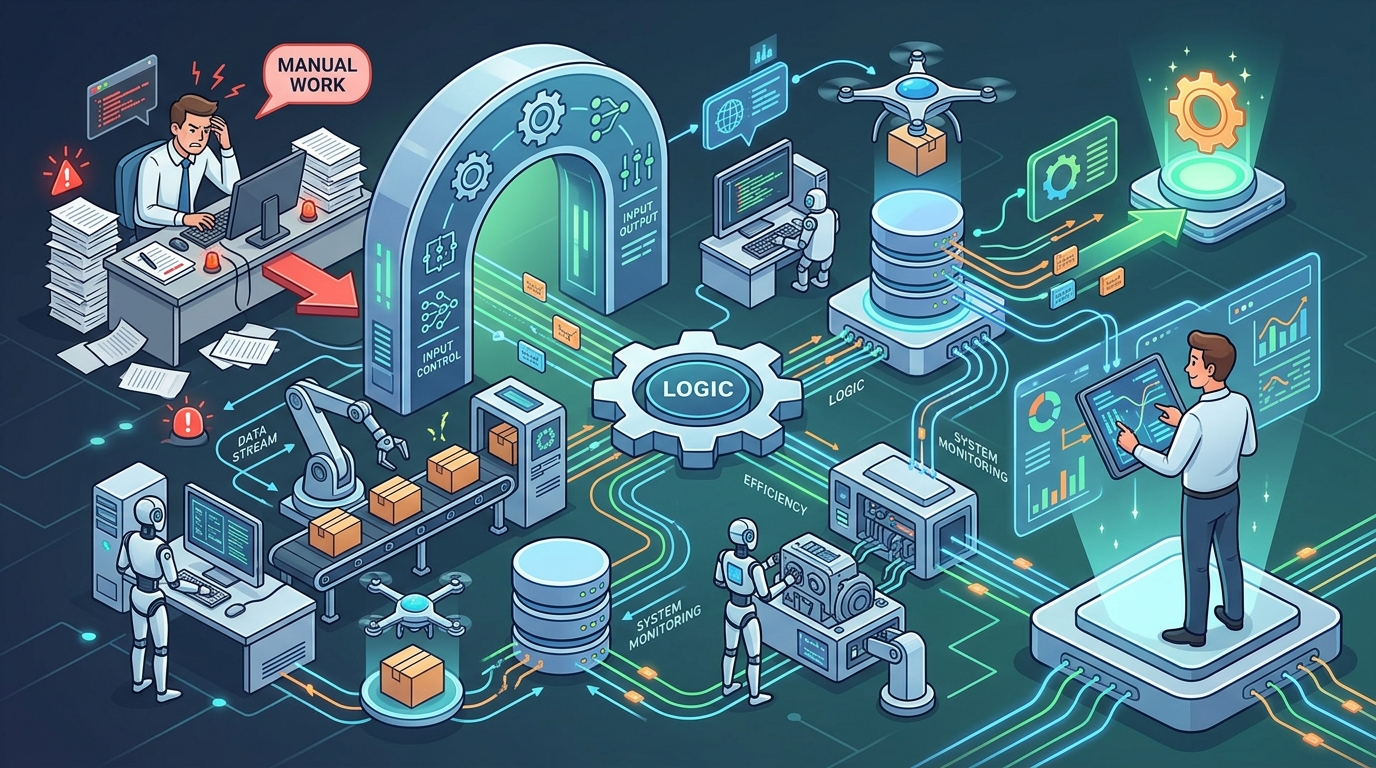
Automation reduces manual effort by allowing systems to perform repetitive activities automatically. Examples include notifications, approvals, reporting, routing, and task creation. Automation improves efficiency but does not automatically connect systems or coordinate workflows.
What Is Integration?
Integration connects systems so information can move between applications. API-connected infrastructure allows HRIS, CRM, ERP, procurement, reporting, and operational systems to exchange data. Integration reduces silos and improves information flow.
What Is Workflow Coordination?
Workflow coordination focuses on how people, systems, approvals, and responsibilities interact. It creates visibility, accountability, governance readiness, and operational consistency across departments and business processes.
Automation Without Integration
Organizations often automate isolated tasks while leaving systems disconnected. This creates fragmented environments where automated activities still depend on manual coordination. Common problems include duplicate work, reporting inconsistencies, and visibility gaps.
Integration Without Coordination
System integration alone does not create operational maturity. Businesses also require workflow ownership, approval structures, visibility frameworks, and standardized execution processes. Connected systems without coordinated workflows can still produce inconsistent outcomes.
A business may connect a CRM to an accounting system, but that does not automatically create a clean handoff between sales, operations, and finance. The business still needs to decide who owns the next step, what information must be reviewed, what approval is required, and how status should be tracked.
Why API-Connected Operational Infrastructure Matters

API-connected operational infrastructure combines automation, integration, and workflow coordination. Benefits include improved operational visibility, better reporting consistency, reduced manual administration, stronger governance readiness, and improved scalability.
HRIS, CRM, ERP, and Procurement Coordination
Modern workflows often span multiple systems. Employee onboarding, procurement requests, approvals, vendor management, and reporting require coordination across platforms. API integration enables these environments to function as a connected operational ecosystem.
How Organizations Can Improve Infrastructure
1. Standardize workflows.
2. Improve systems integration.
3. Evaluate API opportunities.
4. Centralize operational visibility.
5. Reduce manual handoffs.
6. Clarify workflow ownership.
7. Design infrastructure for scalability.
Quick Comparison
Automation: Reduces repeated manual tasks.
Example: Sending a notification when a form is submitted.
Integration: Connects systems so data can move between tools.
Example: Sending customer data from a CRM to an accounting system.
Workflow Coordination: Organizes how people, approvals, systems, and responsibilities work together.
Example: Routing a customer request from sales to operations to finance with clear ownership and visibility.
Conclusion
Automation improves efficiency. Integration connects systems. Workflow coordination creates operational consistency and visibility. Organizations that combine all three build stronger operational infrastructure capable of supporting long-term growth and operational maturity.
Learn how operational infrastructure helps organizations connect workflows, systems, visibility, and execution as they scale.