


Introduction
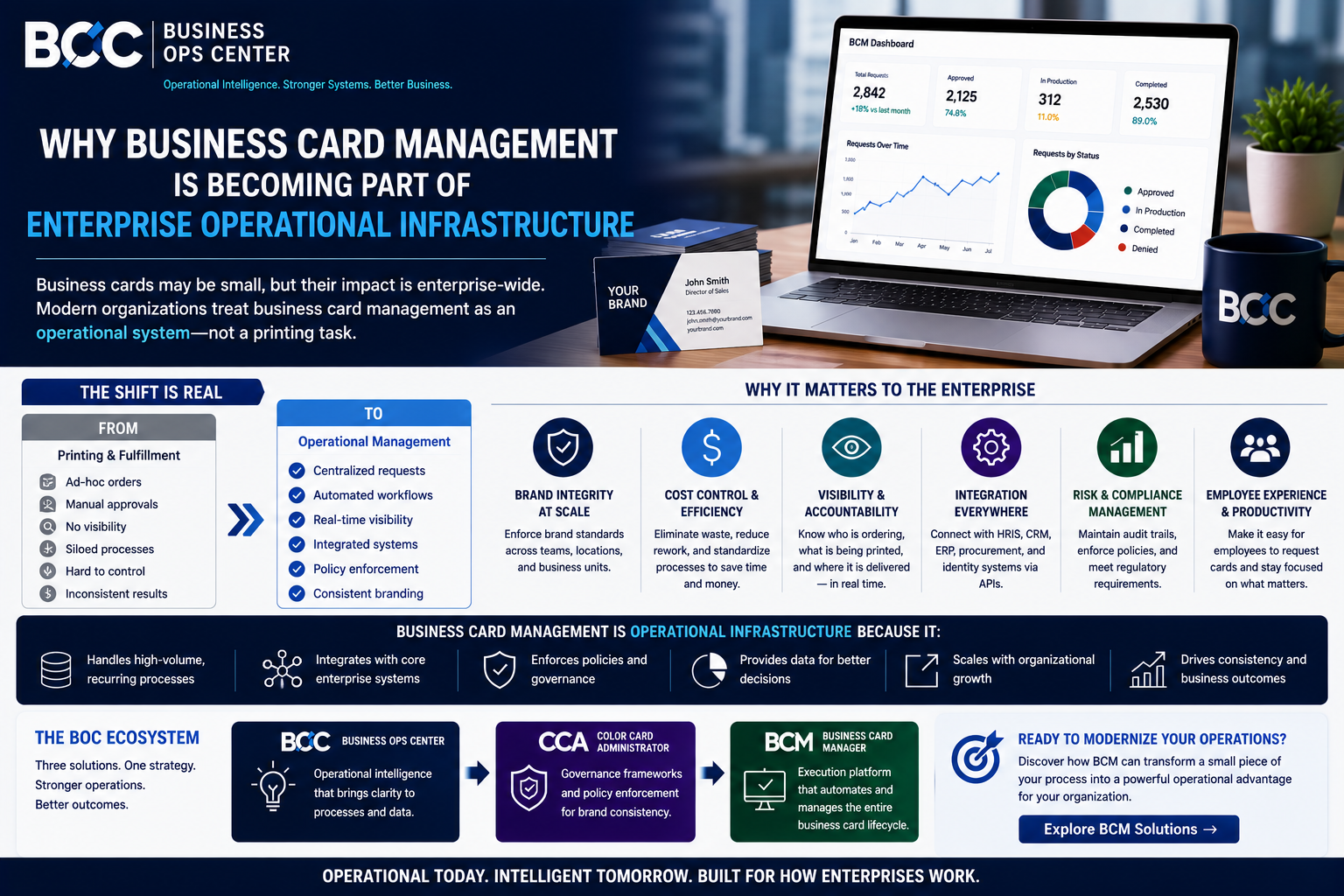
Business card management is undergoing a significant transformation. Historically viewed as a simple ordering and printing activity, it is increasingly becoming a component of enterprise operational infrastructure. Modern organizations operate across multiple locations, departments, systems, and workflows. As a result, even seemingly simple activities such as business card ordering now require governance, visibility, workflow coordination, and accountability.
Enterprise organizations are discovering that business cards touch onboarding, procurement, branding, vendor management, reporting, compliance, and employee lifecycle management. Because of these dependencies, business card management is evolving into a strategic operational process.
The Evolution Of Business Card Management
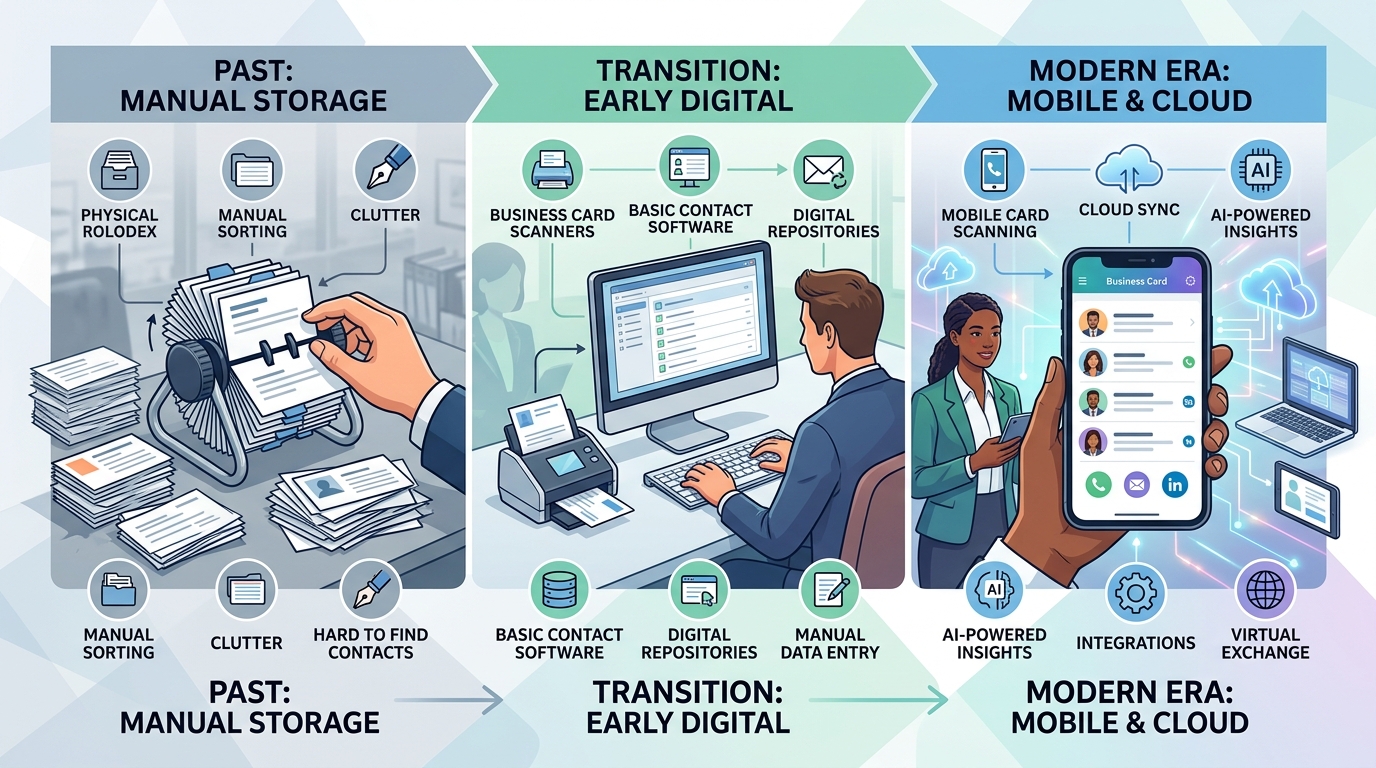
Historically, organizations treated business card ordering as a local purchasing activity. Employees submitted requests, managers approved them, vendors printed cards, and orders were fulfilled.
As organizations expanded, this approach became more difficult to manage. Multiple offices, growing employee populations, acquisitions, remote work models, and compliance requirements created new operational challenges.
Today, business card management must support consistency across distributed environments while maintaining visibility and control.
Why Operational Infrastructure Matters
Operational infrastructure refers to the systems, workflows, technologies, policies, and governance frameworks that support business execution.
Organizations invest heavily in operational infrastructure because it enables scalability, consistency, accountability, and visibility.
Business card management increasingly requires the same characteristics. Requests must move efficiently through workflows. Approvals must be tracked. Brand standards must be enforced. Vendors must be coordinated. Reporting must be available.
Without infrastructure, these activities become difficult to manage at scale.
Workflow Management
One of the primary reasons business card management is becoming operational infrastructure is workflow complexity.
A typical enterprise request may involve:
- Employee submission.
- Manager approval.
- Brand review.
- Procurement validation.
- Vendor fulfillment.
- Delivery confirmation.
- Reporting.
- Each stage requires visibility and accountability.
Modern platforms help organizations manage these workflows through automation, approval routing, and centralized oversight.
Governance And Accountability
Governance is another critical factor.
Organizations need confidence that every card aligns with approved standards. This includes branding, employee information, policy requirements, and operational controls.
Governance frameworks establish responsibilities, approval structures, reporting requirements, and audit trails.
These controls improve accountability and reduce operational risk.
Visibility And Reporting
Enterprise leaders require visibility into operational performance.
Questions often include:
- How many requests are processed each month?
- Which departments generate the highest demand?
- How long do approvals take?
- Which vendors are being used?
- What are spending trends?
Visibility supports better decision-making and operational improvement.
API Connectivity
Modern organizations operate across connected technology ecosystems.
Business card management increasingly interacts with HRIS platforms, ERP systems, procurement tools, reporting environments, and workflow applications.
API integration enables information sharing and workflow synchronization across these environments.
This transforms business card management from an isolated process into a connected operational capability.
Centralization
Centralized management improves consistency and control.
Organizations benefit from:
- Standardized templates.
- Centralized reporting.
- Governance controls.
- Vendor coordination.
- Approval management.
- Operational visibility.
These capabilities become increasingly important as organizations scale.
Enterprise Buyer Considerations
Organizations evaluating solutions should consider:
- Workflow automation.
- Governance capabilities.
- Reporting visibility.
- API integration.
- Scalability.
- Operational accountability.
The objective is not simply printing cards. The objective is to manage an operational process effectively.
Conclusion
Business card management is becoming part of enterprise operational infrastructure because it intersects with governance, workflows, reporting, accountability, procurement, and employee lifecycle management.
Organizations that recognize this shift are better positioned to improve consistency, visibility, scalability, and operational performance.