


Introduction
Modern organizations increasingly operate across distributed environments. Remote teams, hybrid operational structures, multi-location organizations, and globally distributed workflows are becoming standard operational models across industries.
While distributed operational environments provide flexibility and scalability advantages, they also introduce significant coordination challenges. Businesses frequently struggle with communication fragmentation, inconsistent workflows, reduced operational visibility, approval delays, disconnected systems environments, and inconsistent execution across teams.
Operational consistency is becoming one of the most important strategic requirements for distributed organizations. Businesses that maintain coordinated operational infrastructure across distributed teams improve visibility, accountability, workflow reliability, and organizational responsiveness.
Organizations that fail to establish operational consistency often experience fragmented execution environments that reduce scalability and create operational inefficiencies as complexity increases.
Modern operational maturity increasingly depends on the ability to coordinate distributed operational environments through visibility-focused infrastructure, workflow standardization, governance frameworks, and connected systems ecosystems.
What Is Operational Consistency?
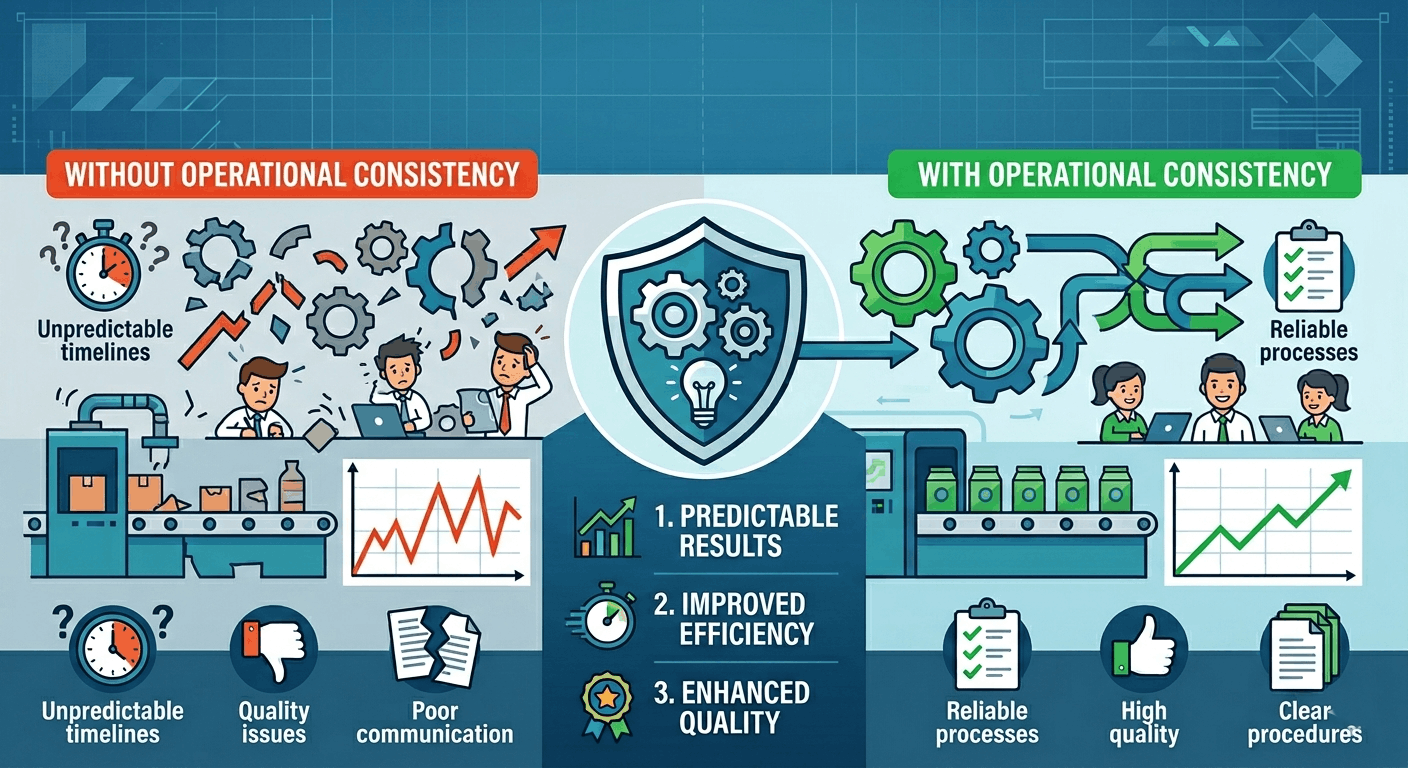
Operational consistency refers to the ability of an organization to maintain predictable workflows, standardized operational procedures, coordinated approvals, accountability structures, and execution reliability across departments, locations, and teams.
Operational consistency creates environments where:
– Workflows remain standardized
– Approvals follow predictable processes
– Communication structures remain coordinated
– Operational responsibilities are clearly defined
– Reporting environments remain centralized
– Cross-functional execution remains aligned
Distributed organizations require operational consistency to ensure workflows remain scalable, manageable, and visible regardless of where teams operate.
Why Distributed Teams Create Operational Complexity
Distributed operational environments naturally increase organizational complexity. Teams operating across multiple locations, time zones, communication systems, and operational structures often experience coordination challenges that become increasingly difficult to manage manually.
Common operational challenges include:
– Communication fragmentation
– Inconsistent workflows
– Delayed approvals
– Reduced operational visibility
– Workflow duplication
– Accountability confusion
– Disconnected reporting environments
– Operational silos
As businesses scale distributed operations, these inefficiencies frequently compound and reduce organizational responsiveness.
Without coordinated infrastructure, distributed operational environments often become difficult to standardize and manage consistently.
Operational Visibility Is Essential for Distributed Operations
Operational visibility is one of the most important components of distributed operational consistency. Leadership teams require visibility across workflows, approvals, systems, operational priorities, and execution status to coordinate distributed environments effectively.
Operational visibility improves distributed coordination by:
– Centralizing operational intelligence
– Improving workflow tracking
– Supporting accountability visibility
– Improving cross-functional communication
– Coordinating operational priorities
– Improving reporting consistency
Organizations operating through disconnected systems environments often struggle to maintain visibility into workflow execution across distributed operational teams.
Workflow Standardization Improves Distributed Coordination
Workflow standardization is foundational for distributed operational consistency. Organizations cannot effectively coordinate distributed teams when workflows vary significantly between departments or locations.
Standardized workflows improve:
– Operational predictability
– Approval consistency
– Workflow accountability
– Cross-functional coordination
– Reporting reliability
– Governance readiness
Businesses that standardize workflows across distributed teams often improve scalability and execution consistency while reducing operational confusion.
The Role of Operational Infrastructure
Operational infrastructure plays a critical role in distributed operational environments. Businesses require connected systems ecosystems that support communication, workflow coordination, operational visibility, and centralized reporting across locations and teams.
Strong operational infrastructure supports:
– Workflow coordination
– Real-time operational visibility
– Approval standardization
– Cross-functional communication
– Operational intelligence
– Governance readiness
Organizations relying heavily on manual coordination or disconnected systems environments often struggle to maintain operational consistency as distributed complexity increases.
Operational Coordination vs Fragmented Communication
Many distributed organizations attempt to solve coordination challenges primarily through increased communication. However, communication alone does not create operational consistency.
Without coordinated operational infrastructure, businesses often experience:
– Excessive meetings
– Communication overload
– Inconsistent approvals
– Operational bottlenecks
– Workflow confusion
– Reduced accountability
Operational coordination focuses on aligning workflows, systems, approvals, operational responsibilities, and visibility structures strategically across distributed environments.
Businesses with strong coordination infrastructure often reduce communication fragmentation while improving operational responsiveness.
How Businesses Can Improve Operational Consistency
Organizations seeking stronger operational consistency across distributed teams should intentionally design operational infrastructure that supports visibility, coordination, and workflow standardization.
Recommended operational strategies include:
1. Standardizing workflows across teams
2. Improving systems integration
3. Centralizing reporting visibility
4. Defining workflow ownership clearly
5. Improving operational accountability
6. Implementing governance-oriented frameworks
7. Reducing disconnected operational silos
8. Aligning operational infrastructure strategically
Businesses that prioritize operational consistency often improve scalability, responsiveness, execution reliability, and organizational maturity.
The Future of Distributed Operational Infrastructure
Business operations will continue becoming increasingly distributed, software-driven, and interconnected. As organizations adopt additional systems and workflows, operational consistency will become even more important.
Future operational environments will increasingly prioritize:
– Workflow visibility
– Operational standardization
– Centralized operational intelligence
– Governance-oriented infrastructure
– Connected systems ecosystems
– Scalable operational coordination
Organizations that invest early in distributed operational infrastructure will likely gain long-term advantages in scalability, accountability, operational maturity, and execution consistency.
Conclusion
Operational consistency is becoming foundational infrastructure for distributed organizations. Standardized workflows and operational visibility drive scalable growth.
As distributed operational complexity continues increasing, organizations that intentionally coordinate operational environments strategically will improve visibility, accountability, governance readiness, and organizational responsiveness.
Modern operational maturity increasingly depends on the ability to maintain consistent execution across distributed teams through connected operational infrastructure and coordinated workflow systems.