


Introduction
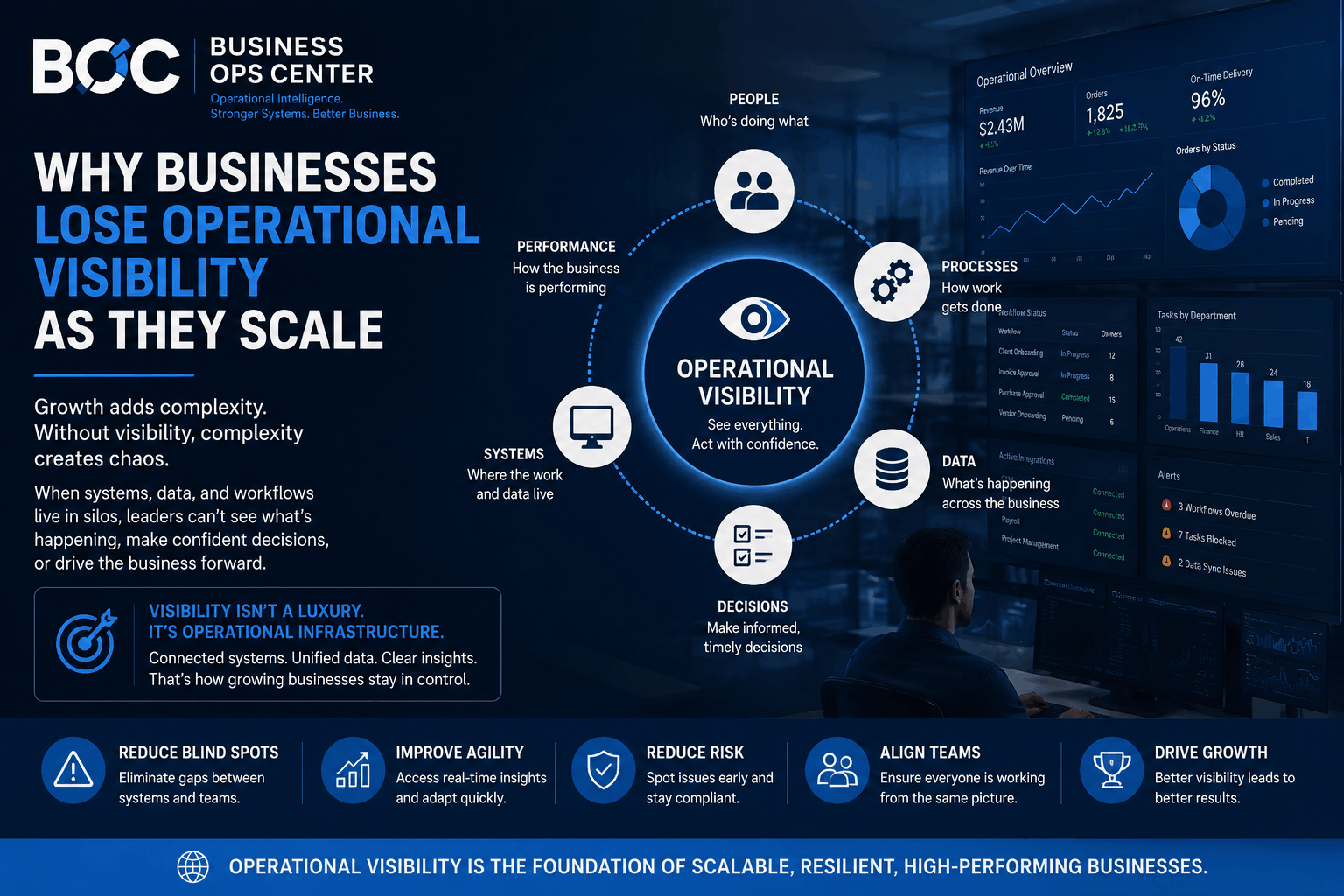
Operational visibility is becoming one of the most important competitive advantages for modern organizations. As companies scale, teams, systems, approvals, and workflows become increasingly complex. Without centralized visibility across operations, organizations often experience slower execution, fragmented communication, inconsistent processes, and reduced organizational accountability.
Many businesses assume growth-related problems originate primarily from staffing shortages or operational inefficiency. In reality, a significant percentage of operational bottlenecks are caused by disconnected systems, fragmented workflows, and a lack of coordinated operational infrastructure.
As organizations expand across departments, locations, and digital systems, maintaining visibility becomes increasingly difficult. Leadership teams often struggle to understand how work moves throughout the organization, where bottlenecks occur, and which systems or workflows are slowing operational execution.
This is why operational visibility is evolving from a reporting function into a foundational business infrastructure requirement.
What Operational Visibility Actually Means
Operational visibility refers to an organization’s ability to clearly understand how workflows, approvals, responsibilities, systems, and operational activities move throughout the business.
High operational visibility allows organizations to:
- Monitor workflow execution
- Identify operational bottlenecks
- Improve accountability
- Standardize operational processes
- Coordinate cross-functional teams
- Improve decision-making speed
- Reduce operational confusion
- Improve reporting accuracy
However, visibility is not limited to dashboards or reporting software alone. True operational visibility requires interconnected systems, workflow consistency, centralized governance structures, and reliable operational coordination.
Organizations with strong visibility infrastructure can quickly identify inefficiencies, improve responsiveness, and make operational decisions using accurate real-time information rather than fragmented reporting.
Why Visibility Breaks Down During Growth
Many growing organizations unintentionally create operational fragmentation as they scale. Departments often adopt software independently based on immediate operational needs, workflows evolve inconsistently between teams, and communication processes become increasingly decentralized.
Over time, this creates disconnected operational environments where leadership teams struggle to understand:
- Workflow status
- Approval ownership
- Team accountability
- Operational priorities
- Process consistency
- System dependencies
- Reporting accuracy
As operational complexity increases, fragmented systems reduce visibility into how workflows actually function across the organization.
This creates organizational blind spots that make coordination more difficult and decision-making slower. Teams may unknowingly duplicate work, approvals may stall without visibility, and operational responsibilities may become unclear.
Without centralized infrastructure, operational growth often introduces more confusion instead of greater efficiency.
The Hidden Cost of Fragmented Systems
Disconnected systems rarely create immediate operational failure. Instead, they gradually introduce inefficiencies that compound over time and become increasingly difficult to manage as organizations scale.
Common operational consequences include:
- Duplicate data entry
- Inconsistent reporting
- Delayed approvals
- Manual coordination work
- Reduced workflow transparency
- Cross-department confusion
- Increased operational risk
- Lower organizational responsiveness
Many organizations compensate for poor visibility by increasing manual oversight. Managers spend more time following up on approvals, coordinating between departments, verifying information, and resolving workflow inconsistencies.
While this may temporarily maintain operational continuity, it reduces scalability and creates additional coordination strain across the organization.
As businesses continue growing, manual oversight becomes increasingly unsustainable.
Operational Coordination Is Becoming Strategic Infrastructure
Operational coordination is no longer a secondary business function. For modern organizations, workflow coordination and operational visibility are becoming foundational infrastructure requirements necessary for scalable growth.
Organizations that prioritize operational coordination create:
- Faster decision cycles
- Improved workflow accountability
- Better cross-functional alignment
- Stronger operational consistency
- Reduced organizational friction
- More scalable business operations
- Improved governance visibility
Modern operational environments require systems capable of supporting visibility across workflows, approvals, execution, reporting, and communication simultaneously.
Organizations that invest in coordinated operational infrastructure are often able to scale more efficiently because teams remain aligned even as complexity increases.
How Businesses Can Improve Operational Visibility

Improving operational visibility requires more than purchasing additional software tools. In many cases, adding disconnected systems without coordination actually increases operational fragmentation.
Organizations must intentionally design operational systems that support coordination, governance, and standardization across the business.
Recommended strategies include:
- Consolidating disconnected workflows where possible
- Standardizing operational processes across departments
- Improving system integration between platforms
- Creating centralized approval structures
- Defining workflow ownership and accountability
- Reducing manual coordination dependencies
- Implementing governance-focused operational frameworks
- Improving reporting synchronization across systems
Businesses that treat operational visibility as infrastructure rather than reporting functionality are often better positioned for long-term scalability and operational maturity.
Conclusion
Operational visibility is becoming increasingly critical as organizations grow more complex. Businesses that fail to coordinate systems, workflows, approvals, and operational processes often experience fragmentation that slows execution, reduces accountability, and limits scalability.
Organizations that invest in interconnected operational infrastructure, workflow coordination, governance systems, and visibility-focused operational frameworks create stronger foundations for growth, consistency, accountability, and long-term operational maturity.
As operational complexity continues to increase, visibility will become one of the defining characteristics of scalable and resilient organizations.