


Introduction
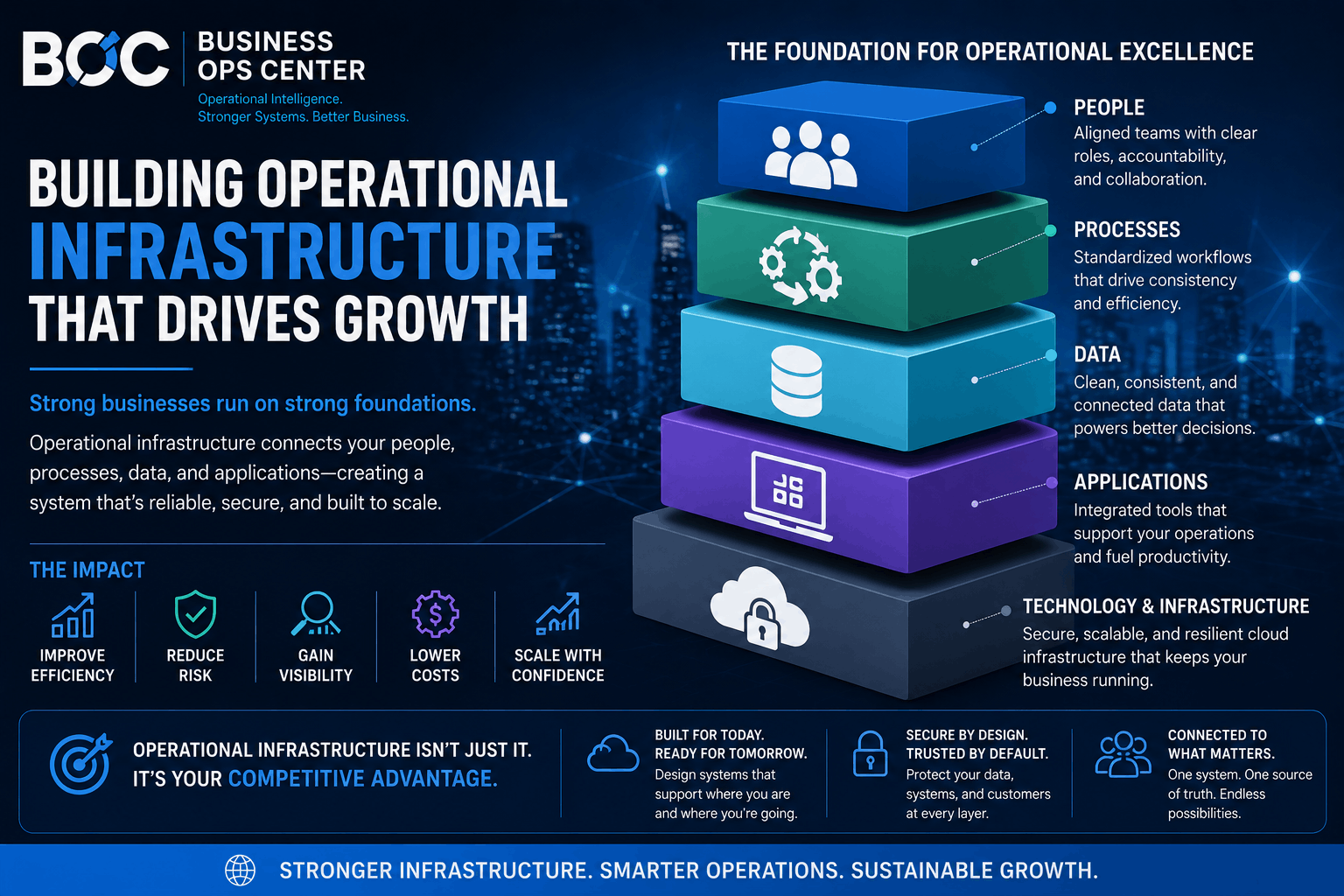
As organizations grow, operational complexity increases rapidly. Teams expand, workflows become more interconnected, software environments become more layered, and operational coordination becomes increasingly difficult to manage manually.
Many businesses focus heavily on revenue growth while underestimating the importance of operational infrastructure. However, sustainable organizational growth depends not only on sales performance or staffing levels, but also on the systems, workflows, governance structures, and operational coordination mechanisms that support execution across the business.
Operational infrastructure is becoming one of the most important strategic assets for modern organizations. Businesses that intentionally build scalable operational environments often improve visibility, workflow consistency, accountability, and organizational responsiveness. Companies that fail to prioritize operational infrastructure frequently experience fragmentation, execution bottlenecks, inconsistent workflows, and operational blind spots as complexity increases.
Modern operational infrastructure is no longer optional. It is becoming foundational for businesses seeking scalable and resilient growth.
What Is Operational Infrastructure?
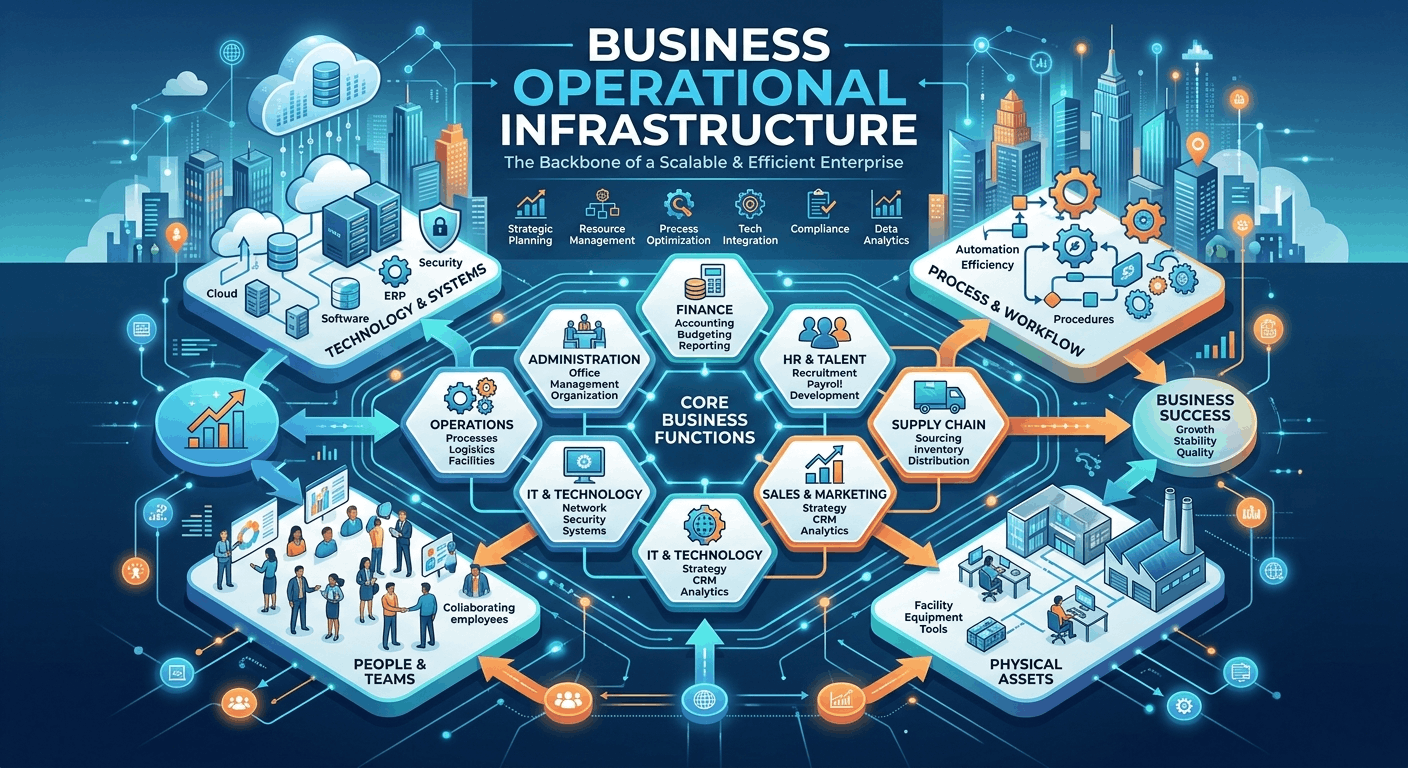
Operational infrastructure refers to the systems, workflows, processes, governance structures, communication environments, and operational technologies that support how work moves throughout an organization.
Operational infrastructure includes:
– Workflow coordination systems
– Approval structures
– Operational reporting environments
– Communication platforms
– Project management systems
– CRM and customer management systems
– HR and payroll infrastructure
– Operational governance frameworks
– Visibility and accountability systems
Strong operational infrastructure creates consistency across teams while improving visibility into operational execution, approvals, responsibilities, and workflow performance.
Rather than operating as isolated tools, operational systems should function as a coordinated infrastructure that supports organizational scalability and operational maturity.
Why Growing Companies Struggle Operationally
Many organizations begin with relatively simple operational structures. Early-stage businesses often rely heavily on direct communication, informal approvals, and manual coordination.
As organizations grow, however, operational complexity increases significantly. Additional departments, workflows, software tools, and communication channels create coordination challenges that become increasingly difficult to manage without centralized operational infrastructure.
Common operational challenges include:
– Fragmented workflows
– Communication silos
– Delayed approvals
– Inconsistent operational processes
– Limited visibility across departments
– Duplicate work
– Reporting inconsistencies
– Reduced accountability
Without intentional operational infrastructure planning, organizations often compensate by increasing manual oversight rather than improving systemic coordination.
The Strategic Value of Operational Infrastructure
Operational infrastructure creates the foundation for scalable execution. Businesses that maintain connected operational systems environments gain stronger visibility into workflows, approvals, and organizational responsibilities.
The strategic benefits of a strong operational infrastructure include:
– Improved workflow coordination
– Faster decision-making
– Increased operational visibility
– Better cross-functional collaboration
– Improved accountability
– Reduced operational bottlenecks
– More consistent execution
– Stronger governance readiness
Organizations with mature operational infrastructure often scale more efficiently because systems support coordination rather than relying heavily on manual intervention.
Operational Visibility as Competitive Advantage
Operational visibility is becoming increasingly important in modern business environments. Leadership teams require visibility across workflows, operational status, approvals, reporting environments, and organizational priorities to make informed decisions.
Businesses with strong operational visibility can:
– Identify bottlenecks more quickly
– Improve execution consistency
– Reduce workflow delays
– Coordinate distributed teams effectively
– Improve reporting accuracy
– Respond faster to operational challenges
Disconnected systems environments often reduce visibility by isolating information across departments and workflows. As operational complexity increases, visibility gaps become increasingly expensive.
Workflow Coordination vs Simple Automation
Many businesses attempt to solve operational inefficiency by automating isolated tasks. While automation improves productivity in some areas, automation without workflow coordination often increases fragmentation.
Operational coordination focuses on how workflows, systems, teams, approvals, and operational responsibilities interact across the organization.
The strongest operational environments combine:
– Standardized workflows
– Operational visibility
– Governance frameworks
– Coordinated approvals
– Connected reporting systems
– Automation aligned with operational consistency
Businesses that prioritize operational coordination create environments that support scalable execution rather than fragmented automation.
How Businesses Can Improve Operational Infrastructure
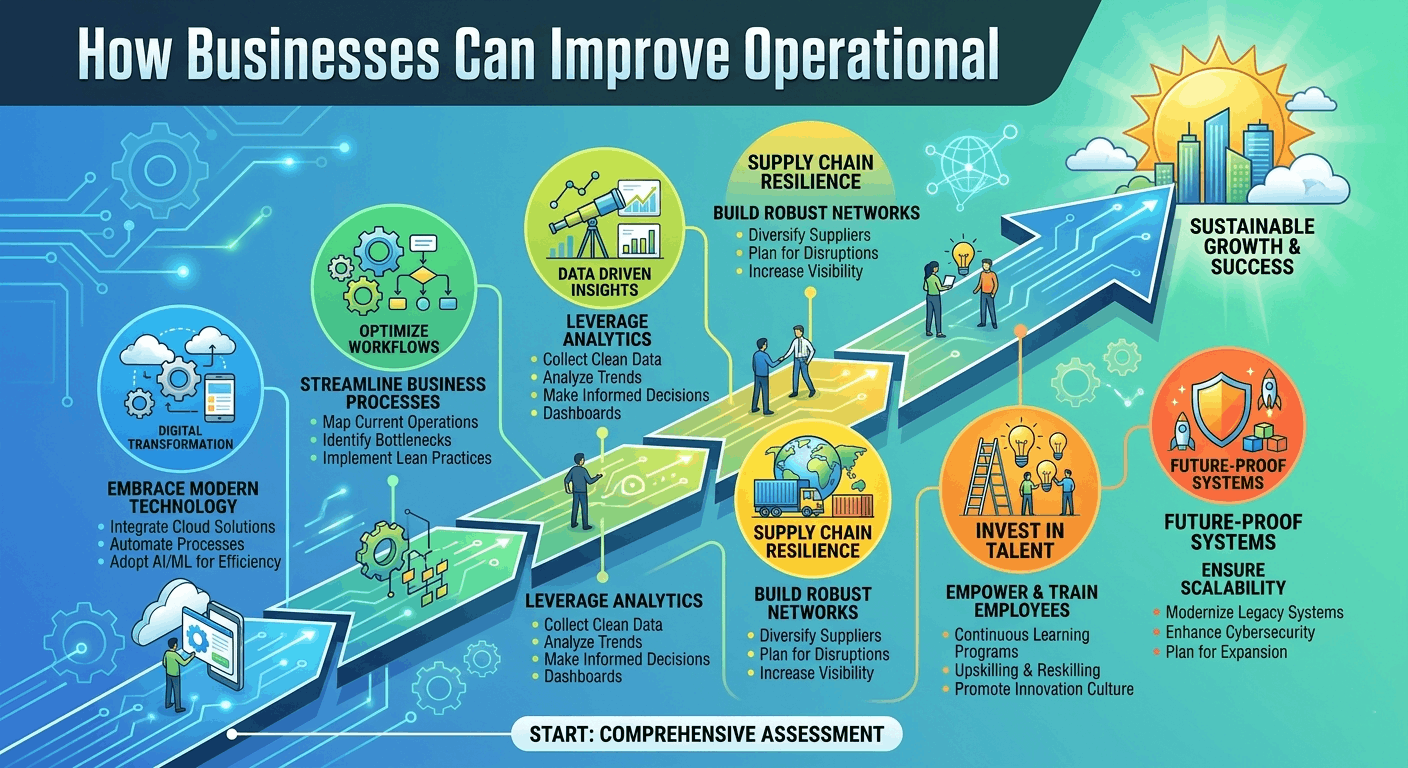
Organizations seeking scalable operational environments should intentionally design infrastructure that supports coordination, visibility, and accountability.
Recommended operational strategies include:
1. Standardizing workflows across teams
2. Improving integration between systems
3. Centralizing operational reporting visibility
4. Reducing manual coordination dependencies
5. Implementing governance-oriented operational frameworks
6. Defining workflow ownership clearly
7. Evaluating software decisions strategically
8. Improving cross-functional operational communication
Businesses that treat operational infrastructure as a strategic priority often improve organizational responsiveness, scalability, and operational consistency.
The Future of Operational Infrastructure
Business operations are becoming increasingly software-driven, distributed, and interconnected. As organizations continue adopting additional platforms and workflows, operational coordination will become even more critical.
Future operational environments will increasingly prioritize:
– Workflow visibility
– Integrated systems ecosystems
– Governance-oriented operational frameworks
– Cross-functional coordination
– Centralized operational intelligence
– Scalable operational infrastructure
Organizations that invest early in operational infrastructure will likely gain long-term advantages in execution consistency, scalability, governance readiness, and operational agility.
Conclusion
Operational infrastructure is becoming one of the most important foundations for scalable organizational growth. Businesses that prioritize workflow coordination, operational visibility, governance readiness, and connected systems ecosystems position themselves for stronger execution and long-term operational maturity.
As operational complexity continues increasing across industries, organizations that intentionally build coordinated operational infrastructure will gain significant advantages in visibility, accountability, scalability, and organizational responsiveness.
Modern business growth is no longer driven solely by expansion. It is increasingly driven by operational coordination and infrastructure maturity.