


Introduction
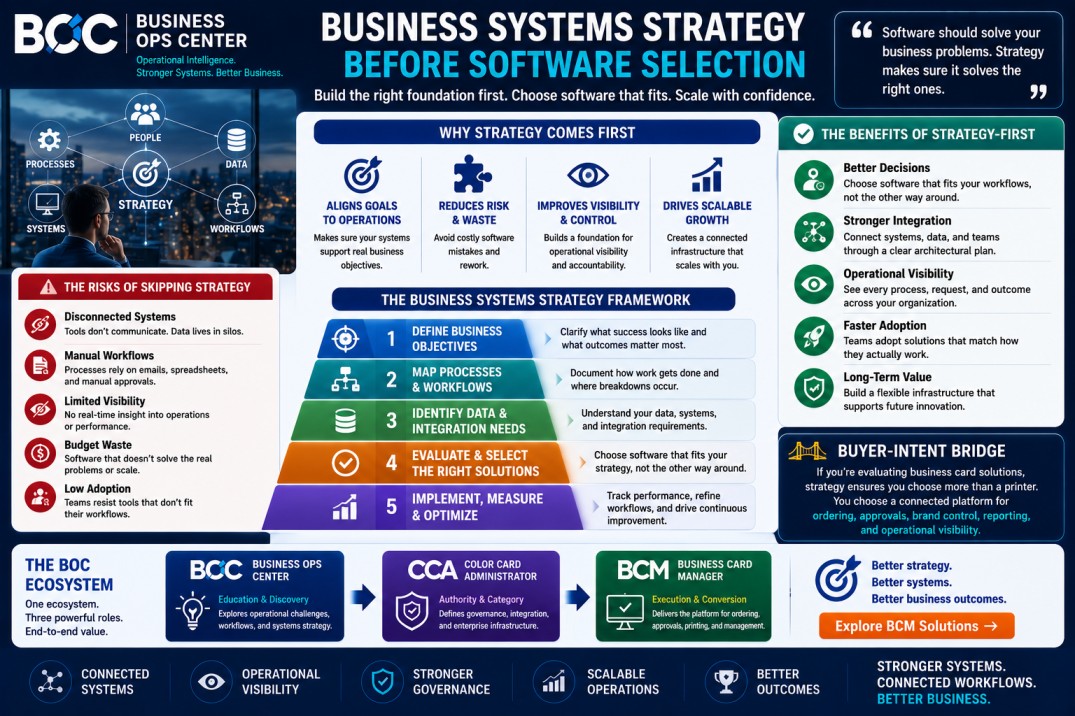
Many organizations approach technology decisions by evaluating software products first and operational requirements second. This often leads to disconnected systems, duplicate capabilities, workflow fragmentation, and limited operational visibility.
The most successful organizations reverse the process. They establish a business systems strategy before selecting software. By defining operational goals, workflow requirements, governance needs, reporting expectations, and integration priorities first, companies are better positioned to build scalable operational infrastructure.
Why Software Selection Often Fails

Software projects frequently underperform because organizations focus on features instead of operational outcomes.
Common mistakes include:
- Department-driven software purchases
- Limited integration planning
- Unclear workflow ownership
- Inconsistent reporting requirements
- No long-term infrastructure roadmap
These decisions may solve immediate problems while creating larger operational challenges later.
What Is Business Systems Strategy?
Business systems strategy is the process of defining how technology, workflows, data, approvals, reporting, and operational responsibilities should work together across the organization.
A strong strategy considers:
- Operational visibility
- Workflow coordination
- Governance requirements
- Integration architecture
- Scalability needs
- Reporting consistency
The objective is not simply to buy software. The objective is to create connected operational infrastructure.
Why Operational Infrastructure Matters
As organizations grow, workflows increasingly span multiple systems. HRIS platforms, CRM environments, ERP systems, procurement applications, communication tools, and workflow platforms all contribute to operational execution.
Without a coordinated strategy, these systems can become disconnected, creating:
- Information silos
- Approval delays
- Duplicate work
- Reporting inconsistencies
- Reduced accountability
Operational infrastructure provides the framework that enables systems to support business objectives effectively.
The Role of API Integration
Modern business systems depend on connectivity. API integration allows applications to exchange information, synchronize workflows, and improve operational visibility.
Organizations should evaluate software based not only on functionality but also on:
- Integration capabilities
- API maturity
- Workflow support
- Reporting accessibility
- Ecosystem compatibility
API-connected infrastructure helps reduce fragmentation while improving operational coordination.
Workflow Visibility Before Technology Selection
One of the most overlooked aspects of software selection is workflow visibility.
Before evaluating platforms, organizations should understand:
- How work moves through the business
- Who owns approvals
- Which systems participate in workflows
- Where bottlenecks occur
- What reporting is required
Software should support these requirements rather than define them.
Buyer-Intent Bridge: Questions to Ask Before Buying Software
Before selecting new business systems, organizations should ask:
- Does this support our operational strategy?
- Can it integrate with existing systems?
- Will it improve workflow visibility?
- Does it support governance requirements?
- Can it scale with future growth?
- Will it reduce operational complexity?
These questions help organizations move beyond feature comparisons and focus on long-term business value.
Business Card Management as an Example
Business card management illustrates the importance of strategy-first thinking. Organizations often begin with a simple print ordering solution. As complexity grows, they discover the need for approval workflows, governance controls, reporting visibility, HRIS integration, and centralized management.
A business systems strategy helps identify these requirements before selecting a platform, resulting in stronger long-term outcomes.
Conclusion
Software selection should be guided by business systems strategy, not the other way around. Organizations that define operational requirements first are more likely to build connected, scalable, and visible operational environments.
As technology ecosystems become increasingly complex, success depends less on individual software products and more on how effectively systems work together to support workflows, governance, and operational execution.