


Introduction
Modern businesses depend heavily on software systems, operational workflows, and digital infrastructure to manage growth.
As organizations scale, teams often adopt new tools rapidly to solve immediate operational challenges. Sales departments implement CRM platforms, finance teams introduce accounting software, HR departments deploy workforce systems, and operations teams adopt project management platforms.
Although each tool may improve efficiency within a specific department, problems begin to emerge when systems are not designed to work together as part of a larger operational ecosystem. Over time, businesses accumulate disconnected workflows, fragmented data environments, inconsistent approvals, and operational silos that reduce visibility and increase organizational complexity.
The hidden cost of disconnected business systems is not always immediately visible. In many organizations, fragmentation develops gradually. Teams begin relying on manual coordination, duplicate data entry, spreadsheet-based oversight, and disconnected communication channels to compensate for operational gaps. Eventually, these inefficiencies create operational bottlenecks that slow execution, reduce accountability, and limit scalability.
Modern operational infrastructure requires more than simply purchasing software. It requires strategic coordination between systems, workflows, governance structures, approvals, and operational visibility across the organization.
What Are Disconnected Business Systems?
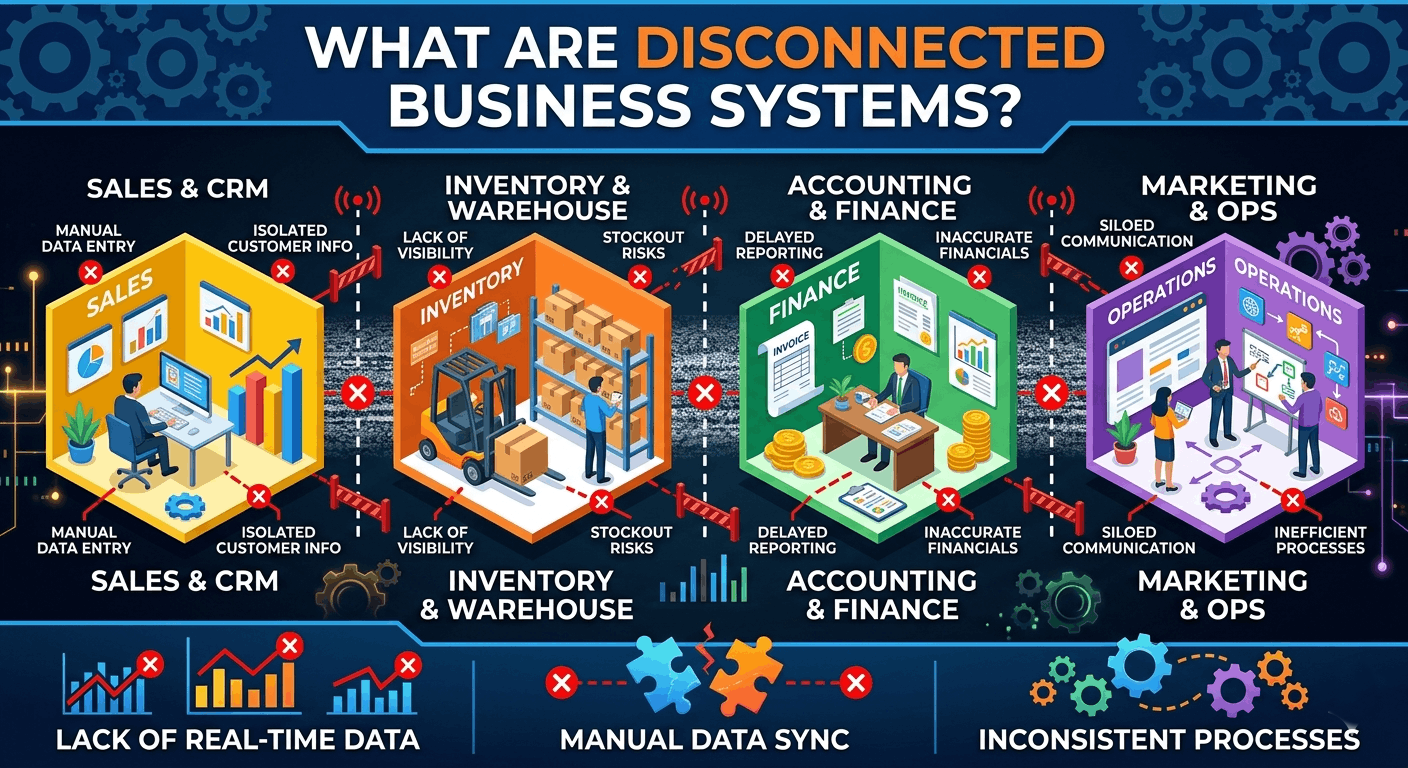
Disconnected business systems are operational tools and workflows that function independently without centralized coordination, integration, or visibility across the organization.
In fragmented operational environments, departments often manage workflows using isolated systems that do not communicate effectively with one another. This creates situations where leadership teams struggle to maintain visibility into operational status, workflow ownership, approvals, reporting, and execution priorities.
Examples of disconnected systems include:
– CRM platforms disconnected from customer support systems
– Accounting software isolated from procurement workflows
– HR systems disconnected from operational onboarding processes
– Approval workflows managed manually through email
– Project management systems operating independently from reporting environments
Although individual tools may appear productive at the departmental level, disconnected systems often reduce efficiency across the organization as a whole.
Why Businesses Become Fragmented as They Scale
Operational fragmentation increases naturally as organizations grow. Small businesses often begin with relatively simple workflows and limited operational complexity. As growth accelerates, however, businesses adopt additional software platforms to manage increasing operational demands.
Without centralized operational planning, organizations often experience:
– Multiple departments purchasing overlapping software tools
– Inconsistent workflow structures between teams
– Duplicate operational processes
– Communication fragmentation
– Isolated reporting environments
– Limited workflow accountability
– Reduced operational transparency
Rapid growth frequently amplifies these challenges. Businesses focused heavily on expansion may prioritize speed over infrastructure consistency, creating operational environments that become increasingly difficult to coordinate over time.
The larger the organization becomes, the more damaging disconnected systems can become to execution efficiency and organizational visibility.
The Hidden Operational Costs of Fragmentation
Disconnected business systems create operational costs that extend well beyond software expenses. Fragmentation impacts workflow coordination, reporting accuracy, communication efficiency, accountability, governance readiness, and organizational responsiveness.
One major consequence is reduced operational visibility. Leadership teams often struggle to understand how workflows move across departments when systems are disconnected. This creates blind spots that make operational decision-making slower and less reliable.
Another high cost is workflow inefficiency. Employees frequently spend valuable time manually updating systems, transferring information between departments, and resolving inconsistencies created by fragmented processes.
Common operational costs include:
– Duplicate data entry
– Delayed approvals
– Communication breakdowns
– Reporting inconsistencies
– Increased coordination overhead
– Reduced execution speed
– Manual workflow tracking
– Higher operational risk
Over time, these inefficiencies compound and reduce organizational agility. Businesses become increasingly dependent on manual oversight rather than scalable operational infrastructure.
Why Operational Visibility Matters
Operational visibility is becoming one of the most important competitive advantages for modern organizations. Businesses that maintain centralized visibility across systems, workflows, approvals, and operational responsibilities can execute more consistently and scale more effectively.
Visibility allows organizations to:
– Monitor workflow performance
– Identify operational bottlenecks
– Improve accountability
– Standardize processes
– Improve reporting accuracy
– Increase decision-making speed
– Coordinate distributed teams
Disconnected systems reduce visibility by isolating operational information across multiple environments. As a result, leadership teams often rely on incomplete reporting or manual coordination to understand operational status.
Organizations that prioritize visibility-focused infrastructure gain stronger operational control and improved organizational responsiveness.
The Difference Between Automation and Coordination
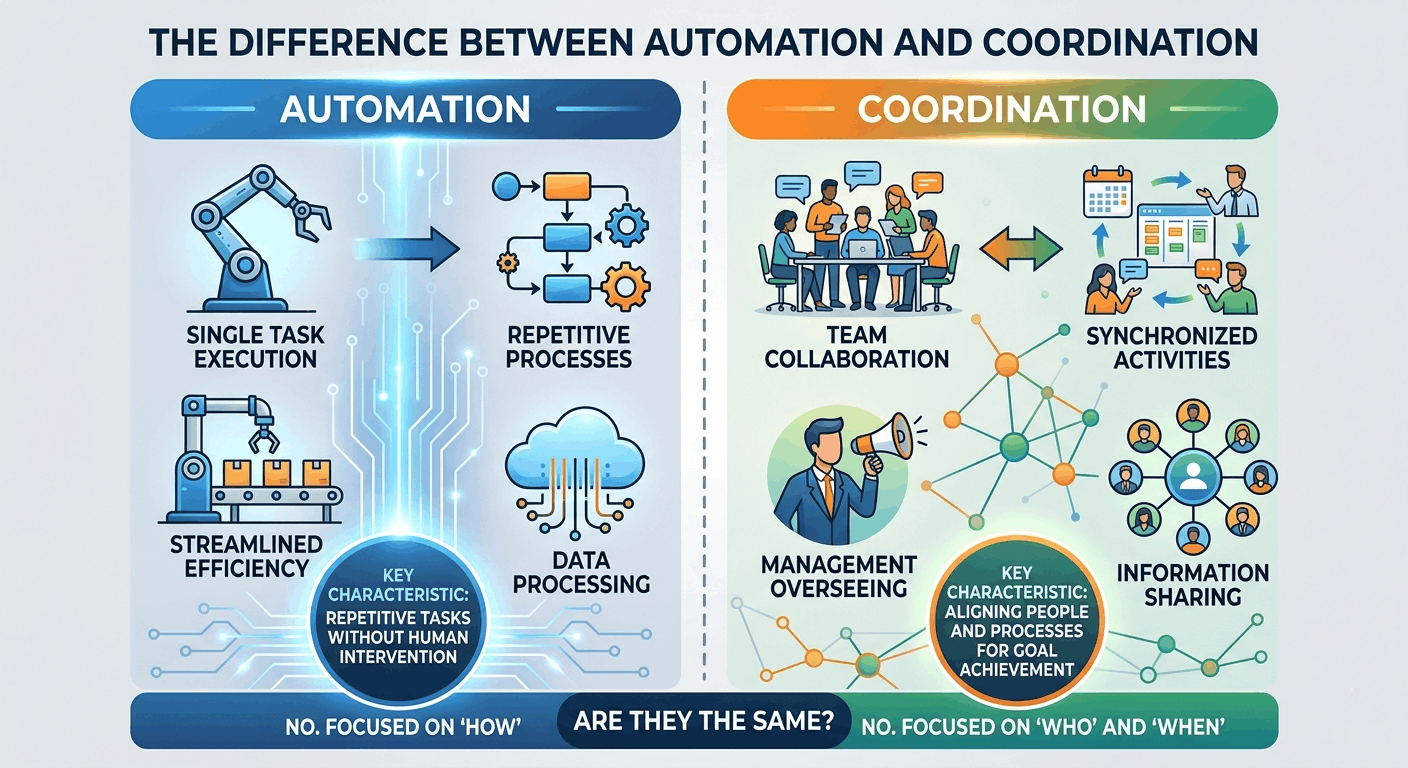
Many businesses mistakenly assume automation alone solves operational inefficiency. While automation can improve productivity, automation without coordination often increases complexity rather than reducing it.
For example, businesses may automate isolated workflows while failing to create visibility into how those workflows connect across departments. This can create fragmented automation environments that remain difficult to manage.
Operational coordination focuses on how systems, workflows, approvals, and operational responsibilities interact across the organization. The strongest operational environments combine automation with:
– Standardized workflows
– Centralized operational visibility
– Governance structures
– Cross-functional coordination
– Integrated reporting systems
Without coordination, automation may accelerate fragmented processes rather than improving operational consistency.
Building Connected Operational Infrastructure
Reducing fragmentation requires organizations to intentionally design operational infrastructure that supports scalability, visibility, and workflow coordination.
Key operational strategies include:
1. Standardizing workflows across departments
2. Improving integration between operational systems
3. Centralizing approvals and reporting visibility
4. Reducing reliance on manual coordination
5. Establishing governance-oriented operational frameworks
6. Evaluating software decisions strategically
7. Creating operational accountability structures
Businesses that treat operational infrastructure as a strategic priority often improve efficiency, responsiveness, scalability, and organizational consistency.
Connected operational systems create environments where workflows move more efficiently, decision-making improves, and leadership teams gain stronger visibility into operational performance.
Conclusion
Disconnected business systems create hidden operational costs that become increasingly difficult to manage as organizations scale. Fragmented workflows, isolated reporting environments, inconsistent approvals, and disconnected communication systems reduce operational visibility and create inefficiencies across the business.
Modern organizations require a coordinated operational infrastructure that supports workflow visibility, governance, accountability, and scalable execution. Businesses that prioritize connected systems ecosystems position themselves for stronger operational maturity and long-term scalability.
As operational complexity continues to increase, organizations that intentionally design integrated business systems will gain significant advantages in execution speed, operational visibility, governance readiness, and organizational efficiency.