
Introduction
One of the most common characteristics of successful organizations is not simply innovation, technology adoption, or market position. It is consistency. The ability to execute processes repeatedly, predictably, and efficiently is often what separates scalable organizations from those that struggle with growth.
As companies expand, operational complexity increases. New employees join the organization. Additional departments emerge. More locations are opened. Vendor relationships multiply. Approval requirements become more sophisticated. Reporting expectations grow. Without a structured operational approach, this complexity can quickly create inefficiencies that slow growth and reduce visibility.
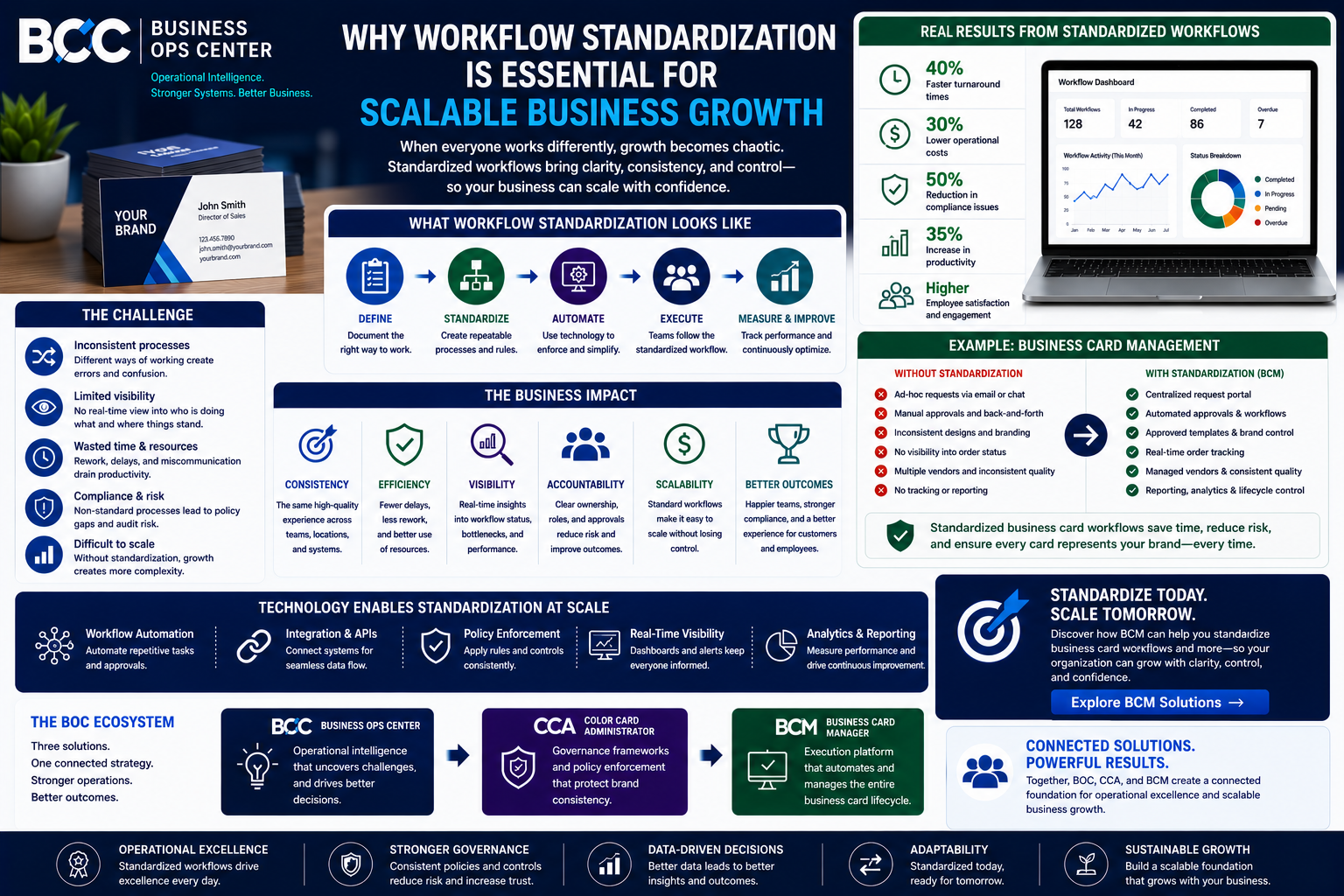
This is why workflow standardization is becoming a strategic priority for organizations of all sizes. Standardized workflows provide the foundation for operational consistency, accountability, governance, visibility, and scalability.
What Is Workflow Standardization?
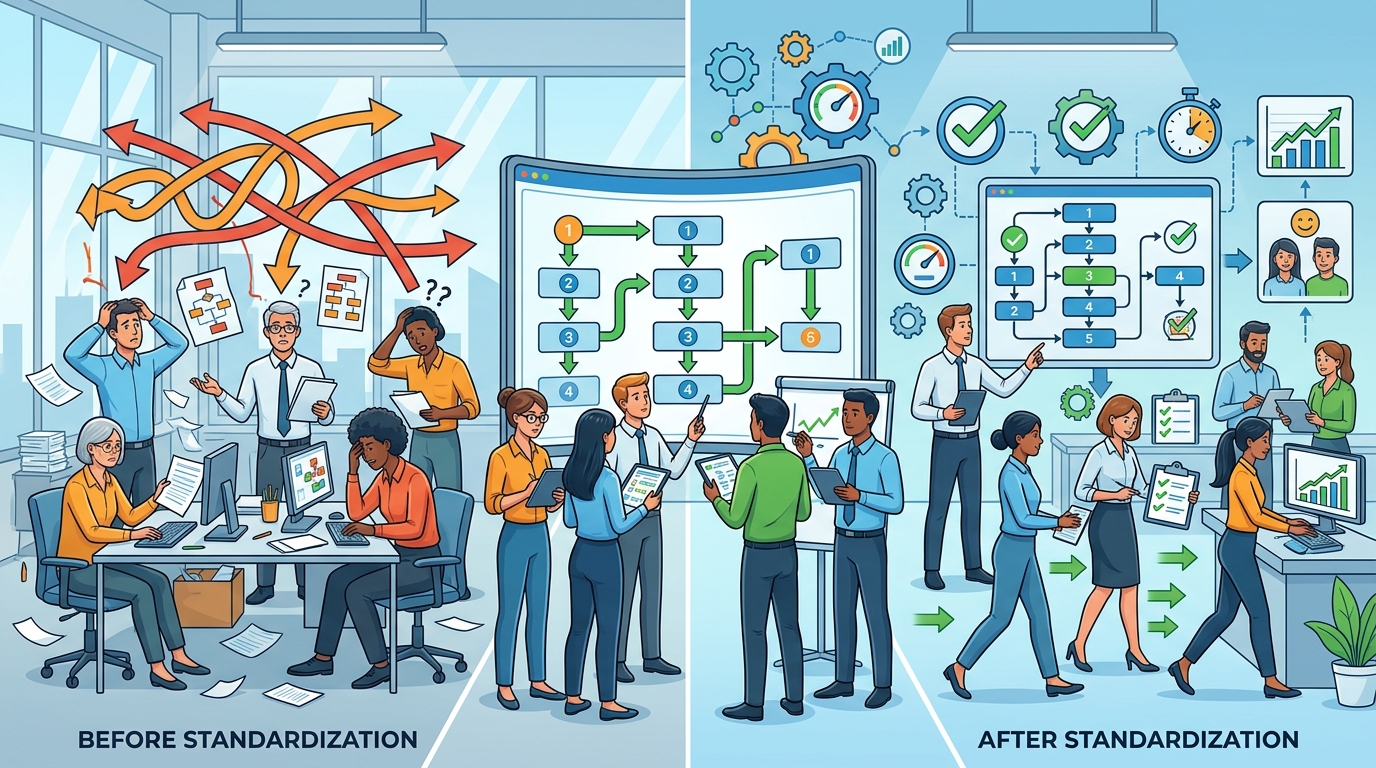
Workflow standardization is the practice of creating consistent, repeatable processes for operational activities. Rather than allowing each team, department, or employee to perform tasks differently, organizations establish defined procedures that guide execution.
Standardization does not eliminate flexibility. Instead, it creates a common framework that reduces ambiguity and improves coordination.
Examples include procurement approvals, employee onboarding, business card management, vendor management, reporting procedures, compliance reviews, and customer service processes.
Why Growth Creates Process Challenges
In smaller organizations, workflows are often informal. Employees communicate directly. Decisions happen quickly. Processes evolve naturally based on immediate needs.
As organizations grow, informal workflows become difficult to manage. Different departments create their own methods. Employees rely on personal knowledge rather than documented procedures. Reporting becomes inconsistent.
The result is operational fragmentation.
Organizations Frequently Encounter:
- Duplicate effort
- Approval delays
- Inconsistent execution
- Limited visibility
- Reporting challenges
- Governance gaps
Workflow standardization helps eliminate these issues by creating a shared operational model.
The Connection Between Standardization and Scalability
Scalability requires predictability.
Organizations cannot scale effectively if every process depends on tribal knowledge or individual interpretation. New employees require training. Managers need visibility. Leadership teams need confidence that activities are being executed consistently.
Standardized workflows create repeatable processes that support growth. They make it easier to onboard employees, manage resources, enforce policies, and maintain quality standards.
As a result, organizations can expand operations without creating unnecessary complexity.
Visibility and Operational Intelligence
Workflow visibility is one of the most important benefits of standardization.
When processes are standardized, organizations can measure performance consistently. Leadership teams can identify bottlenecks, track approvals, analyze trends, and improve decision-making.
Without standardization, visibility is fragmented because activities are performed differently across teams and departments.
Operational intelligence depends on consistent data and repeatable workflows. Standardization creates the foundation for both.
Why Accountability Improves
Accountability becomes easier when responsibilities are clearly defined.
Standardized Workflows Establish:
- Ownership
- Approval paths
- Escalation procedures
- Reporting requirements
- Performance expectations
Employees understand what is required. Managers understand how to evaluate progress. Leadership gains confidence that processes are being followed consistently.
This reduces ambiguity while improving operational discipline.
The Role of Governance
Governance and standardization are closely connected.
Organizations need confidence that policies are being applied consistently. Whether the process involves procurement, employee onboarding, vendor management, or business card ordering, governance depends on repeatable workflows.
Standardization creates a mechanism for enforcing controls while reducing operational risk.
It also improves auditability by ensuring that activities are documented and measurable.
Workflow Standardization and Technology
Technology plays an increasingly important role in workflow standardization.
Workflow platforms, approval systems, reporting tools, and API-connected applications help organizations automate and manage processes consistently.
Technology Enables Organizations To:
- Reduce manual work
- Improve visibility
- Automate approvals
- Centralize reporting
- Strengthen governance
The combination of standardization and technology creates a powerful operational foundation.
A Practical Example: Business Card Management
Business card management provides a practical example of workflow standardization in action.
Many organizations initially manage business card requests through email, spreadsheets, or informal communication. Over time, these approaches create inconsistencies in approvals, branding, reporting, and vendor management.
A Standardized Business Card Workflow Defines:
- Who submits requests
- Who approves requests
- Which templates are authorized
- How vendors are selected
- How reporting is maintained
This improves visibility, accountability, governance, and operational efficiency.
Common Barriers to Standardization
Organizations often resist standardization because they fear losing flexibility. Others assume that documenting processes will slow innovation.
In reality, the opposite is often true.
Standardization eliminates repetitive decision-making and reduces confusion. Employees spend less time figuring out how to complete tasks and more time focusing on value-added work.
The goal is not rigid control. The goal is operational clarity.
Building a Standardization Strategy
Organizations seeking to improve workflow standardization should begin by identifying high-impact operational processes.
Areas to Evaluate Include:
- Employee onboarding
- Procurement
- Vendor management
- Business card management
- Approval workflows
- Reporting processes
The next step is documenting workflows, defining ownership, implementing visibility mechanisms, and evaluating opportunities for automation.
Over time, organizations can expand standardization efforts across additional functions.
The Future of Operational Excellence
As organizations become more complex, workflow standardization will become increasingly important.
Leaders Will Continue Prioritizing:
- Operational visibility
- Governance
- Accountability
- Automation
- Scalability
Organizations that establish standardized workflows today will position themselves better to support growth tomorrow.
Conclusion
Workflow standardization is not simply a process improvement initiative. It is a foundational component of operational infrastructure.
Organizations that standardize workflows improve consistency, strengthen governance, increase visibility, and support scalable growth. As operational complexity continues to increase, standardized workflows will become an essential requirement for sustainable business performance.