
Introduction
As organizations grow, decision-making becomes increasingly distributed across departments, teams, systems, and locations. Activities that once required a quick conversation now involve multiple stakeholders, compliance requirements, budget considerations, procurement reviews, operational oversight, and governance controls.
One of the most common operational challenges facing growing businesses is maintaining consistency in how decisions are made. Requests for purchases, vendor engagements, employee onboarding, marketing assets, technology access, operational resources, and business cards all require some form of authorization.
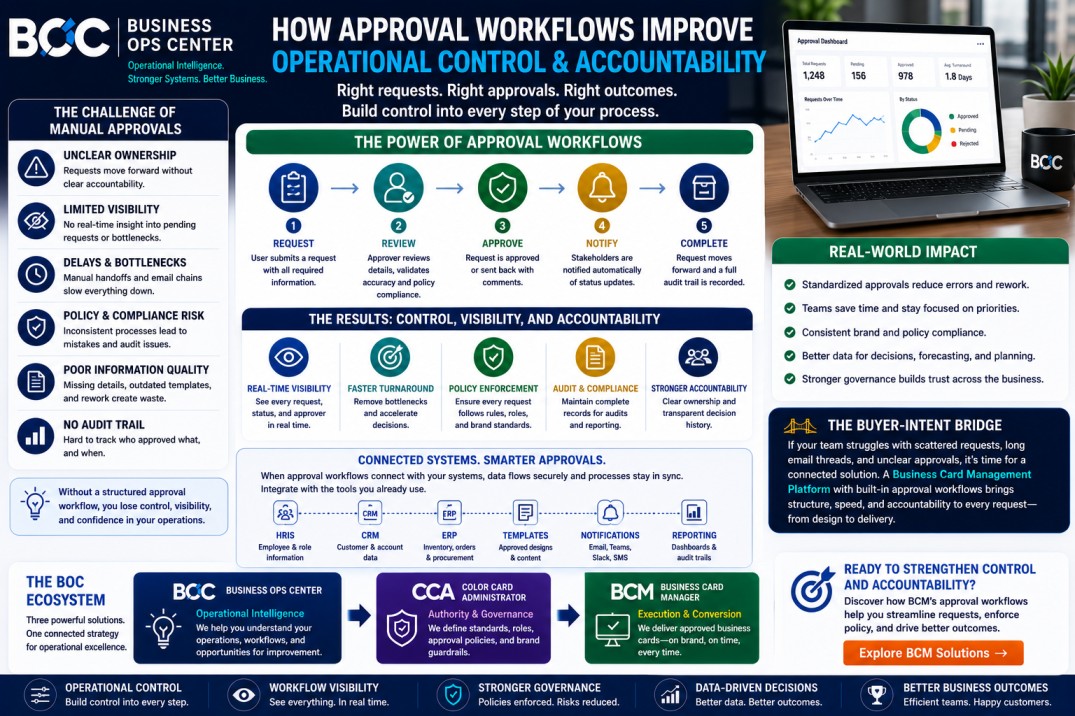
Without a structured process, organizations frequently experience delays, confusion, inconsistent decisions, limited accountability, and poor visibility into operational activity.
Approval workflows provide a framework for managing these decisions systematically. They help organizations move beyond informal processes and establish repeatable, visible, and accountable operational controls.
Why Approval Workflows Matter
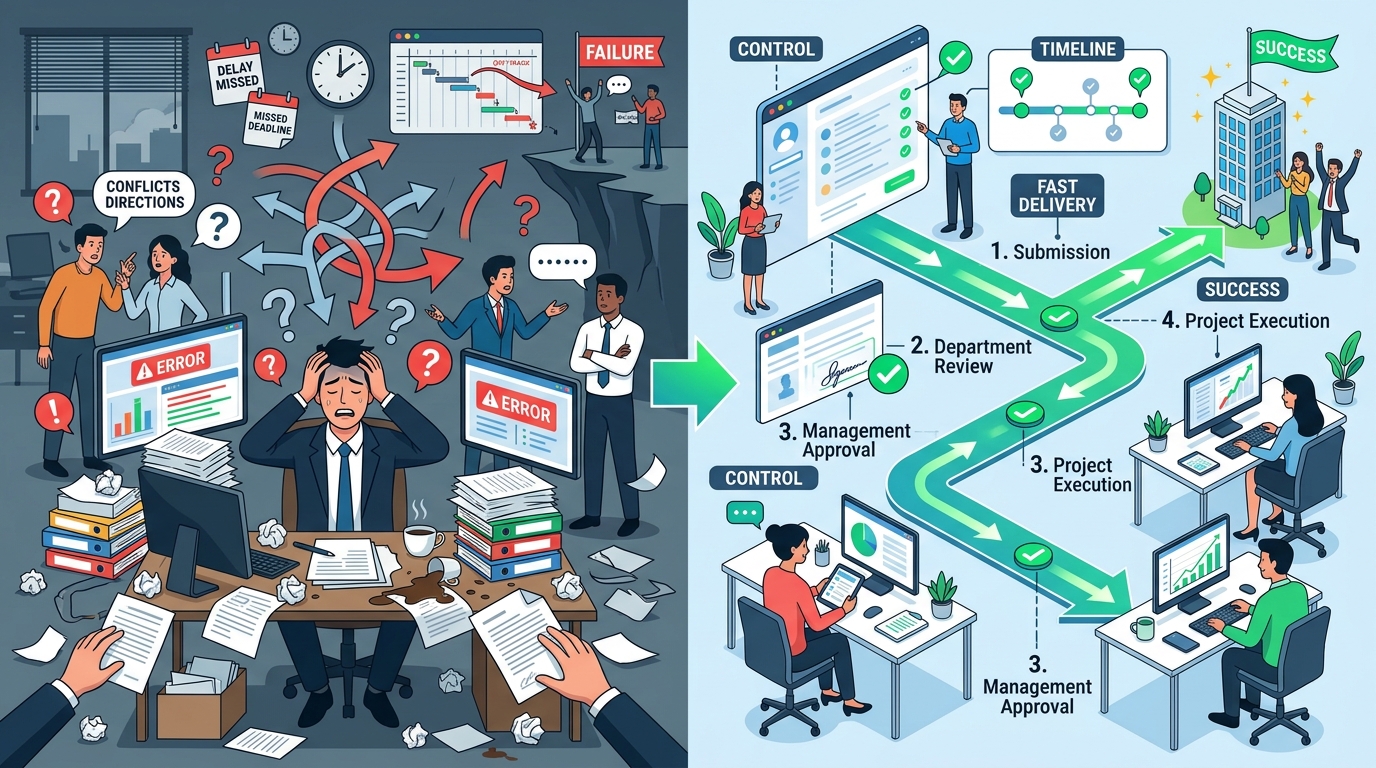
Approval workflows serve a critical role in operational coordination. They ensure requests are reviewed by the appropriate stakeholders, policies are followed consistently, and decisions are documented in a transparent manner.
Without approval workflows, organizations often rely on email chains, spreadsheets, messaging applications, and verbal conversations to authorize activities. While these approaches may appear efficient initially, they become increasingly difficult to manage as organizational complexity grows.
Approval workflows create structure. They define who reviews requests, when approvals are required, how exceptions are handled, and what information is captured throughout the process.
This structure improves consistency while reducing the risk of unauthorized decisions and operational breakdowns.
The Connection Between Operational Control And Approval Workflows
Operational control refers to an organization’s ability to manage activities consistently while ensuring resources are used appropriately and organizational policies are followed.
Approval workflows strengthen operational control by introducing governance into everyday business activities. They help organizations verify that purchases align with budgets, requests comply with policies, and operational decisions support business objectives.
As organizations grow, operational control becomes increasingly important because the number of requests, stakeholders, and operational dependencies expands significantly.
Approval workflows create a mechanism for maintaining consistency without requiring constant executive intervention.
Visibility Creates Accountability
Accountability depends on visibility. Organizations cannot effectively manage operational performance if they lack insight into who approved a request, why a decision was made, or where a workflow is currently delayed.
Approval workflows improve visibility by documenting every stage of the process. Request submission, review, approval, rejection, escalation, and fulfillment activities can all be tracked within a structured environment.
This visibility helps leadership teams identify bottlenecks, improve decision-making, and strengthen accountability. Employees gain clarity regarding responsibilities while managers gain confidence that requests are being handled consistently.
Why Informal Approval Processes Fail At Scale
Many organizations begin with informal approval practices because they are easy to implement. Managers approve requests through conversations, email exchanges, or messaging applications.
While these methods may work for smaller teams, they rarely scale effectively.
Organizations often encounter:
– Lost requests
– Approval delays
– Inconsistent decisions
– Lack of documentation
– Limited auditability
– Poor reporting visibility
– Unclear ownership
These challenges create operational friction that reduces efficiency and increases administrative overhead.
Workflow Governance And Operational Maturity
Governance is often misunderstood as bureaucracy. In reality, effective governance creates clarity, consistency, and accountability.
Approval workflows support governance by ensuring requests follow predefined paths aligned with organizational policies and operational requirements.
Operationally mature organizations recognize that governance is not about slowing work down. It is about creating repeatable processes that support efficiency while reducing risk.
Approval workflows help organizations establish governance without sacrificing agility.
The Role of API-connected Approval Infrastructure
Modern organizations operate across multiple business systems, including HRIS platforms, ERP environments, procurement systems, workflow applications, reporting tools, and identity management platforms.
API-connected approval workflows allow information to move automatically between these environments.
Instead of requiring manual updates, workflows can synchronize data, trigger approvals, update records, notify stakeholders, and support reporting automatically.
This connectivity improves operational efficiency while creating a more complete view of organizational activity.
Approval Workflows And Business Card Management
Business card management provides a practical example of how approval workflows improve operational control.
Many organizations initially treat business card ordering as a simple purchasing activity. However, as employee counts grow, business card management often involves brand governance, approval requirements, procurement controls, budget oversight, and vendor coordination.
Without structured workflows, organizations may experience inconsistent branding, unauthorized orders, duplicate requests, and limited reporting visibility.
Approval workflows create a centralized process where requests can be reviewed, approved, tracked, and reported consistently.
What Enterprise Buyers Should Look For
Organizations evaluating workflow solutions should consider more than basic approval functionality.
They should evaluate:
- Workflow visibility
- Reporting capabilities
- Approval routing flexibility
- API integration support
- Audit trail functionality
- Governance controls
- Scalability
The goal is not simply to automate approvals. The goal is to create operational infrastructure that supports visibility, accountability, and long-term growth.
Conclusion
Approval workflows are one of the most important components of modern operational infrastructure. They improve visibility, accountability, governance, and operational control while helping organizations scale effectively.
As business environments become increasingly complex, organizations need structured processes that support consistency without creating unnecessary administrative burden.
Businesses that invest in workflow governance, connected systems, and approval infrastructure are better positioned to support growth, improve accountability, and maintain operational excellence over time.