


Introduction
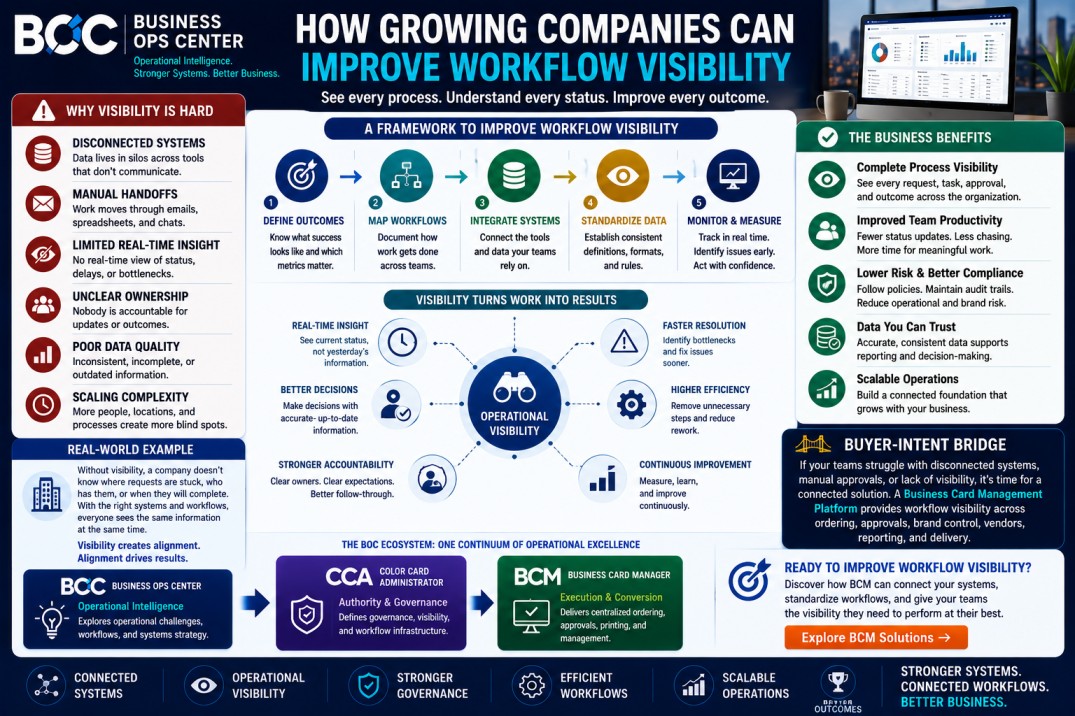
As organizations grow, operational complexity increases. More employees, more locations, more systems, and more workflows create new challenges that are often difficult to manage using manual processes and disconnected technology.
One of the most common symptoms of operational complexity is reduced workflow visibility. Teams struggle to understand where requests are delayed, which approvals are pending, who owns critical activities, and how operational work is progressing across the organization.
Improving workflow visibility has become a strategic priority for organizations seeking stronger operational performance, scalability, and accountability.
What Is Workflow Visibility?
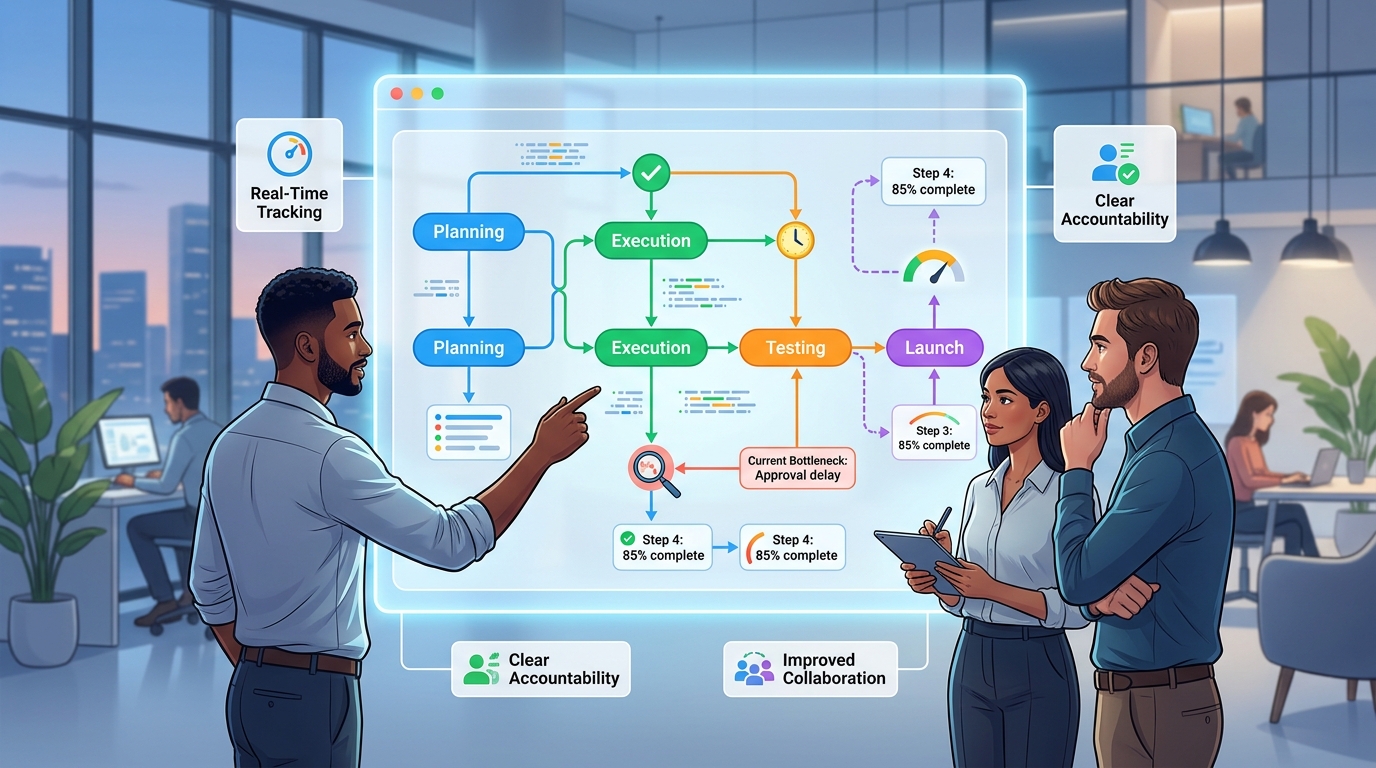
Workflow visibility refers to the ability to understand how work moves throughout an organization.
Effective visibility provides insight into:
- Workflow status
- Approval activity
- Task ownership
- Bottlenecks
- Dependencies
- Operational outcomes
Organizations with strong workflow visibility can identify issues earlier, make better decisions, and coordinate activities more effectively.
Why Visibility Declines as Companies Grow
Many organizations begin with simple operational structures. Teams communicate directly, and workflows are relatively easy to monitor.
As growth occurs, organizations often introduce:
- Additional departments
- New software systems
- Multiple locations
- More approval requirements
- Increased reporting demands
Without a coordinated operational strategy, visibility becomes fragmented across spreadsheets, emails, applications, and disconnected workflows.
Common Causes of Poor Workflow Visibility
Several factors contribute to visibility challenges:
- Disconnected systems
- Manual approval processes
- Inconsistent workflows
- Limited reporting capabilities
- Departmental silos
- Lack of workflow ownership
- Poor integration between applications
These issues make it difficult to understand operational performance in real time.
The Role of Operational Infrastructure
Workflow visibility is not solely a reporting problem. It is an infrastructure problem.
Organizations need operational environments that support:
- Workflow coordination
- Accountability
- Reporting consistency
- Cross-functional collaboration
- Operational transparency
Operational infrastructure creates the foundation necessary for visibility at scale.
How API Integration Improves Visibility
API-connected systems allow information to move across applications automatically.
Benefits include:
- Reduced information silos
- Better reporting accuracy
- Real-time operational updates
- Improved workflow transparency
- Greater accountability
API integration enables organizations to build connected environments where operational activity can be monitored more effectively.
Workflow Visibility and Governance
Visibility also supports governance. Organizations need to understand who approved requests, when actions occurred, and how workflows were executed.
As businesses scale, governance requirements often increase. Workflow visibility helps support:
- Audit readiness
- Policy enforcement
- Operational accountability
- Process consistency
This is particularly important for organizations managing regulated processes, procurement workflows, or enterprise business operations.
Buyer-Intent Bridge: Visibility and Business Card Management
Workflow visibility challenges often appear in business card ordering and management environments.
Organizations may struggle to understand:
- Who requested business cards
- Which approvals are pending
- Whether brand standards were followed
- Which vendors fulfilled orders
- How spending is distributed
Modern business card management platforms address these challenges through centralized ordering, approval workflows, reporting, and operational visibility.
How Growing Organizations Can Improve Visibility
- Standardize workflows.
- Define workflow ownership.
- Reduce manual approvals.
- Improve systems integration.
- Centralize reporting.
- Evaluate API connectivity.
- Build operational infrastructure designed for scale.
Conclusion
Workflow visibility is a foundational capability for growing organizations. As operational complexity increases, visibility becomes essential for coordination, accountability, governance, and scalability.
Organizations that invest in connected operational infrastructure, workflow coordination, and API integration are better positioned to understand operational performance and support long-term growth. How Growing Companies Can Improve Workflow Visibility