
Introduction
Most organizations have invested heavily in ERP, CRM, HR, finance, collaboration, and analytics platforms. These systems generate enormous volumes of data, yet many executives still struggle to answer fundamental operational questions. Which processes consistently miss service targets? Approvals delay customer delivery? Do departments create recurring operational bottlenecks? Where are governance policies routinely bypassed?
The challenge is not a lack of information but a lack of operational intelligence. Data exists in abundance, yet fragmented operational execution fragments meaningful enterprise insight. Business Operations Center (BOC) bridges this gap by transforming operational control into operational intelligence.
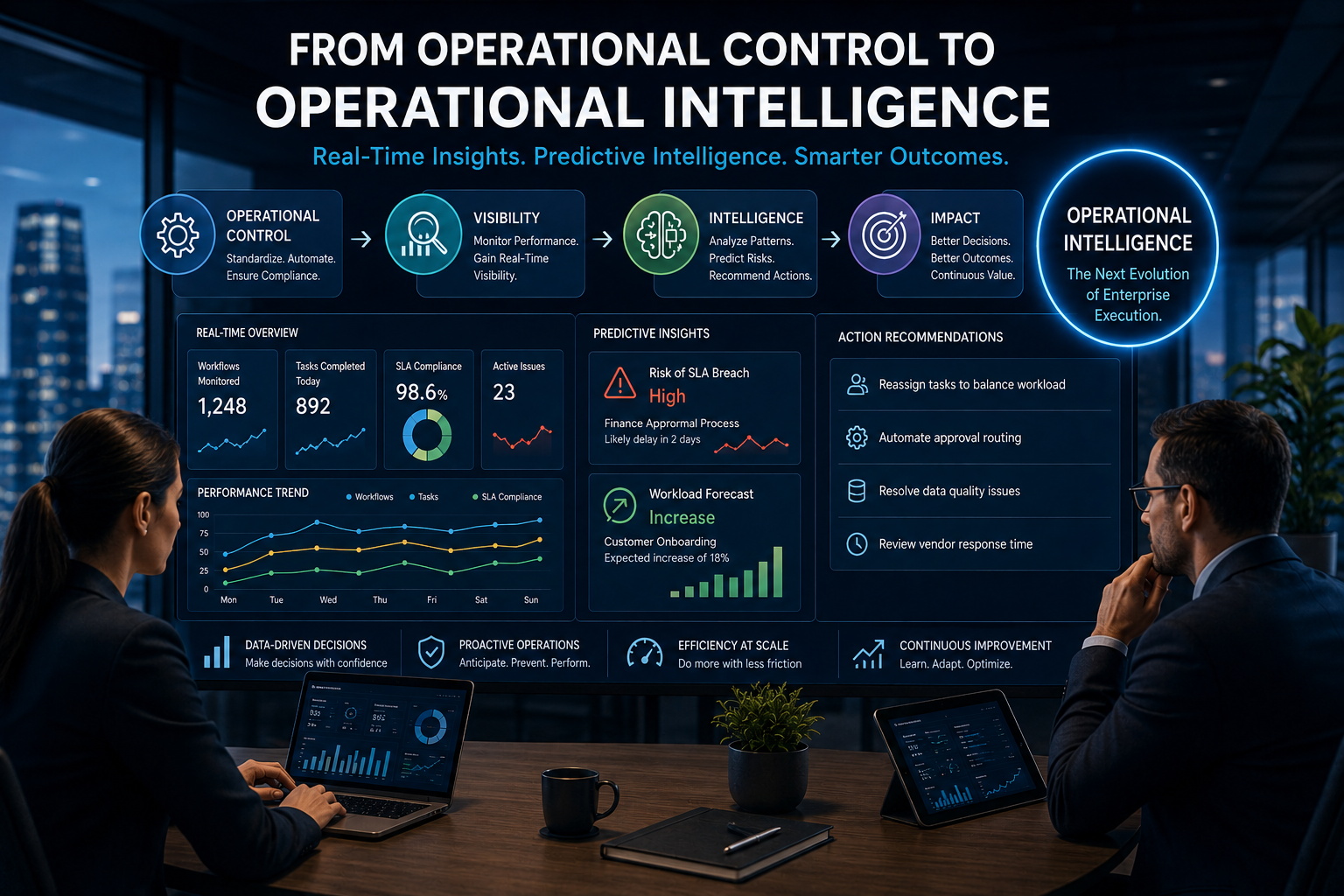
Operational intelligence is more than dashboards. It is the ability to understand, predict, and continuously improve enterprise execution using trusted operational data generated through governed workflows. When organizations standardize how work is executed, every task, approval, escalation, policy exception, and business decision becomes measurable. These measurements create a living operational model that supports strategic leadership rather than retrospective reporting.
Operational Control Is Only the Beginning
Operational control ensures work follows approved processes. It establishes accountability, ownership, approval hierarchies, compliance requirements, and service expectations. While essential, operational control answers only one question: ‘Is work following the defined process?’ Operational intelligence goes much further by identifying trends, predicting delays, recommending improvements, and revealing enterprise-wide patterns that are impossible to identify manually.
Why Traditional Reporting Falls Short
Traditional reports summarize completed work. They rarely explain why performance differs across departments or where operational risks originate. Weekly spreadsheets, manual status meetings, and disconnected KPIs often provide delayed visibility. Leaders respond after problems have already affected customers. A governance-driven intelligence platform provides continuous visibility instead of historical summaries.
The Role of Business Operations Center
Business Operations Center becomes the enterprise process orchestration & coordination layer where workflows, approvals, operational policies, integrations, and performance metrics converge. Because execution follows standardized governance rules, every operational event becomes trusted data. Executives receive real-time operational intelligence while managers identify bottlenecks before service levels decline.
Building an Intelligence-Driven Enterprise
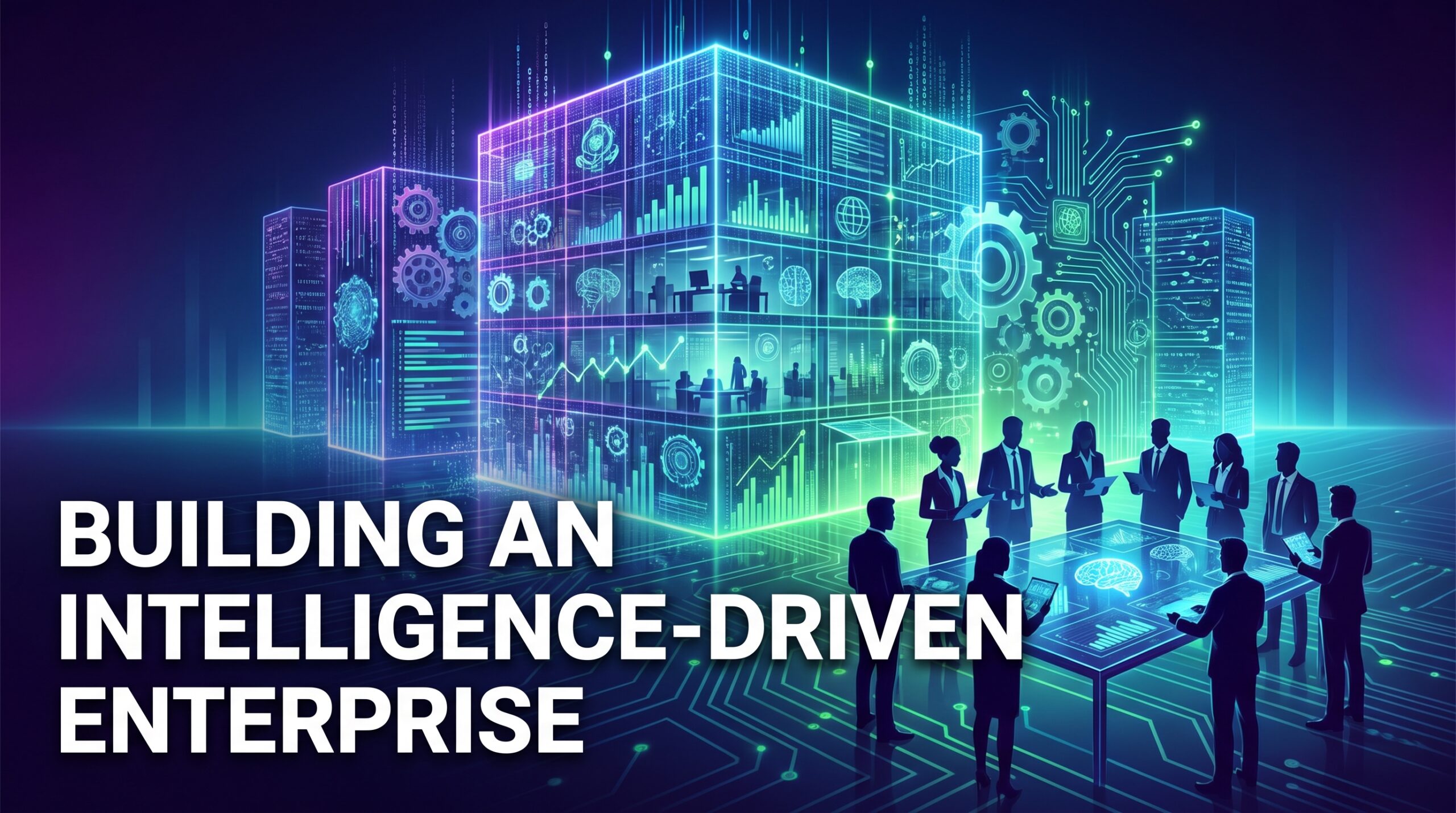
Organizations should begin by standardizing high-value workflows, defining enterprise KPIs, integrating operational systems, establishing common governance policies, monitoring service-level commitments, and continuously reviewing analytics. Over time the organization develops a culture where operational improvement is driven by evidence instead of assumptions. Continuous optimization becomes part of normal business execution.
Artificial Intelligence and Predictive Operations
As artificial intelligence becomes embedded within enterprise platforms, governed operational data becomes increasingly valuable. AI models can only generate reliable recommendations when underlying workflows are standardized and consistently executed. BOC provides the structured operational foundation required for predictive analytics, intelligent workload balancing, proactive risk identification, and decision support.
Business Outcomes
Organizations that mature from operational control to operational intelligence generally achieve faster decision-making, improved compliance, reduced operational risk, higher employee productivity, better customer experiences, increased executive confidence, and stronger long-term scalability. Leaders shift from reacting to operational issues toward preventing them through proactive governance.
Conclusion
Operational excellence is no longer measured by how efficiently individual departments perform. It is measured by how effectively the entire enterprise coordinates people, processes, technology, and decisions. Business Operations Center enables organizations to evolve from managing operations to understanding operations, creating an enterprise capable of continuous learning, governance, and sustainable performance improvement.
Business Operations Center helps enterprises transform operational data into actionable intelligence through governance-first workflows, enterprise visibility, and continuous operational improvement.