
Introduction
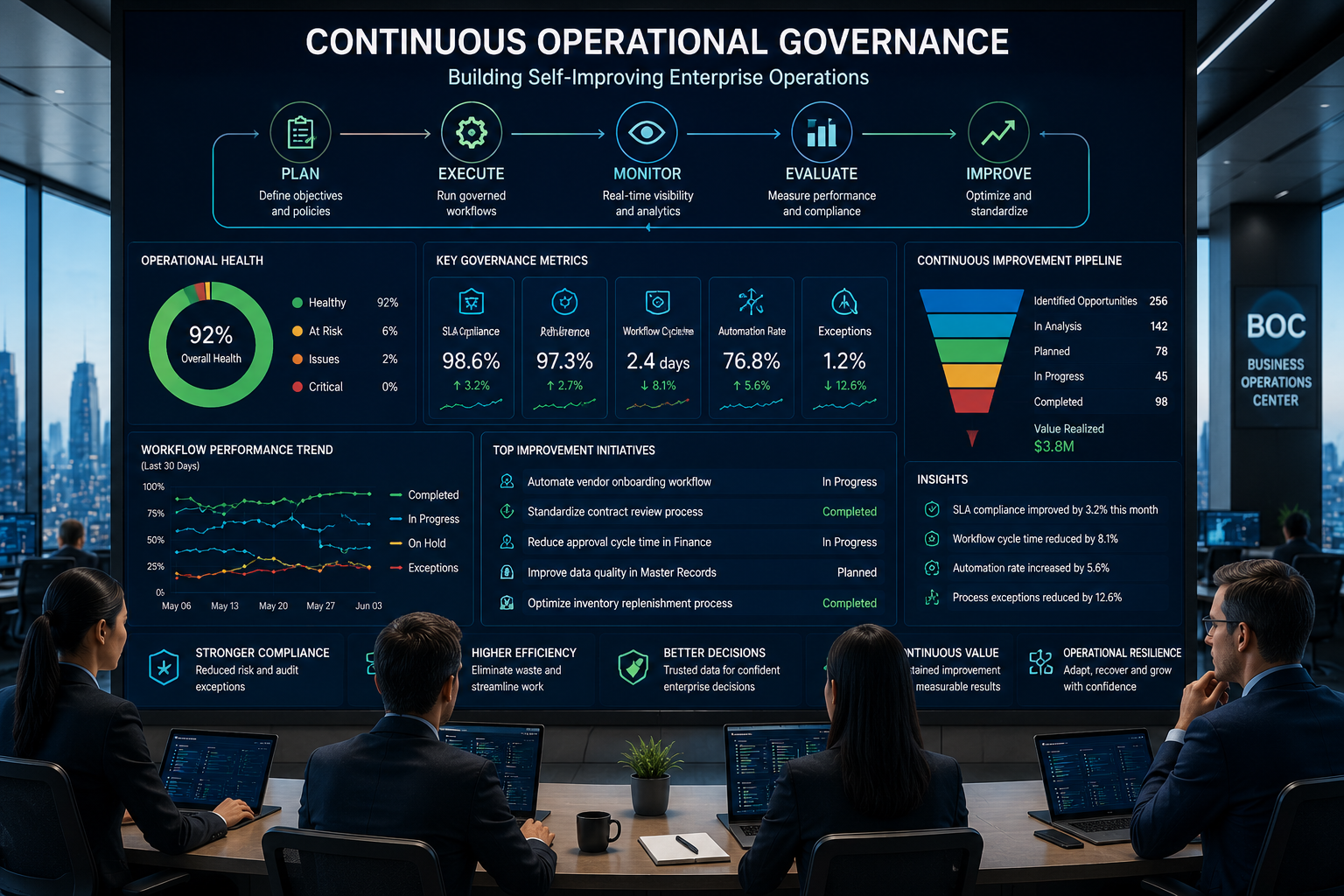
Enterprise transformation is not achieved through one-time automation initiatives. Sustainable operational excellence requires an operating model that continuously measures execution, identifies opportunities for improvement, adapts governance policies, and strengthens organizational performance over time. Continuous Operational Governance extends governance beyond compliance by making it an active capability that learns from every workflow, every approval, every exception, and every operational outcome. Business Operations Center (BOC) provides the governance-first foundation that enables enterprises to evolve while maintaining consistency, accountability, and enterprise-wide visibility.
Why Governance Must Be Continuous
Markets change, regulations evolve, customer expectations rise, and organizational structures expand. Governance frameworks that remain static eventually become disconnected from operational reality. Continuous governance establishes regular measurement, policy review, workflow optimization, and performance feedback so enterprise execution remains aligned with business objectives rather than historical practices.
The Governance Feedback Loop
Every governed workflow produces operational data. Approval durations, SLA performance, policy exceptions, escalations, workload distribution, automation success rates, and audit findings all contribute to a continuous governance feedback loop. Instead of treating operational reporting as a historical exercise, the Business Operations Center converts operational intelligence into actionable improvements that strengthen future execution.
Standardization Before Optimization
Organizations often attempt to optimize inconsistent processes. BOC first standardizes ownership, business rules, approval workflows & hierarchies, documentation requirements, and governance controls across departments. Once execution becomes consistent, performance can be measured accurately, bottlenecks can be identified confidently, and optimization initiatives deliver predictable business value.
Enterprise-Wide Collaboration
Continuous governance encourages collaboration across business functions instead of isolated departmental optimization. Finance, procurement, HR, IT, legal, operations, customer service, and executive leadership contribute to a shared governance model supported by common operational metrics. This enterprise identity perspective reduces conflicting priorities while improving transparency and accountability.
Operational Intelligence as a Strategic Asset
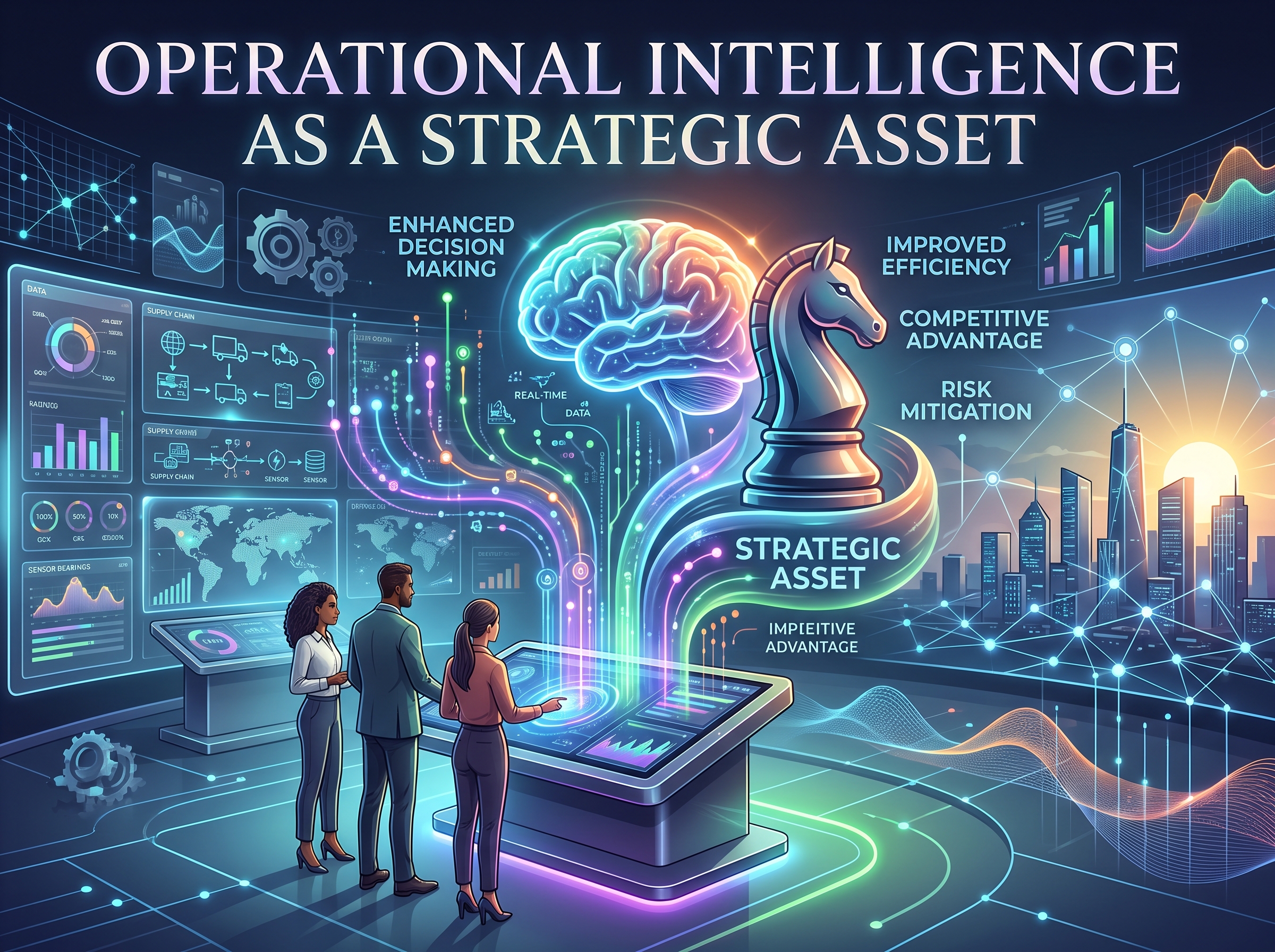
Operational intelligence becomes increasingly valuable as governance matures. Leaders gain insight into recurring process delays, policy violations, approval bottlenecks, compliance risks, automation opportunities, and resource constraints. Predictive analytics and AI can then recommend governance improvements based on trusted operational history rather than fragmented departmental information.
Enterprise Scenario
A global services organization uses Business Operations Center to govern onboarding, procurement, project approvals, and compliance workflows. Monthly governance reviews reveal recurring approval delays in specific regions, increasing SLA risks and customer onboarding time. By adjusting approval hierarchies, automating low-risk decisions, and standardizing regional policies, the organization reduces cycle time, improves compliance, and establishes a repeatable improvement framework across every business unit.
Preparing for Autonomous Operations
Future digital enterprises will increasingly rely on AI copilots, intelligent automation, predictive analytics, and autonomous workflows. These technologies require transparent governance, measurable execution, and trusted operational data. Continuous Operational Governance ensures that innovation occurs within a controlled enterprise framework where accountability and compliance remain integral to every automated decision.
Conclusion
Continuous Operational Governance transforms governance from a static control mechanism into a dynamic enterprise capability. Business Operations Center enables organizations to continuously observe, govern, optimize, and improve business execution through standardized workflows, operational intelligence, and enterprise-wide collaboration. The result is a resilient operating model capable of supporting long-term digital transformation and operational excellence.