


Introduction
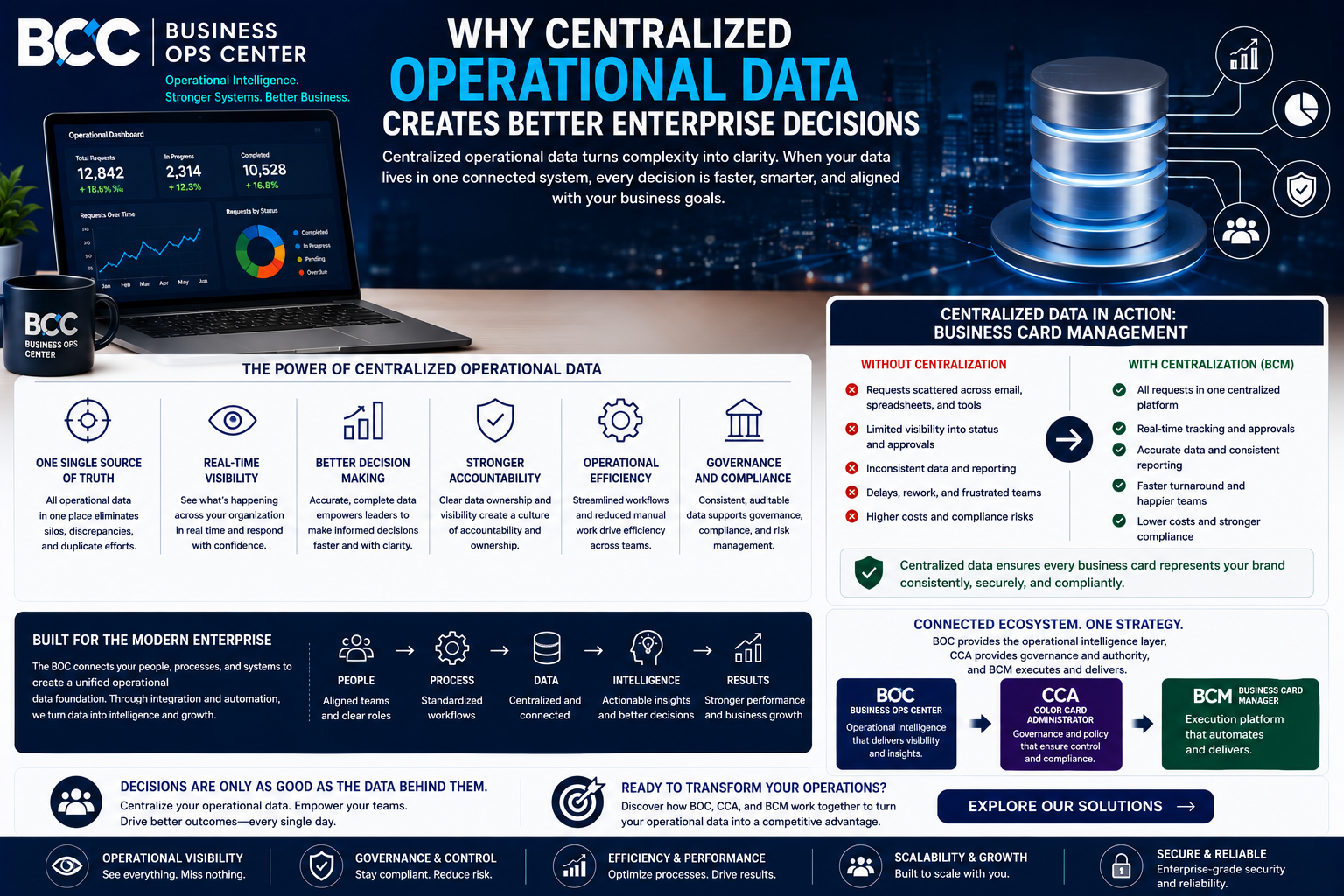
Enterprise organizations generate operational data every minute. Employee onboarding, procurement approvals, vendor interactions, customer requests, compliance activities, finance operations, marketing execution, and identity management all create valuable information. Unfortunately, in many organizations, this information is fragmented across independent systems. Leadership teams, therefore, spend considerable time collecting reports instead of interpreting them.
Centralized operational data changes this dynamic. Rather than allowing every department to maintain its own version of operational truth, information is brought together into a connected environment that supports governance, visibility, and informed decision-making. As organizations become larger and more distributed, this capability becomes an essential part of operational infrastructure rather than an optional reporting enhancement.
Why Fragmented Data Limits Enterprise Performance
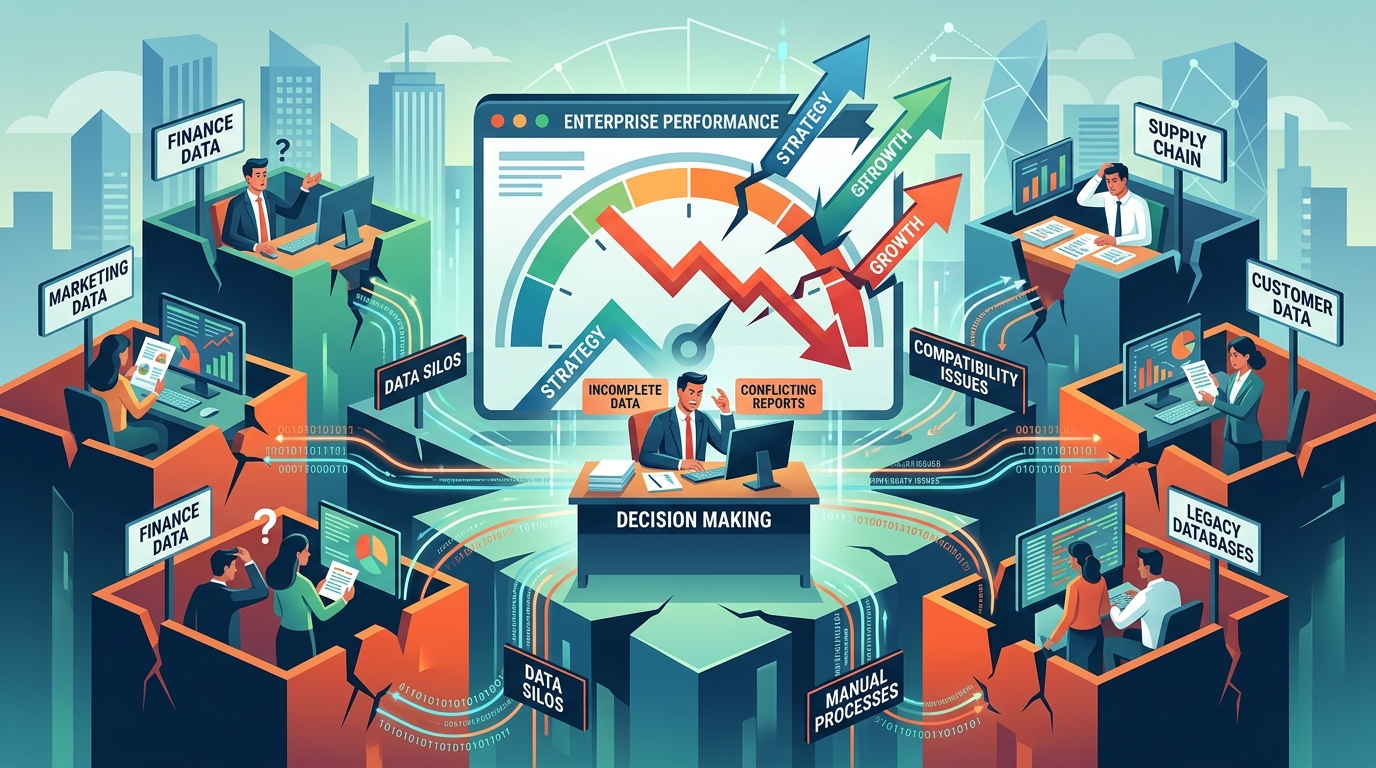
When operational information exists in spreadsheets, emails, and disconnected applications, managers struggle to answer basic questions. Where is a workflow delayed? Which department owns the next action? Which vendors are generating the highest activity? How long do approvals take? The absence of a unified operational view slows decisions, increases manual effort, and creates inconsistent reporting across departments.
Centralized Data as an Operational Asset
Centralized operational data is not merely a technical architecture. It enables common metrics, consistent reporting, stronger accountability, and repeatable governance. Finance, HR, procurement, operations, and executive leadership all work from the same operational information, reducing disagreements caused by inconsistent datasets.
Operational Visibility and Better Decisions
Decision quality depends on operational visibility. Leaders require timely information about workflow execution, approval performance, resource utilization, and operational trends. Centralized information allows executives to identify bottlenecks early, prioritize improvements, and allocate resources based on measurable operational evidence rather than assumptions.
Governance, Compliance and Accountability
Governance improves when information is consistent. Standardized operational data supports audit trails, approval histories, policy compliance and reporting consistency. Accountability becomes clearer because ownership, approvals and workflow progress are visible across the organization.
API-Connected Infrastructure
Modern enterprises increasingly integrate HRIS, ERP, CRM, procurement, workflow and reporting platforms through APIs. Integration reduces duplicate data entry, improves data quality, and enables automated operational workflows. The value comes not only from connecting software but from creating a connected operational ecosystem.
Business Card Management Example
Business card management illustrates these principles. Employee information, approval workflows, template governance, procurement controls, vendor coordination, and reporting all benefit from centralized operational data. Instead of relying on disconnected emails and spreadsheets, organizations gain a complete operational view of the business card lifecycle. This strengthens governance while improving employee experience and reporting visibility.
Building a Centralized Data Strategy
Organizations should begin by identifying critical operational workflows, establishing common data standards, integrating key systems, defining ownership and creating centralized reporting. Standardization, API connectivity, and governance should evolve together rather than independently. The objective is sustainable operational intelligence, not simply more dashboards.
Conclusion
Centralized operational data enables better enterprise decisions because it provides visibility, governance, and accountability across connected workflows. Organizations that invest in operational intelligence create stronger foundations for scalable growth, continuous improvement, and enterprise governance. As digital transformation matures, competitive advantage will increasingly come from how effectively operational information is connected, governed, and used.