
Introduction
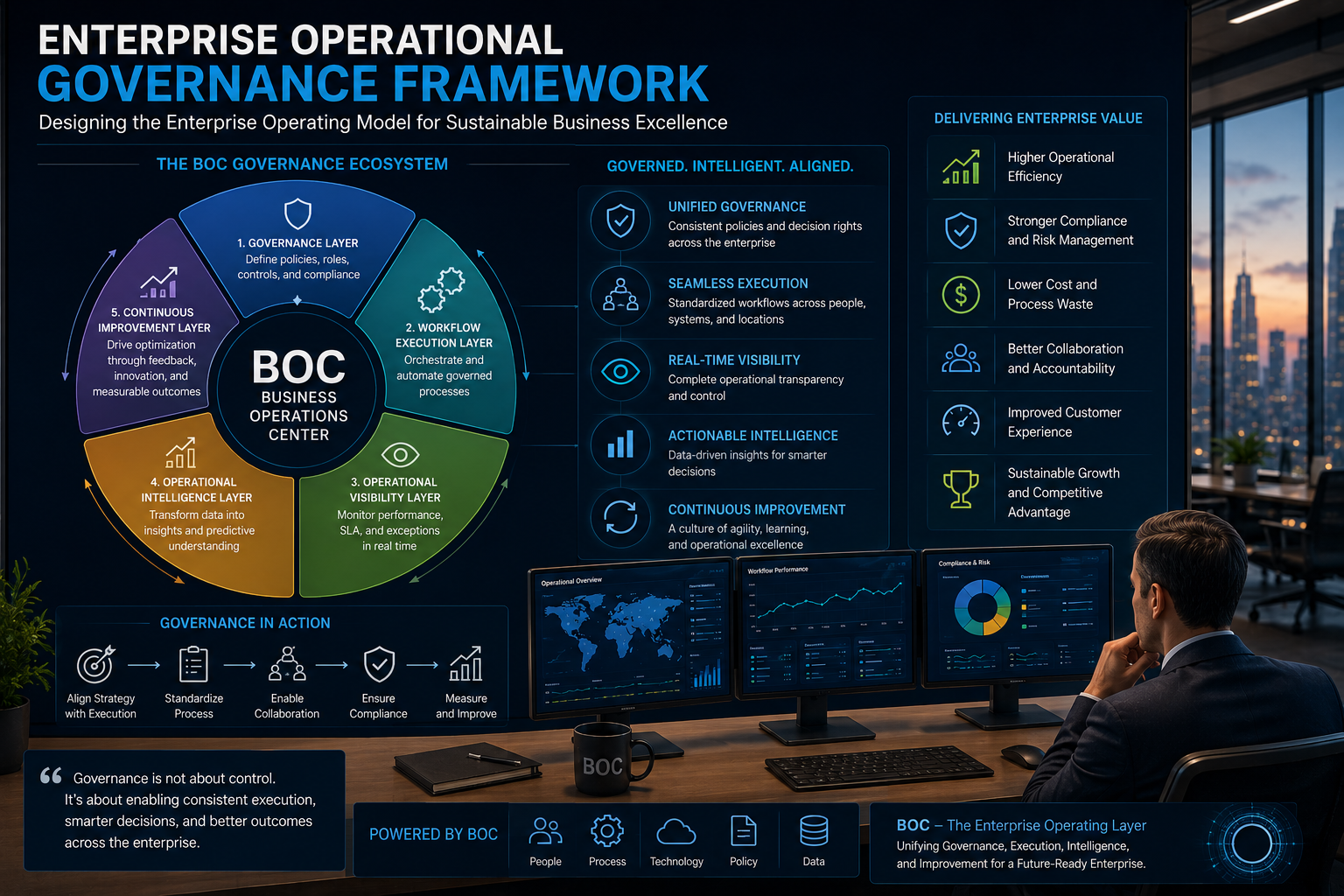
Digital transformation has modernized enterprise technology, yet many organizations continue to experience fragmented execution, inconsistent governance, duplicated processes, and limited operational visibility. An Enterprise Operational Governance Framework establishes the operating discipline required to connect people, processes, policies, and platforms into one coordinated execution model.
Why Traditional Operating Models Are No Longer Enough
Most enterprises have evolved through years of departmental optimization, acquisitions, and technology investments. These initiatives often create disconnected operating models that produce inconsistent reporting, varying approval structures, duplicated workflows, and governance gaps. BOC addresses these issues by introducing a unified governance layer across the enterprise.
Understanding Enterprise Operational Governance
Operational governance defines how work moves throughout the organization. It includes workflow ownership, approval authority, escalation rules, audit controls, compliance requirements, documentation standards, performance measurement, and continuous improvement. When embedded directly into execution, governance becomes a business enabler rather than simply a compliance activity.
The Five Layers of the Framework
The framework consists of governance, workflow execution, operational visibility, operational intelligence, and continuous improvement. Governance establishes policies, workflow orchestration coordinates execution, visibility monitors operations, intelligence converts data into insights, and continuous improvement ensures every workflow contributes to higher operational maturity.
Governance Before Automation
Automation without governance accelerates inconsistency. Business Operations Center standardizes ownership, business rules, approval hierarchies, and compliance controls before automation is implemented, ensuring technology strengthens operational discipline instead of bypassing it.
Enterprise Operational Intelligence
Every governed workflow generates trusted operational metrics, including cycle time, SLA adherence, approval turnaround time, workload distribution, exception frequency, resource utilization, automation adoption, and compliance performance. These metrics provide leadership with a comprehensive view of enterprise health.
Cross-Functional Governance
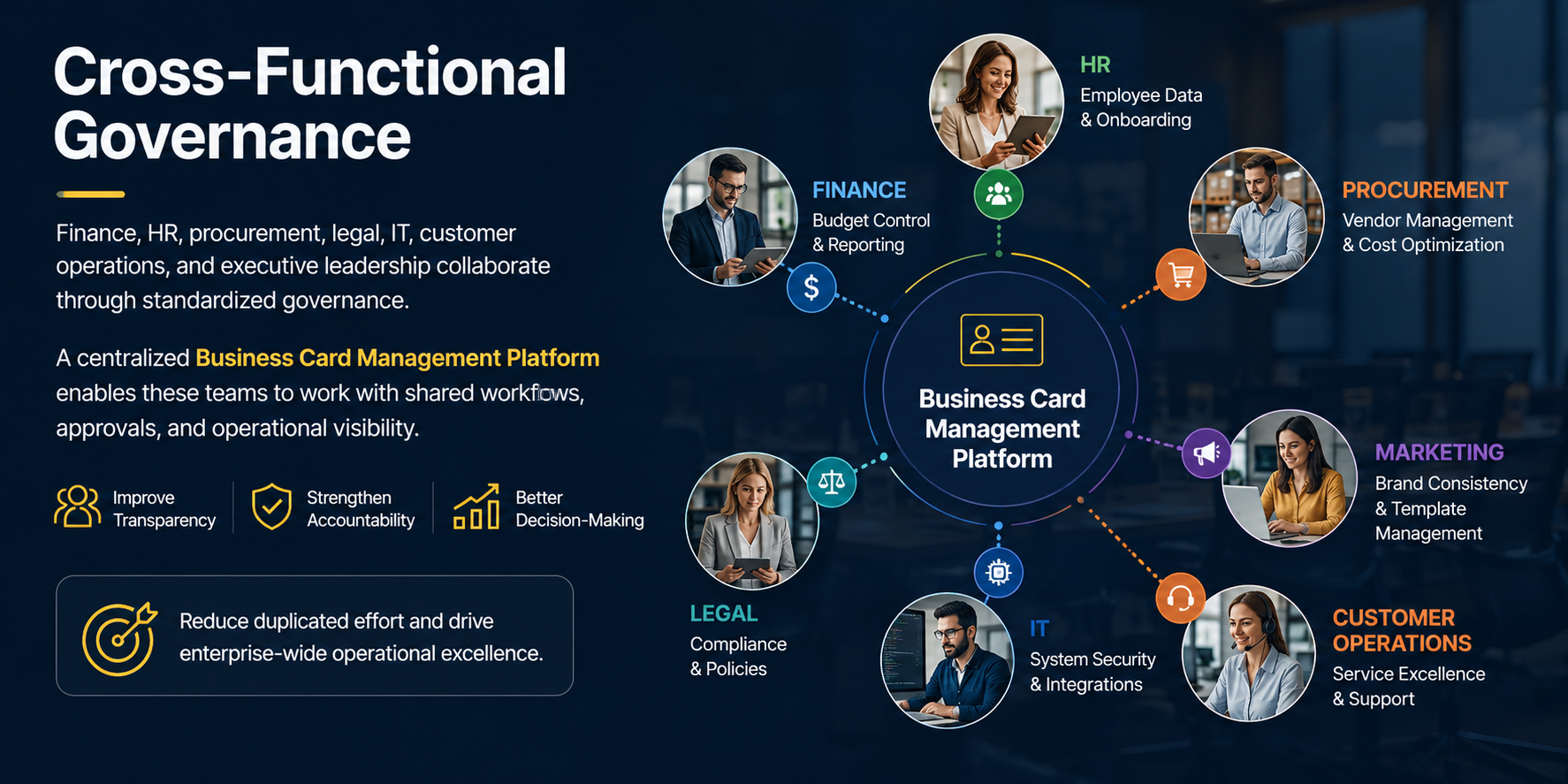
Finance, HR, procurement, legal, IT, customer operations, and executive leadership collaborate through standardized governance. Organizations often support this collaboration with a Business Card Management Platform for HR, Procurement & Marketing, enabling centralized approvals, procurement coordination, brand governance, and operational visibility. Shared operational metrics improve transparency, accountability, and enterprise-wide decision-making while reducing duplicated effort.
Enterprise Scenario
A multinational enterprise standardizes procurement, onboarding, compliance, and project approvals through the Business Operations Center. Unified governance eliminates regional inconsistencies, operational intelligence exposes bottlenecks, and continuous improvement cycles reduce delays while strengthening audit readiness and customer satisfaction.
Preparing for AI-Driven Operations
Artificial intelligence depends upon trusted operational history. BOC supplies governed workflow execution, explainable decision records, standardized operational metrics, and enterprise policies that support predictive analytics, intelligent routing, anomaly detection, and autonomous workflow optimization.
Measuring Success
Organizations should monitor governance maturity, workflow efficiency, SLA compliance, operational risk, customer satisfaction, cost reduction, productivity improvements, audit readiness, and digital transformation progress to evaluate operational governance success.
Future Enterprise Operating Model
Future enterprises will coordinate human teams, AI agents, enterprise applications, and governance policies simultaneously. Organizations that establish governance-first operating models today will adopt innovation faster while maintaining compliance, transparency, and resilience.
Conclusion
Enterprise Operational Governance Frameworks transform fragmented execution into coordinated enterprise performance. By combining governance, workflow orchestration, operational intelligence, operational analytics and continuous improvement, the Business Operations Center provides the foundation for sustainable operational excellence and long-term digital transformation.