


Introduction
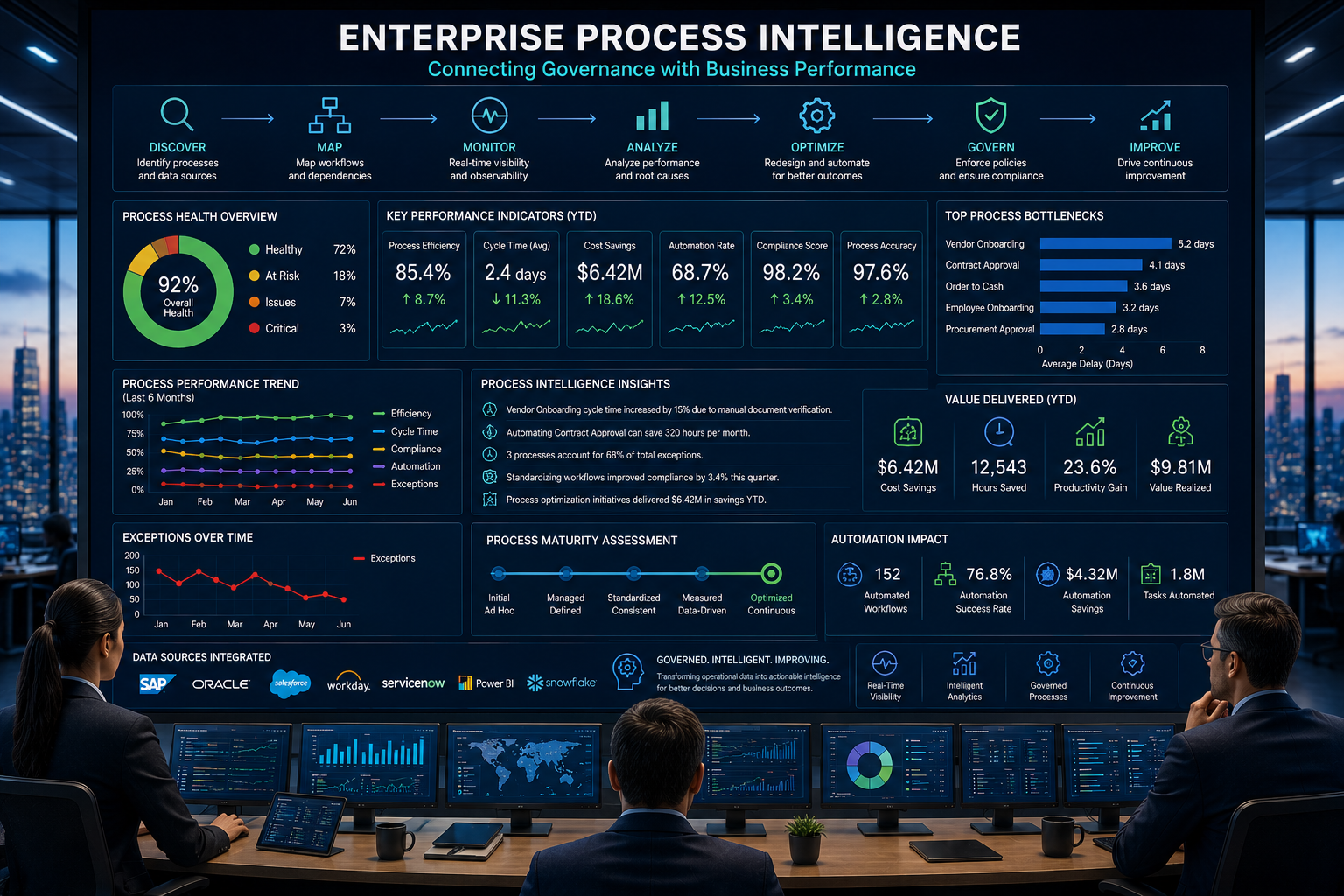
Enterprise Process Intelligence represents the next stage in digital operations. While dashboards describe results and workflow engines coordinate execution, process intelligence explains how work flows across the enterprise, why bottlenecks emerge, where governance influences outcomes, and how organizations can continuously improve. Business Operations Center (BOC) brings together governance, workflow orchestration, operational observability, analytics, and decision intelligence into a single operating framework that converts day-to-day execution into strategic business knowledge. In complex enterprises, this capability becomes essential for maintaining agility, compliance, and sustainable growth.
The Evolution from Automation to Intelligence
Many organizations begin with workflow automation but quickly discover that automation alone cannot guarantee operational excellence. Automated processes still require governance, ownership, compliance, policy enforcement, performance measurement, and executive visibility. Enterprise Process Intelligence extends beyond task completion by capturing every approval, decision, exception, escalation, SLA checkpoint, and operational dependency. The resulting execution history provides leaders with a complete understanding of enterprise performance.
Governance Creates Reliable Intelligence
Operational intelligence is valuable only when built upon governed execution. BOC standardizes approval hierarchies, workflow ownership, documentation requirements, audit controls, and business rules before collecting operational metrics. Because execution follows common enterprise standards, process intelligence becomes trustworthy across business units, geographic regions, and functional departments.
Connecting Enterprise Systems
Business Operations Center does not replace ERP, CRM, HR, finance, procurement, customer service, or collaboration platforms. Instead, it coordinates execution across these systems while providing a unified operational view. Every governed interaction contributes measurable intelligence that exposes process variations, collaboration gaps, recurring delays, and automation opportunities.
Measuring What Matters
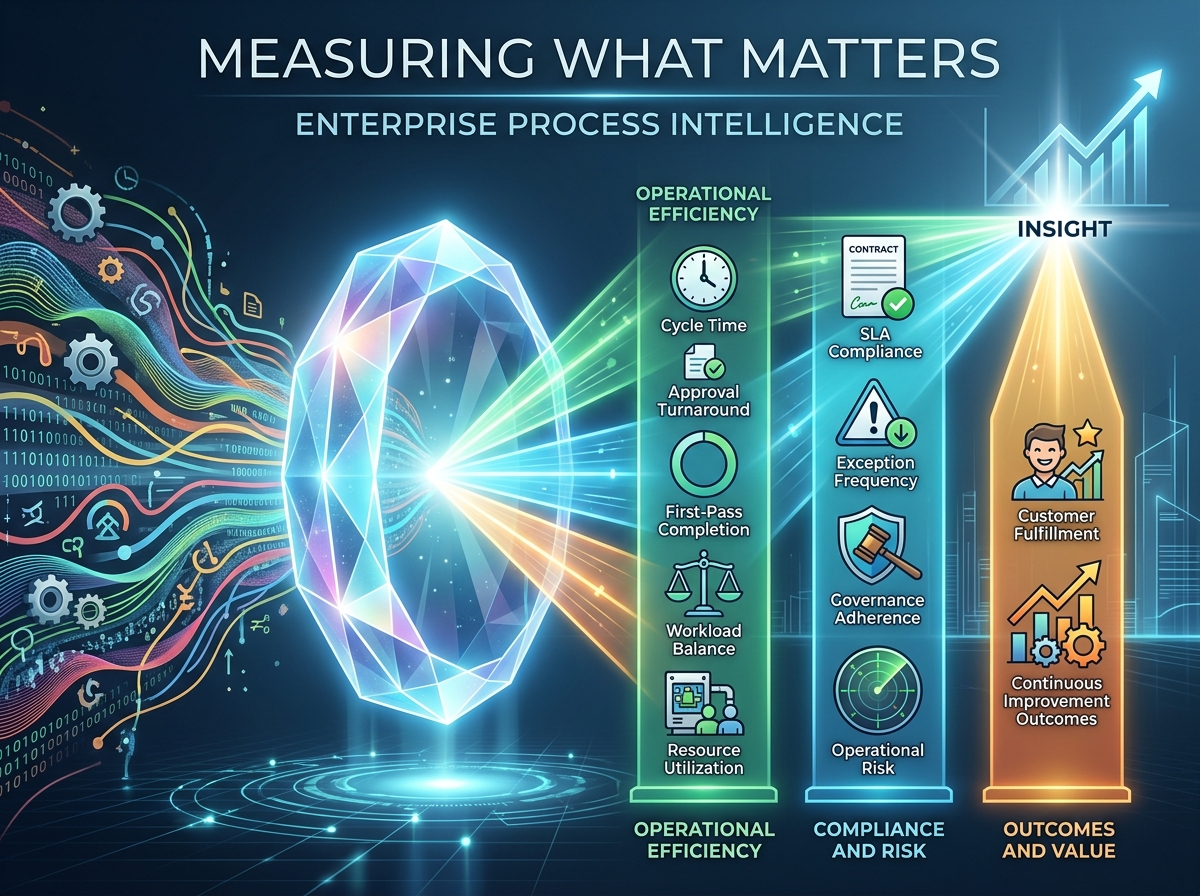
Enterprise Process Intelligence measures cycle time, approval turnaround, first-pass completion, workload balance, resource utilization, SLA compliance, exception frequency, governance adherence, operational risk, customer fulfillment, and continuous improvement outcomes. These metrics provide executives with an evidence-based view of enterprise health and enable proactive operational management rather than reactive reporting.
Supporting Continuous Improvement
Every workflow execution becomes a learning opportunity. Historical operational intelligence identifies recurring bottlenecks, unnecessary approvals, regional inconsistencies, policy conflicts, and automation candidates. Governance reviews transform these insights into standardized improvements that increase efficiency while maintaining accountability and compliance.
AI and Predictive Operations
Artificial intelligence performs best when trained on consistent operational history. Enterprise Process Intelligence supplies the structured execution data needed for predictive analytics, anomaly detection, workload forecasting, intelligent routing, and AI-assisted recommendations. Governance ensures every recommendation remains transparent, explainable, and aligned with enterprise policies.
Enterprise Scenario
A global manufacturing organization governs engineering changes, procurement approvals, quality management, supplier onboarding, and customer implementations through the Business Operations Center. Enterprise Process Intelligence reveals approval bottlenecks affecting multiple regions, identifies underutilized automation, and uncovers compliance variations between business units. Leadership standardizes governance, optimizes workflows, and improves execution performance while reducing operational risk and strengthening customer satisfaction.
Future Outlook
The future enterprise will depend on operational platforms capable of coordinating people, AI agents, enterprise applications, governance policies, and continuous learning. Organizations investing in process intelligence today will gain a sustainable competitive advantage because they can adapt operations using measurable evidence instead of assumptions.
Conclusion
Enterprise Process Intelligence transforms operational execution into enterprise knowledge. By combining governance, workflow orchestration, observability, analytics, and continuous improvement, Business Operations Center enables organizations to continuously optimize business performance while building a resilient, intelligent, and governance-driven operating model.