


Introduction
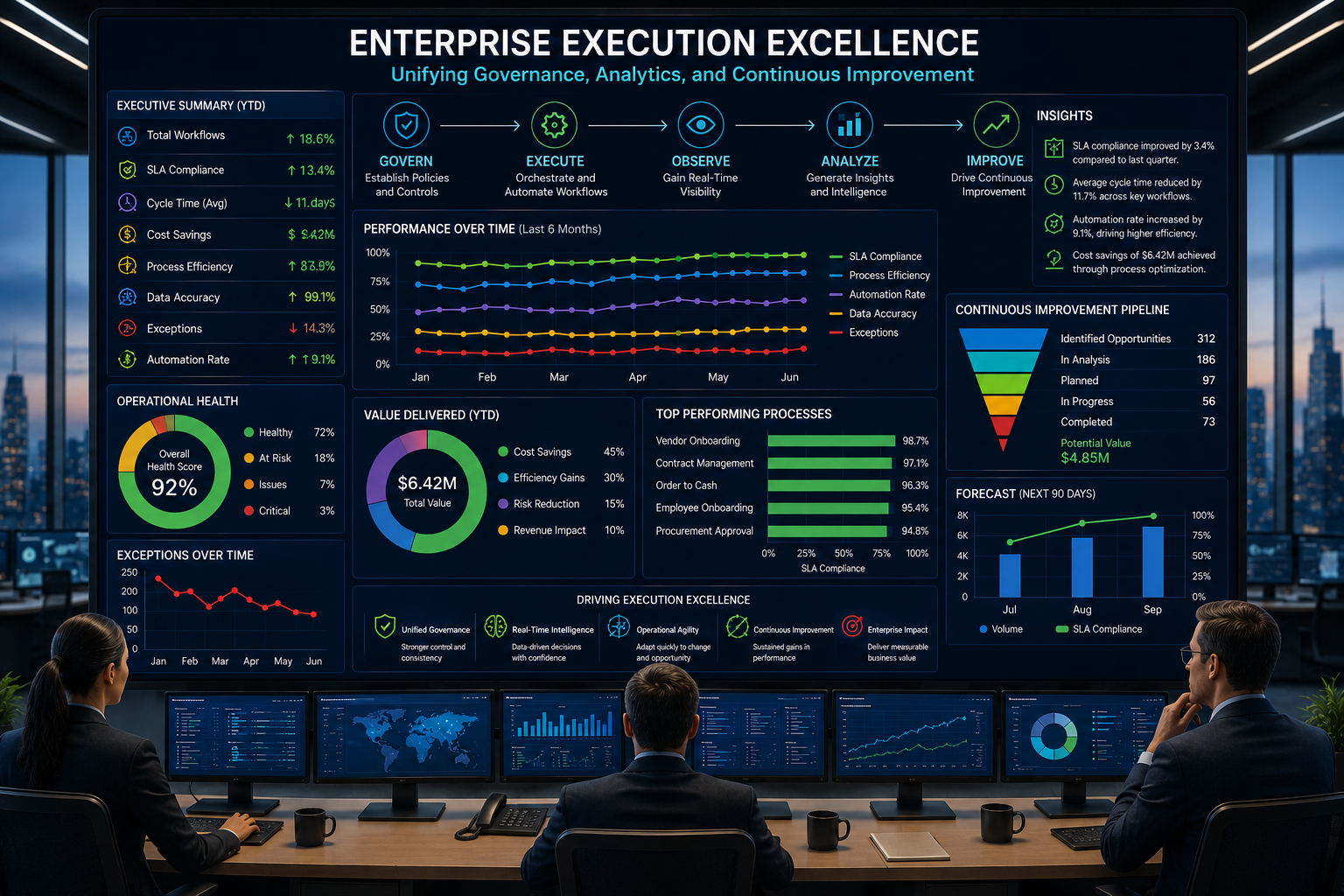
Enterprise execution excellence requires more than automation. It demands governed workflows, operational visibility, standardized execution, measurable performance, and continuous improvement. Business Operations Center (BOC) serves as the enterprise operating layer that unifies governance, workflow orchestration, operational analytics, and decision intelligence into a single framework.
Building a Governance-First Enterprise
Organizations often modernize applications while leaving operational practices fragmented. BOC standardizes ownership, approvals, policies, audit controls, escalation rules, and documentation so every workflow follows a consistent enterprise model. This creates trusted operational data that supports executive decisions and regulatory compliance.
Operational Intelligence
Every governed workflow generates meaningful analytics including cycle time, SLA performance, approval turnaround, backlog trends, policy exceptions, workload balance, and automation adoption. Together, these metrics provide a real-time view of enterprise execution instead of isolated departmental reporting.
Cross-Functional Execution
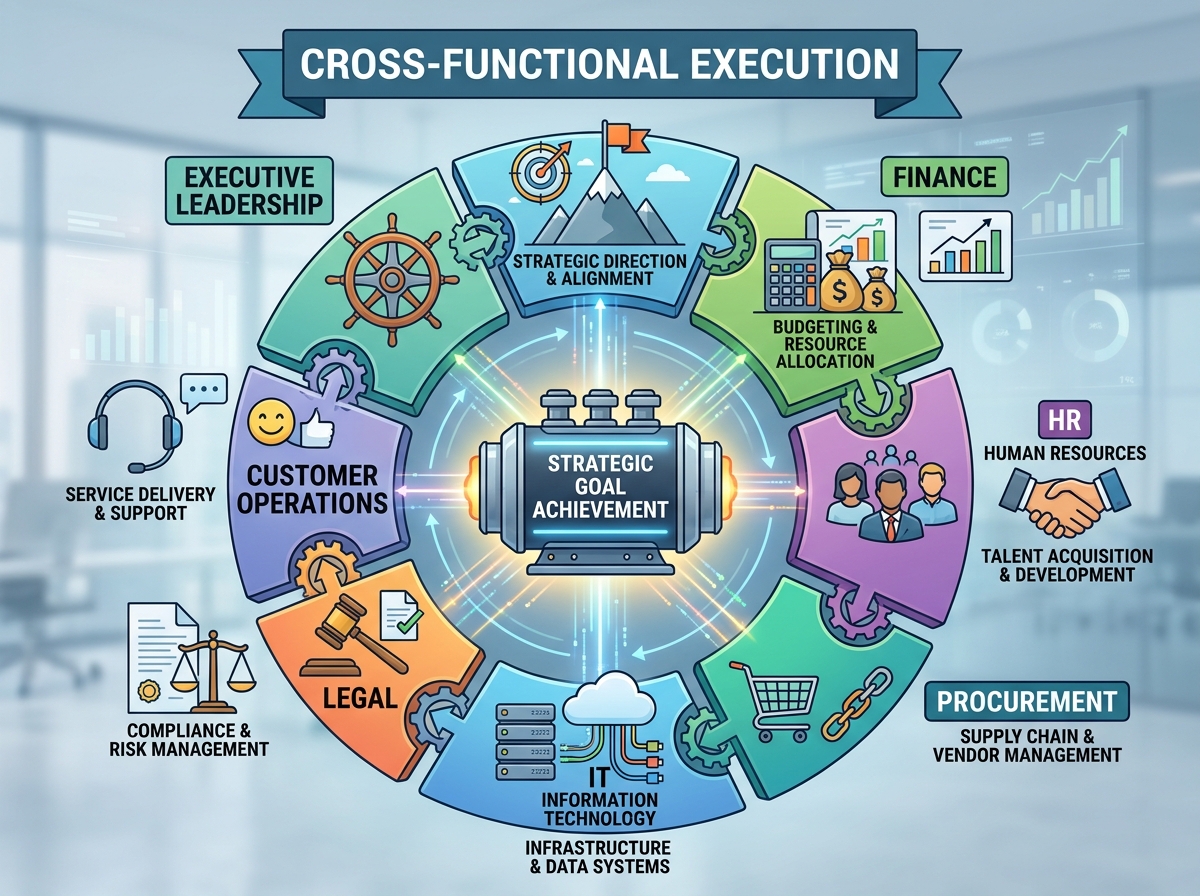
Finance, HR, procurement, IT, legal, customer operations, and executive leadership collaborate through standardized governance. Unified execution improves accountability, reduces duplication, accelerates decisions, and strengthens enterprise resilience.
AI-Ready Operations
Governed operational history provides the foundation for predictive analytics, intelligent routing, workload forecasting, anomaly detection, and AI-assisted recommendations. BOC ensures these capabilities remain transparent, measurable, and policy compliant.
Enterprise Scenario
A multinational enterprise governs onboarding, procurement, customer implementation, compliance, and project approvals using Business Operations Center. Operational analytics identify regional bottlenecks, inconsistent approvals, and automation opportunities. Continuous governance reviews improve execution while strengthening customer satisfaction and operational efficiency.
Future Outlook
Execution platforms will increasingly coordinate human teams, AI agents, enterprise systems, and governance policies. Organizations with governance-first operational foundations will adopt innovation fast er and with lower operational risk.
Conclusion
Enterprise Execution Excellence transforms strategy into measurable business outcomes. By combining governance, workflow orchestration, operational observability, analytics, and continuous improvement, Business Operations Center enables resilient, scalable, and intelligent enterprise operations.