
Introduction
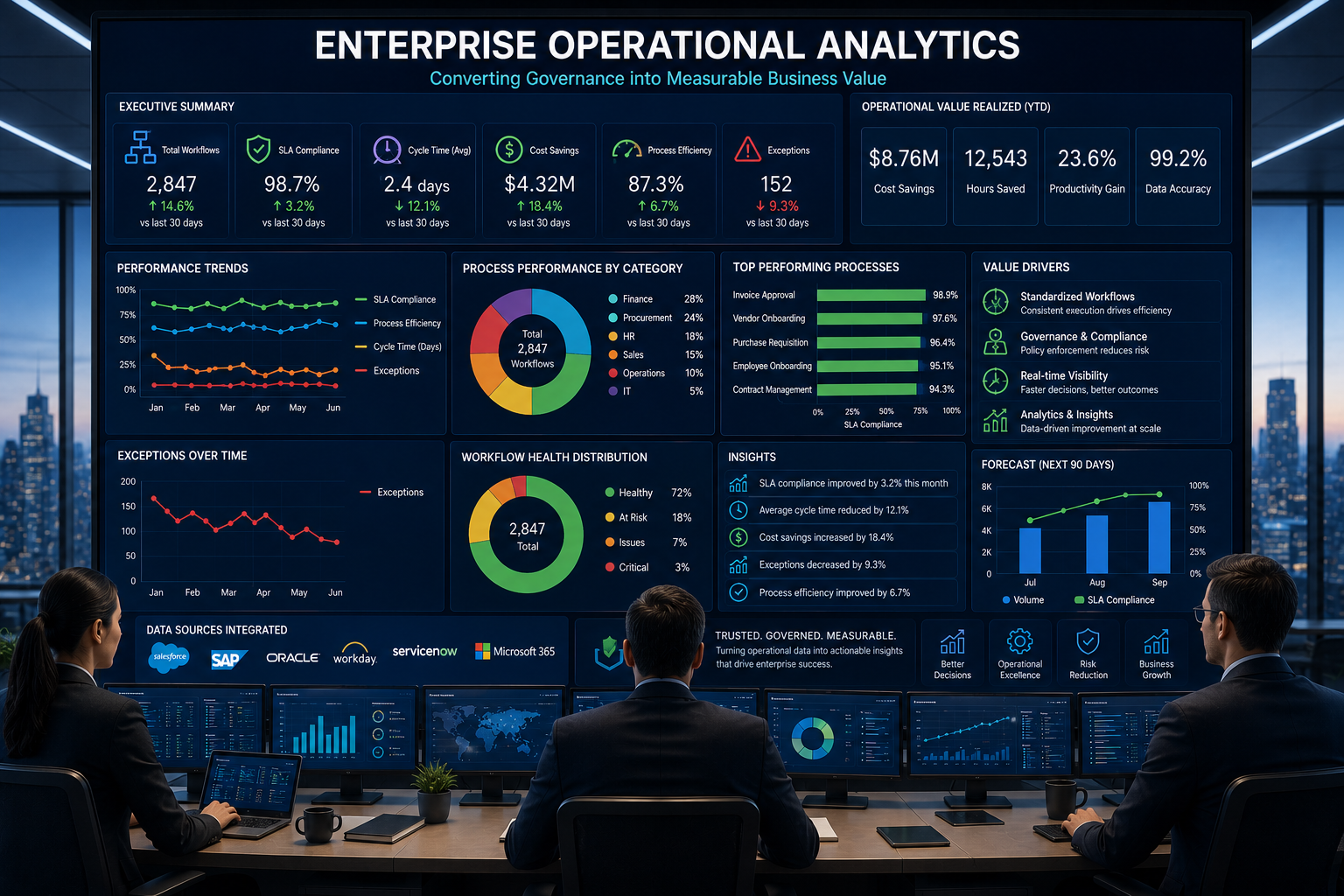
Enterprise success depends on more than collecting data. Organizations need analytics built on standardized execution, governed workflows, and trusted operational information. Business Operations Center (BOC) delivers enterprise operational analytics by combining governance, workflow orchestration, observability, and decision intelligence into a single operating framework. Instead of measuring isolated activities, BOC measures enterprise execution from end to end, enabling leaders to understand operational health, identify improvement opportunities, and make confident strategic decisions.
From Data to Operational Intelligence
Many organizations possess abundant dashboards but limited operational insight. Enterprise Operational Analytics connects workflow events, approvals, policy compliance, SLA performance, resource utilization, and business outcomes into a unified analytical model. Every governed workflow contributes reliable metrics that reflect how the organization actually operates rather than how individual departments report performance.
Governance Creates Trusted Metrics
Analytics is valuable only when the underlying execution is consistent. Governance standardizes ownership, approval hierarchies, business rules, escalation paths, and audit controls before metrics are captured. This governance-first approach ensures KPIs remain comparable across departments, business units, and geographic regions while supporting executive reporting and regulatory compliance.
Executive KPIs
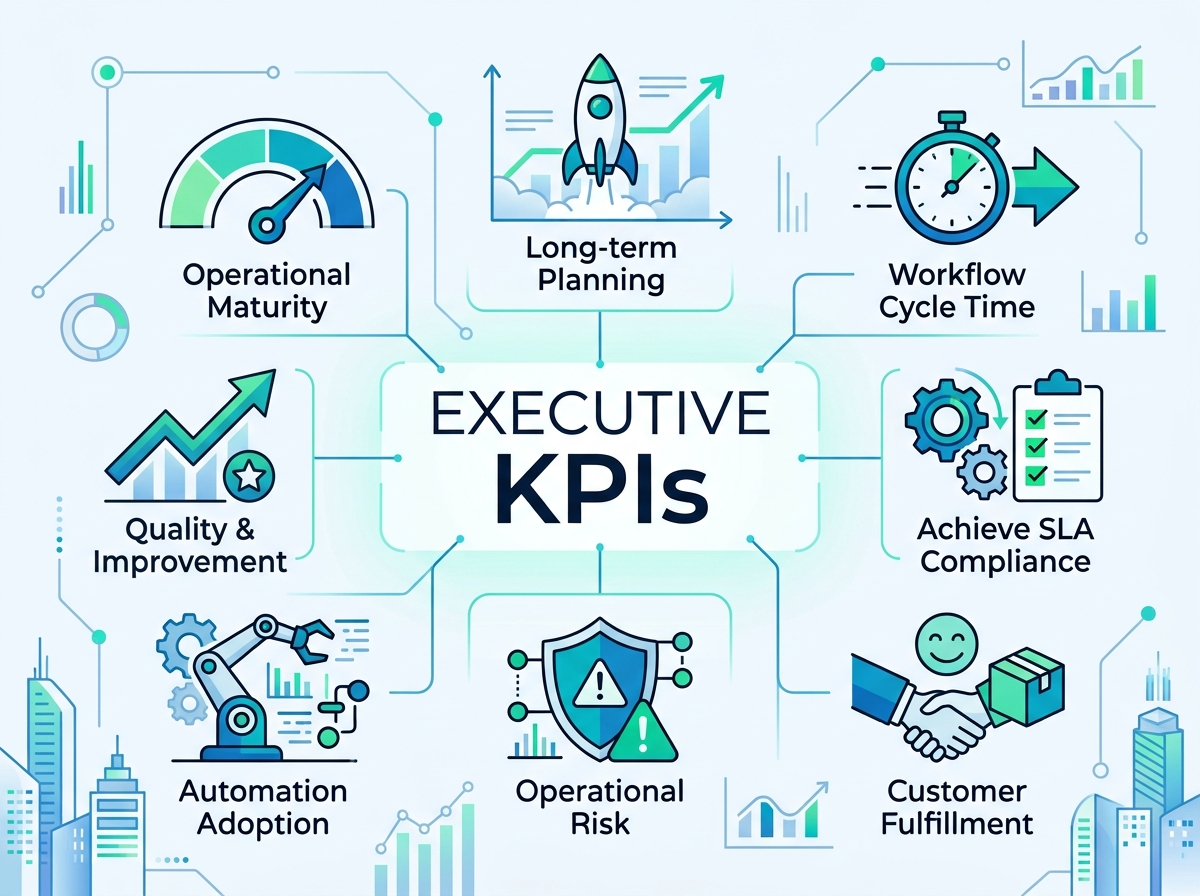
A mature operational analytics framework measures workflow cycle time, approval turnaround, first-pass completion, SLA compliance, backlog trends, policy exceptions, automation adoption, operational risk, customer fulfillment, and continuous improvement initiatives. These indicators help executives evaluate operational maturity while supporting long-term planning.
Enterprise Scenario
A global enterprise uses BOC to consolidate procurement, HR onboarding, customer implementation, and IT service workflows. Unified operational analytics reveal recurring bottlenecks, regional process variations, and capacity constraints. Leadership optimizes governance policies, automates repetitive approvals, and improves resource allocation, resulting in faster execution, stronger compliance, and measurable business value.
Future Outlook
As AI-driven recommendations and predictive analytics become mainstream, enterprises with governance-first operational analytics will adapt faster, scale more confidently, and improve continuously. BOC provides the trusted operational foundation required for intelligent enterprise execution.
Conclusion
Enterprise Operational Analytics transforms governed execution into measurable business value. By combining governance, workflow visibility, operational intelligence, and continuous improvement, Business Operations Center helps enterprises create sustainable operational excellence.