
Introduction
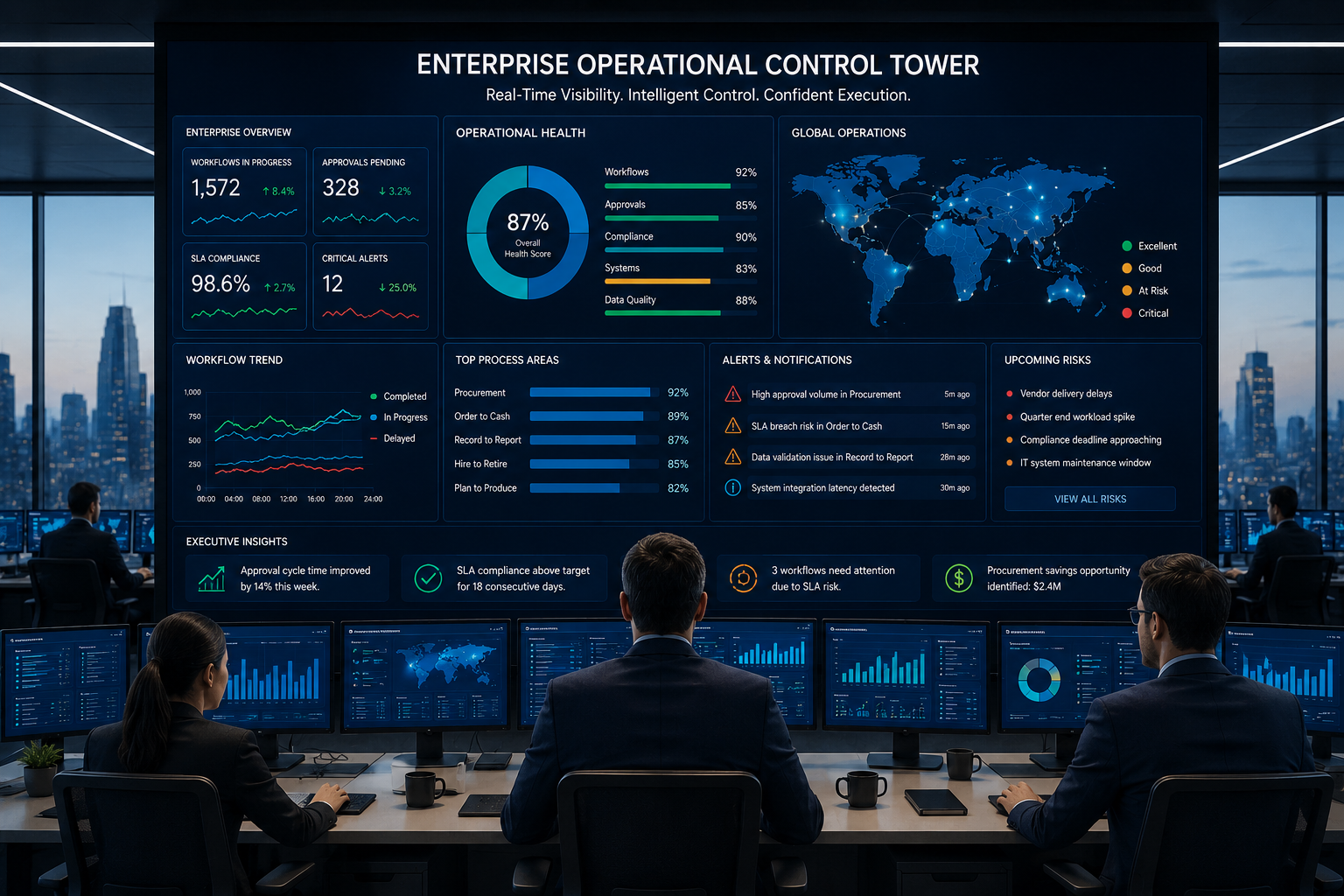
Modern enterprises require more than dashboards to manage complex operations. They need an operational control tower that continuously coordinates workflows, governance, policies, risks, and execution across every business function. Business Operations Center (BOC) delivers this capability by providing a governance-first operating layer that connects enterprise systems while maintaining operational consistency and accountability.
From Visibility to Control
Traditional monitoring platforms show operational status but often fail to influence execution. A control tower combines enterprise visibility with workflow orchestration, approvals, escalation management, SLA monitoring, compliance, and decision support. Instead of simply identifying issues, it enables organizations to respond quickly through governed operational processes.
Core Components
An enterprise operational control tower consolidates data from ERP, CRM, HR, finance, procurement, customer service, and collaboration platforms into a unified operational view. Standardized workflows, policy enforcement, audit trails, exception management, analytics, and executive reporting work together to create a trusted execution environment.
Governance-Driven Coordination
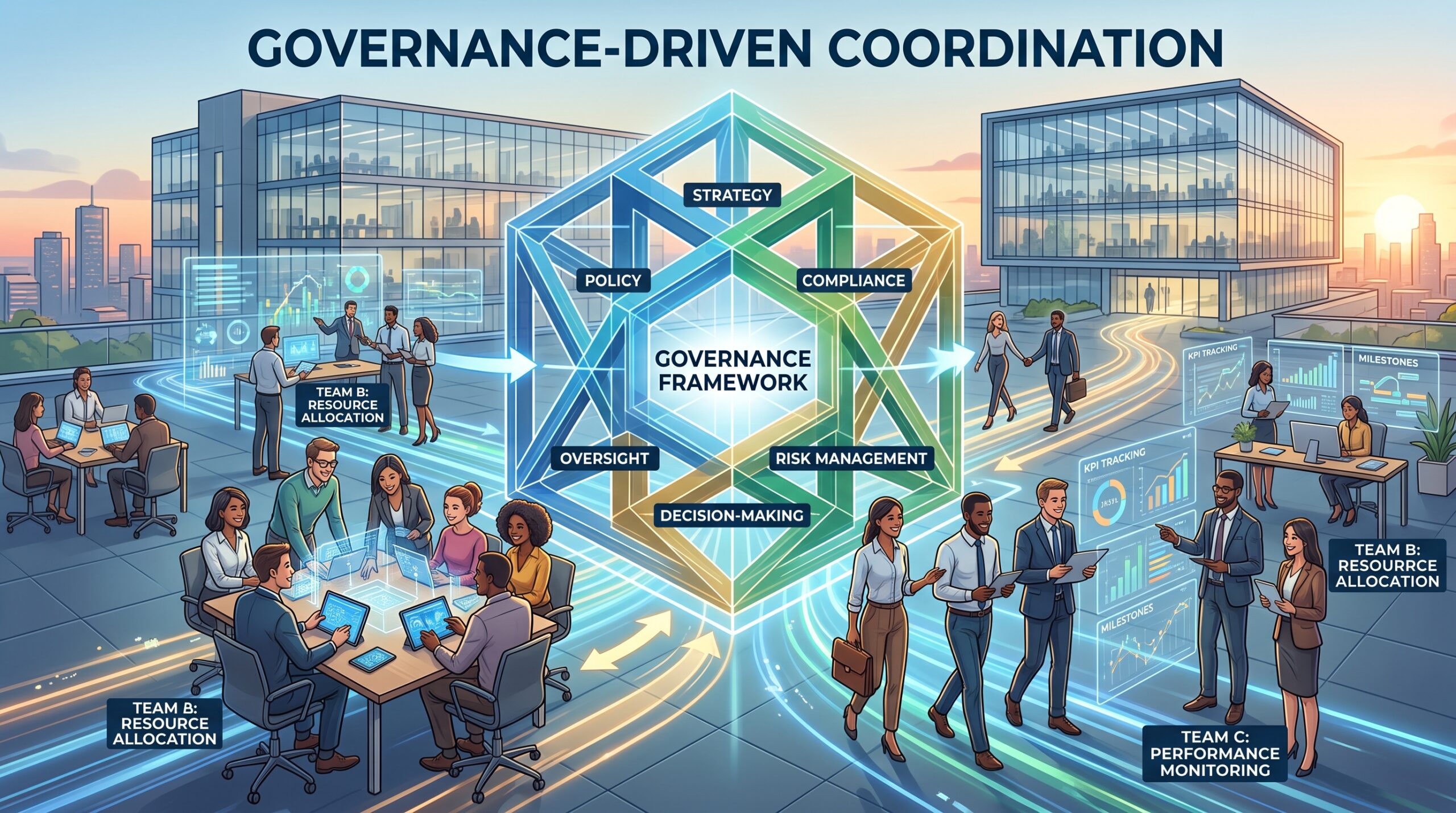
Every operational activity should follow clearly defined ownership, approval structures, and business rules. BOC embeds governance directly into enterprise execution so that departments collaborate through standardized processes rather than isolated systems. This creates consistency across locations, business units, and regulatory environments.
Real-Time Operational Intelligence
Because every governed workflow generates measurable operational data, leaders gain continuous insight into workload trends, SLA performance, policy compliance, bottlenecks, operational risk, and resource utilization. The control tower becomes the single source of operational truth for executives and operational managers alike.
Business Outcomes
Organizations implementing enterprise operational control towers reduce operational delays, improve compliance, accelerate cross-functional collaboration, strengthen audit readiness, and create a scalable foundation for AI-assisted operations. Standardized execution improves both efficiency and strategic decision-making.
Future Outlook
As enterprises expand automation, AI, predictive analytics, and autonomous workflows, the operational control tower will become the coordination layer that governs intelligent execution. Organizations with mature governance frameworks will be better positioned to scale innovation while maintaining operational discipline.
Conclusion
Enterprise Operational Control Towers transform disconnected operational activities into coordinated enterprise execution. Business Operations Center provides the governance, workflow orchestration, visibility, and operational intelligence required to operate confidently in increasingly complex digital enterprises.