


Introduction
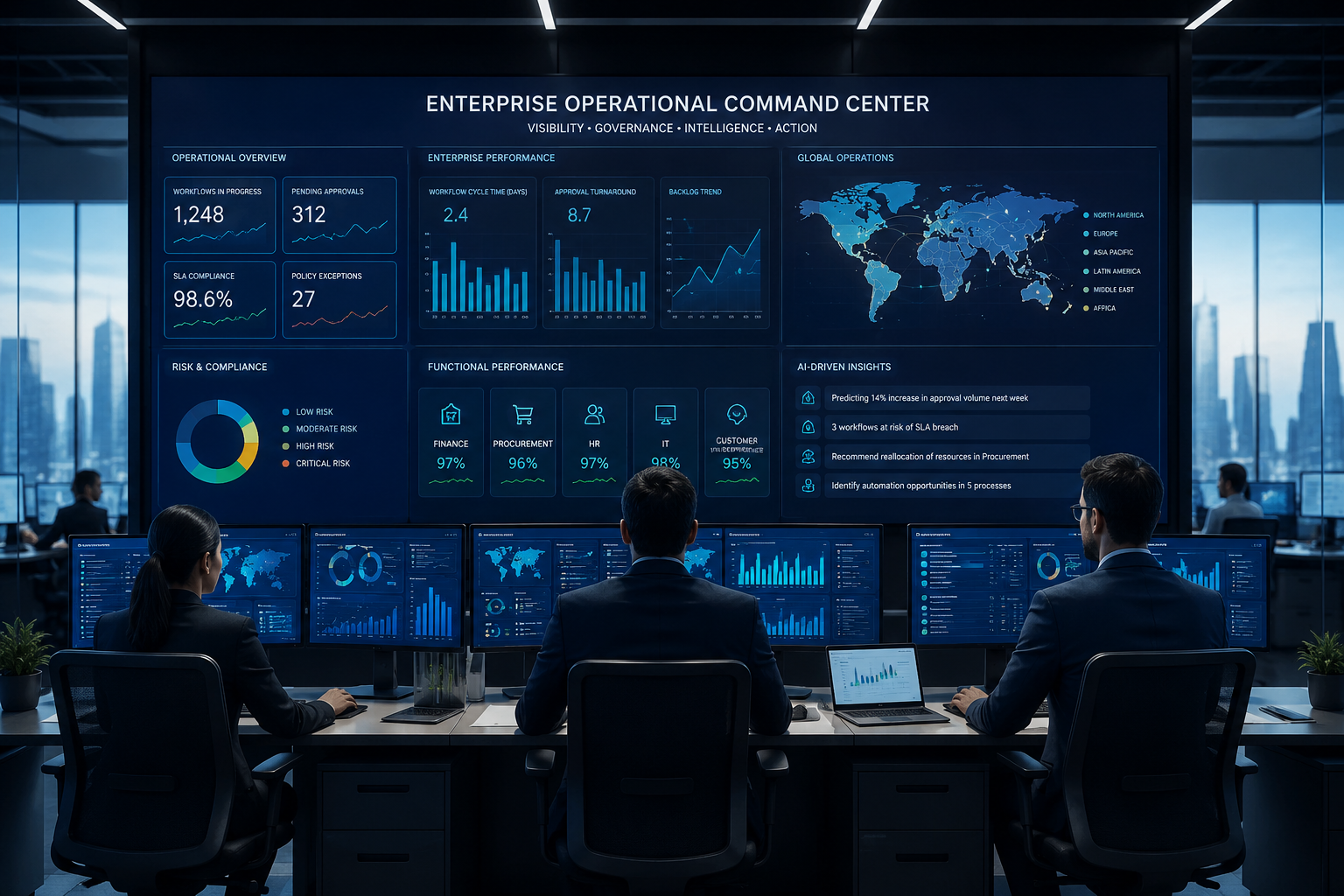
As enterprises become increasingly digital, operational complexity grows across departments, platforms, regions, and regulatory environments. Business Operations Center (BOC) serves as the enterprise operational command center that unifies governance, standardized workflows, operational visibility, analytics, and continuous improvement into a single operating model. Rather than functioning as another application, BOC becomes the orchestration layer that ensures enterprise execution remains consistent, measurable, and accountable.
Why Enterprises Need an Operational Command Center
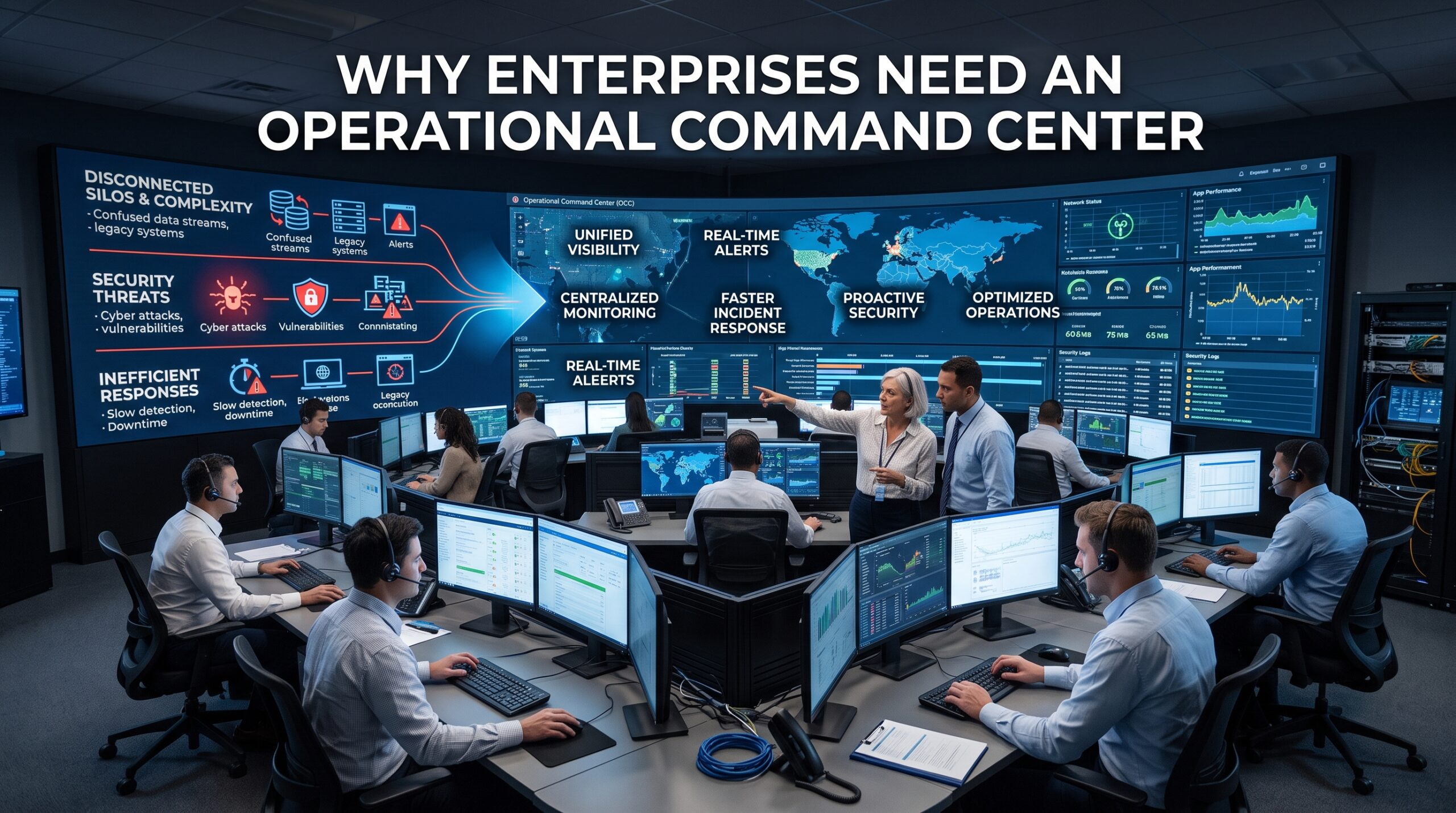
Traditional monitoring tools report activity but rarely coordinate execution. Modern enterprises require a centralized governance framework that aligns policies, approval workflows, operational metrics, and cross-functional collaboration. A command center enables leadership to manage enterprise operations proactively instead of reacting after problems occur.
Core Capabilities
An enterprise operational command center integrates workflow orchestration, governance policies, approval management, SLA monitoring, exception handling, executive dashboards, audit trails, and operational analytics. Every governed workflow contributes trusted operational intelligence that improves enterprise-wide execution.
Governance Before Automation
Automation without governance often accelerates inconsistency. BOC establishes ownership, approval hierarchies, compliance rules, and accountability before automation is introduced, ensuring that technology reinforces operational discipline instead of bypassing it.
Enterprise-Wide Visibility
Operational command centers consolidate signals from ERP, CRM, HR, finance, procurement, customer support, and collaboration platforms. Executives gain a unified view of operational health while managers receive actionable insights for day-to-day execution.
Business Value
Organizations adopting governance-driven command centers reduce approval delays, improve policy compliance, strengthen audit readiness, increase operational transparency, and create a scalable foundation for AI-driven optimization.
Future Outlook
As AI copilots, predictive analytics, and intelligent automation mature, enterprises with standardized governance frameworks will achieve greater resilience and agility. Business Operations Center provides the trusted operational foundation required for these innovations.
Conclusion
Enterprise Operational Command Centers represent the next evolution of business execution. By combining governance, workflow orchestration, operational visibility, analytics, and continuous improvement, Business Operations Center enables organizations to execute with confidence while transforming operational excellence into long-term strategic advantage.