


Introduction
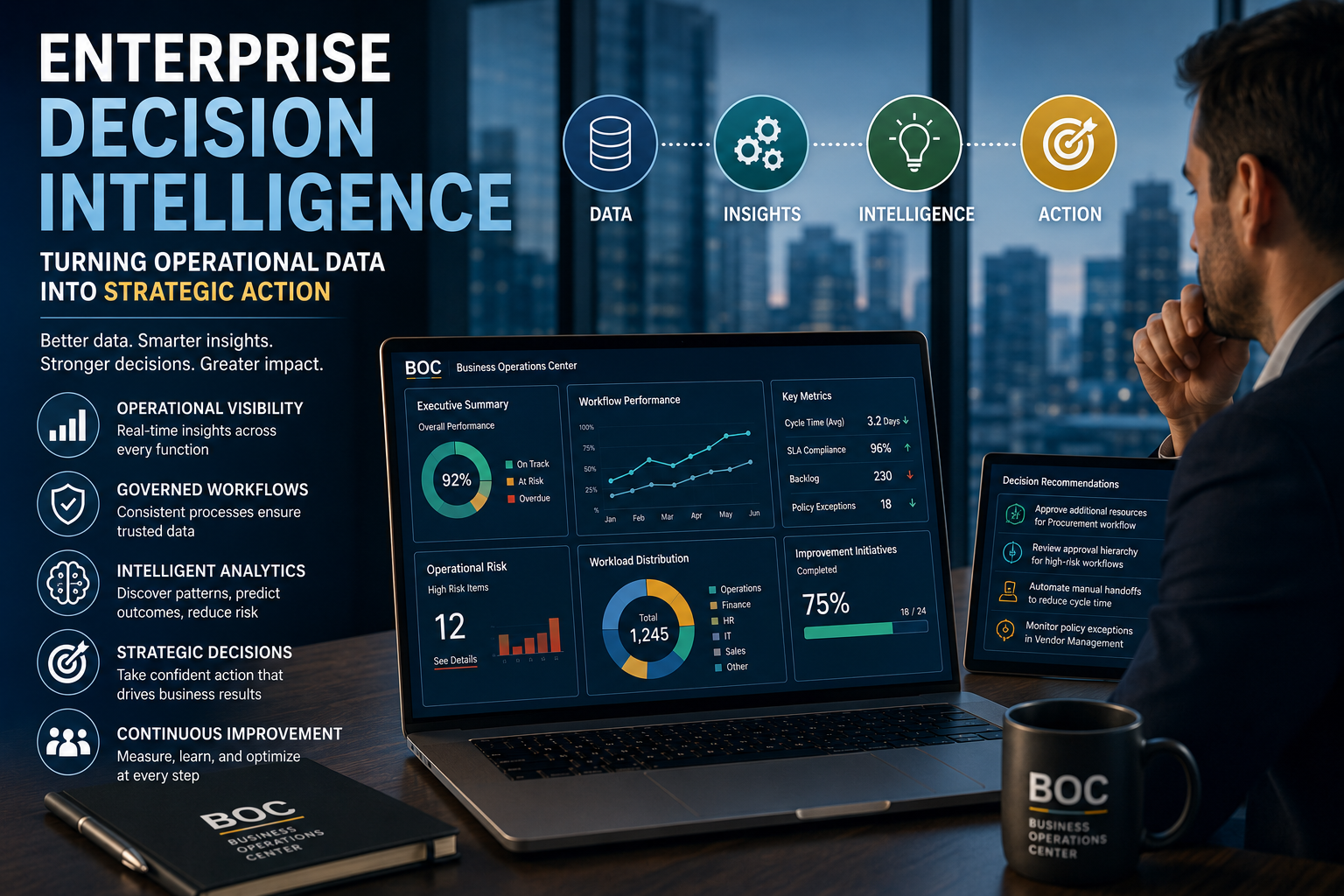
Modern enterprises generate enormous volumes of operational data from ERP, CRM, HR, finance, procurement, customer service, and collaboration platforms. Despite this abundance of information, executive leaders often struggle to make fast, confident decisions because operational data remains fragmented across departments. Business Operations Center (BOC) transforms governed operational execution into enterprise decision intelligence by combining standardized workflows, governance, operational visibility, and analytics.
Understanding Enterprise Decision Intelligence
Traditional reporting explains what happened. Business intelligence explains why it happened. Decision intelligence recommends what should happen next. By combining governed operational data with enterprise context, organizations move from reactive reporting to proactive leadership.
Why Better Decisions Matter
Growing organizational complexity makes evidence-based decisions essential. Hybrid workforces, distributed operations, global suppliers, regulatory obligations, and rising customer expectations require leaders to make decisions using trusted enterprise-wide operational information rather than disconnected departmental reports.
Governance Creates Trusted Intelligence
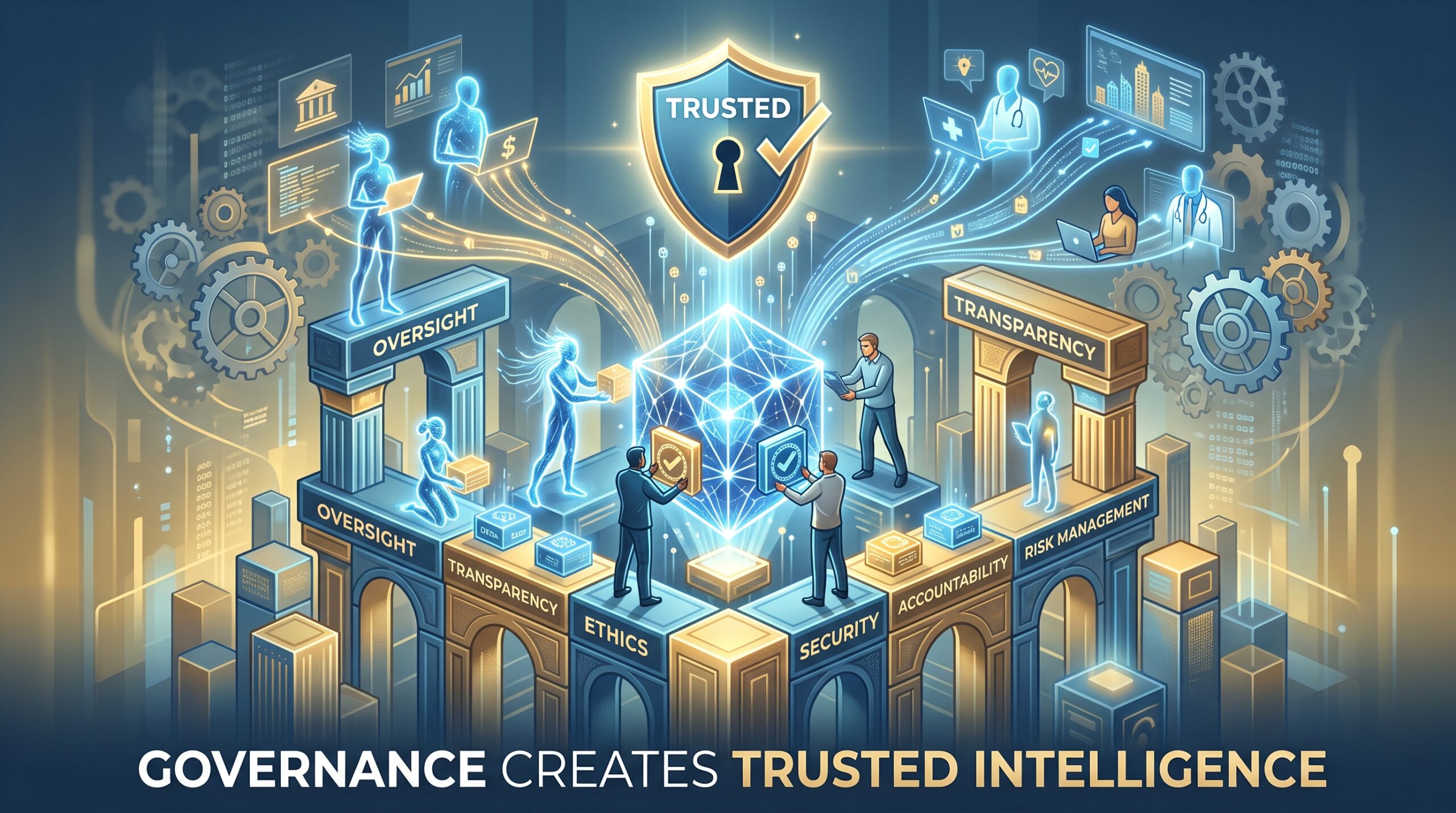
Decision quality depends upon data quality. Governance standardizes workflow ownership, approval workflow & hierarchies, policy enforcement, escalation rules, and operational accountability. Because BOC governs execution before measuring performance, executives gain confidence that operational metrics accurately represent enterprise reality.
Beyond Dashboards
Dashboards visualize performance but rarely explain operational context. Decision intelligence combines workflow execution, policy compliance, operational dependencies, and enterprise analytics to identify risks, recommend improvements, and support strategic decision making rather than displaying isolated charts.
Business Operations Center as the Intelligence Layer
BOC coordinates enterprise workflows across existing business systems instead of replacing them. Every governed workflow contributes operational intelligence. Managers monitor execution in real time while executives evaluate enterprise performance using consistent operational metrics supported by standardized governance.
Enterprise KPIs
Important decision intelligence metrics include workflow cycle time, approval turnaround, SLA compliance, backlog trends, policy exception rates, resource utilization, operational risk indicators, customer fulfillment performance, and continuous improvement progress. Together, these KPIs create a comprehensive operational performance framework.
Predictive Analytics and AI
Artificial intelligence depends on trusted operational data. Standardized workflows enable predictive analytics, intelligent routing, workload forecasting, anomaly detection, and operational recommendations. Governance ensures AI-driven insights remain transparent, reliable, and aligned with enterprise policies.
Decision Governance
Decision governance establishes ownership, approval authority, escalation paths, documentation standards, accountability, and auditability. BOC embeds these principles directly into enterprise workflows so routine decisions remain consistent while high-risk decisions automatically follow governed approval structures.
Enterprise Scenario
A multinational organization standardizes procurement approvals, inventory governance, and operational reporting using Business Operations Center. Leadership gains enterprise-wide visibility, predictive analytics identifies supply risks earlier, approval delays decrease, and customer fulfillment improves because decisions are based on consistent operational intelligence.
Common Pitfalls
Organizations often rely on historical reports, inconsistent departmental metrics, unclear ownership, and fragmented workflows. These weaknesses reduce confidence in enterprise decisions. Governance-first workflow execution eliminates these problems by creating a trusted operational foundation.
Future Outlook
As AI, predictive analytics, digital twins, and intelligent automation mature, enterprises with standardized workflows and measurable governance will adopt innovation faster. Business Operations Center provides the operational discipline required for this next generation of enterprise decision-making.
Conclusion
Enterprise Decision Intelligence enables organizations to transform operational execution into strategic advantage. By combining governance, workflow standardization, operational visibility, analytics, and continuous improvement, Business Operations Center helps leaders make faster, smarter, and more confident enterprise decisions.